

The Sovereign Baseline: Restoring Determinism to Hybrid-Cloud IaC
The Sovereign Drift Auditor exists because of a problem every cloud architect eventually faces: IaC drift. In my 15 years as a cloud architect, I’ve witnessed a recurring Day 2 disaster — the degradation of Infrastructure-as-Code into Ghost Infrastructure. It starts with an engineer making a five-minute fix in the AWS Console to troubleshoot a routing error. That change is never back-ported to Terraform, and suddenly your sovereign environment is no longer deterministic. When you are designing for Day 2 operations, the delta between your code and your live environment isn’t just a technicality — it’s a security breach.
When you are designing for Day 2 operations, the delta between your code and your live environment isn’t just a technicality—it’s a security breach.
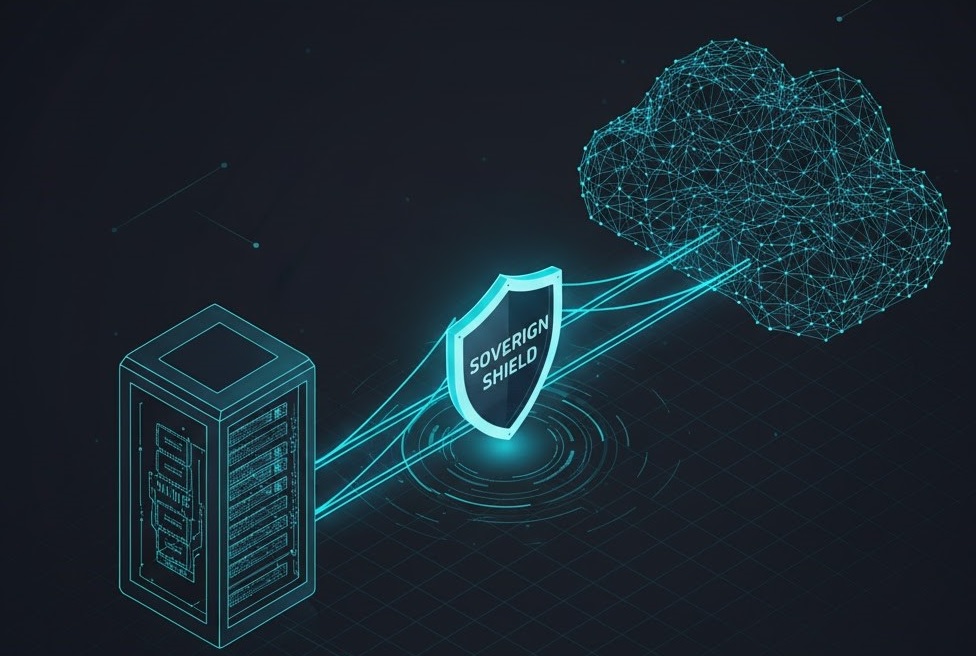
The Decision Framework: Choosing Your Sovereign Drift Auditor Strategy
Architects must decide between “Passive Monitoring” and “Deterministic Auditing” based on their risk tolerance.
| Feature | Native CSP Scanners | Sovereign Drift Auditor |
| Logic Basis | API Polling (Point-in-time) | Plan-to-State Determinism |
| Data Privacy | SaaS Upload Required | 100% Local Browser Analysis |
| Remediation | Generic Alerts | Instant HCL Code Generation |
| Integrity Pattern | Reactive | Proactive (Pre-Apply) |
Mandatory Cost Analysis: The “Drift Tax”
Manual drift isn’t just a security risk; it’s an operational drain on your OpEx.
- OpEx (The Audit Penalty): During a standard SOC2 or Sovereign compliance audit, verifying drifted resources manually can cost an enterprise $20k–$50k in senior engineering hours per quarter.
- CapEx (Zombie Resources): Drift often results in “Zombie Resources”—instances or volumes that were manually created but never captured by FinOps tags, leading to a 7–15% hidden increase in monthly cloud spend.
- Licensing (Compliance Risk): In Sovereign environments like Nutanix NC2, drift can invalidate a “Hardened Baseline,” leading to contract penalties or the loss of “Authorized” status for government workloads.

The Solution: Deterministic Auditing for Sovereign Baselines
To solve the “Console Drift” problem, we developed the Sovereign Drift Auditor. This utility allows architects to perform a local, browser-based audit of their Terraform plan.json files before any infrastructure is deployed.
By analyzing the delta between your intended code and the live cloud state, the tool identifies non-sovereign configurations—such as public S3 buckets or unencrypted databases—and generates the exact HCL code needed to restore integrity. This is not just a scanner; it is a deterministic fix for Day 2 operations.
Perform a local, browser-based audit of your Terraform plan.json files before any infrastructure is deployed. No SaaS upload required — the delta between your intended code and live cloud state is analyzed entirely in-browser, with instant HCL remediation code generated on the spot.
→ Launch the Sovereign Drift AuditorQ: What is IaC drift and why is it a sovereign compliance risk?
A: IaC drift occurs when live cloud infrastructure diverges from its Terraform or CloudFormation definition — typically through manual console changes, emergency fixes, or undocumented modifications. In sovereign environments, drift invalidates the hardened baseline that compliance frameworks like FedRAMP, SOC2, and government cloud authorizations require. A drifted resource that hasn’t been audited is effectively an unauthorized configuration change — regardless of whether it was intentional.
Q: How is the Sovereign Drift Auditor different from native CSP security scanners?
A: Native CSP scanners (AWS Config, Azure Policy, GCP Security Command Center) use API polling — they capture point-in-time state but don’t compare against your intended IaC definition. The Sovereign Drift Auditor uses plan-to-state determinism: it compares your Terraform plan.json against live state to identify the exact delta. Critically, analysis runs entirely in the local browser — no data is uploaded to a SaaS platform, which is a hard requirement for sovereign and air-gapped environments.
Q: What file format does the Sovereign Drift Auditor require?
A: The auditor analyzes Terraform plan.json output — generated by running terraform plan -out=tfplan followed by terraform show -json tfplan > plan.json. This captures the full intended state including resource additions, modifications, and deletions. The tool does not require Terraform state files or cloud provider credentials — only the plan output, keeping sensitive infrastructure data local.
Q: What does the Sovereign Drift Auditor generate as output?
A: For each drifted resource identified, the auditor generates the exact HCL remediation code needed to restore the sovereign baseline. This is not a generic alert — it’s actionable code you can apply directly to your Terraform configuration. Output includes the resource identifier, the drifted attribute, the expected value from your IaC definition, and the live value detected in your cloud environment.
Additional Resources
Editorial Integrity & Security Protocol
This technical deep-dive adheres to the Rack2Cloud Deterministic Integrity Standard. All benchmarks and security audits are derived from zero-trust validation protocols within our isolated lab environments. No vendor influence.

R.M.
Senior Solutions Architect with 25+ years of experience in HCI, cloud strategy, and data resilience. As the lead behind Rack2Cloud, I focus on lab-verified guidance for complex enterprise transitions. View Credentials →
Get the Playbooks Vendors Won’t Publish
Choose the architecture problems you care about. Get field-tested playbooks and frameworks delivered to your inbox.
- > AI Infrastructure & Inference Economics
- > Cloud Strategy & Hidden Cost Models
- > Virtualization & Deterministic Migration
- > Kubernetes, IaC & Modern Infrastructure
- > Data Protection & Recovery Engineering
Zero spam. Includes The Dispatch weekly drop.
Need Architectural Guidance?
Independent review before major infrastructure decisions.
- > Validate assumptions
- > Identify hidden dependencies
- > Quantify migration risk
- > Challenge vendor narratives
Triage · Advisory · Fractional · Direct Hire