

From Sysadmin to Cloud Engineer in 2026: The Definitive Skills Roadmap
Introduction: The Server Room is Evolving, Not Dying
If you are a traditional systems administrator, you’ve likely felt the shift. The racking and stacking are decreasing; the API calls are increasing. The narrative that “sysadmins are obsolete” is false, but the reality is that the role is evolving rapidly into Platform and Cloud Engineering.
Your on-premises experience—understanding DNS, subnetting, storage IOPS, and Linux kernel panics—is not baggage; it’s your foundation. But in 2026, that foundation needs a new structure built on top of it.
The biggest mistake sysadmins make when pivoting to the cloud is trying to learn “everything.” They dive into Kubernetes before they understand VPCs, or they try to learn AWS, Azure, and GCP simultaneously.
This roadmap is about focus. It is a pragmatic, scoped guide designed to take a competent on-prem IT pro and turn them into a hireable Junior to Mid-level Cloud Engineer in 2026.

Phase 1: Don’t Skip Leg Day (The Fundamentals)
Before touching the AWS console or Azure Portal, you must ensure your foundation is rock solid. The cloud doesn’t abstract away networking and operating systems; it just virtualizes them. If you can’t troubleshoot a connectivity issue on-prem, you won’t be able to troubleshoot it in a VPC or VNet.
The 2026 Checklist:
- Linux constitutes 90% of the Cloud: You need to be comfortable in the terminal. You don’t need to compile kernels, but you must know bash scripting, process management (
systemd,ps,top), logs (journalctl), and basic file permissions. - Networking is Non-Negotiable: The cloud is just other people’s networks. You must deeply understand CIDR notation, subnets, route tables, DNS resolution, firewalls (ports/protocols), and load balancing concepts (L4 vs. L7).
- Compute Fundamentals: Understanding how to size compute correctly is crucial, whether it’s a Hyper-V host or an EC2 instance.
Phase 2: The Great Filter (Infrastructure as Code & Git)
This is where most sysadmins stall. In the on-prem world, you might click through a vSphere wizard or an MMC snap-in to deploy a server.
In the cloud, clicking in the console is a rookie mistake.
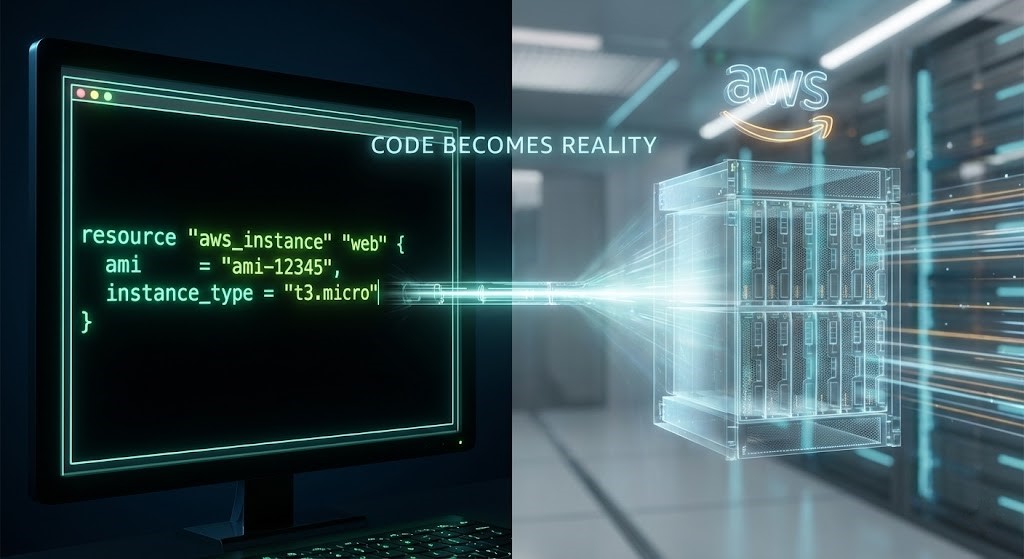
A Cloud Engineer’s primary job is not deploying infrastructure; it is writing the code that deploys infrastructure. You must treat infrastructure exactly like software developers treat applications.
The 2026 Focus: Terraform (OpenTofu) & Git
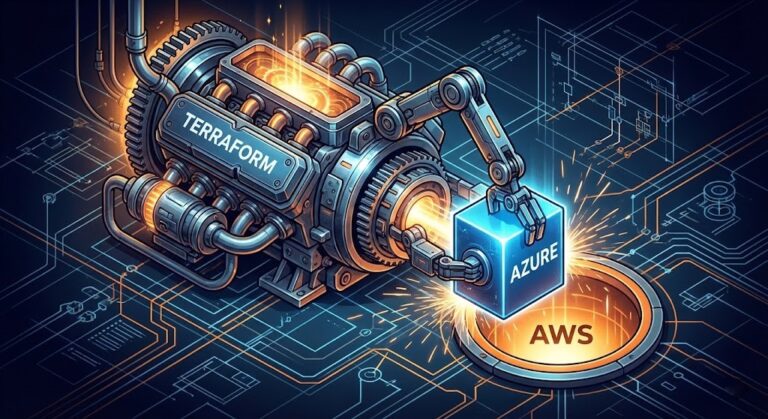
While vendor-specific tools like AWS CloudFormation and Azure Bicep exist, Terraform (and its open-source fork, OpenTofu) remains the de facto industry standard for multi-cloud infrastructure as code.
- Learn Git First: You cannot collaborate on IaC without version control. Understand
clone,commit,push,pull, and crucially, how branches and pull requests work. - Terraform Basics: Learn providers, resources, variables, and outputs.
- Terraform State: Understand the danger and necessity of the state file, and why it must be stored remotely (e.g., S3 bucket or Azure Storage Account) with state locking.
Phase 3: Pick a Horse and Ride It (The CSP Choice)
Do not try to be multi-cloud in your first year. You will end up mediocre at several and master of none. Pick one hyperscaler, get certified, and build deep expertise. Once you understand the patterns in one cloud, learning a second is significantly easier.
The Azure Path (The Enterprise Pivot)
If your background is heavy Windows Server, Active Directory, and PowerShell, Azure is the most natural transition.
- Why: It integrates seamlessly with existing on-prem Microsoft environments.
- The 2026 Cert Goal: Skip AZ-900 (Fundamentals) if you have IT experience. Go straight for AZ-104 (Microsoft Azure Administrator). It is notoriously difficult but validates real hands-on skills.
The AWS Path (The Market Leader)
If your background is more Linux/networking, or you want the widest range of job opportunities, go AWS.
- Why: It has the largest market share and the most mature service offerings.
- The 2026 Cert Goal: The AWS Certified Solutions Architect – Associate (SAA-C03) remains the gold standard entry-point.
Phase 4: The Portfolio Project (Proving It)
A certification gets you past the HR filter. A project gets you the job offer.
Employers in 2026 know that exam dumps exist. They want to see that you can stitch services together to solve a problem. Don’t just deploy a WordPress VM and call it a day.
The “Cloud Resume Challenge” Variant: Build a 3-tier web application, but impose these strict constraints on yourself to prove you are ready for a real engineering role:
- No Console Clicking: Every single resource (VPC, VMs, Load Balancers, Databases) must be deployed via Terraform.
- CI/CD Pipeline: Use GitHub Actions or Azure DevOps. When you push a change to your Terraform code in Git, the pipeline should automatically plan and apply the changes to the cloud.
- Security & Resilience: Don’t put database credentials in your code (use AWS Secrets Manager or Azure Key Vault). Ensure your design spans multiple Availability Zones for high availability.
- Backup Strategy: Even in the cloud, data protection matters.
Conclusion: It’s a Marathon, Not a Sprint
Transitioning from Sysadmin to Cloud Engineer in 2026 isn’t about memorizing 200 new AWS services. It’s about shifting your mindset from “maintaining servers” to “engineering automated platforms.”
Focus on the fundamentals, master Infrastructure as Code, pick one cloud provider, and build something that breaks so you can learn how to fix it. The cloud needs people who know what happens when the abstraction layer leaks. That’s you.
Additional Resources:
Editorial Integrity & Security Protocol
This technical deep-dive adheres to the Rack2Cloud Deterministic Integrity Standard. All benchmarks and security audits are derived from zero-trust validation protocols within our isolated lab environments. No vendor influence.

R.M.
Senior Solutions Architect with 25+ years of experience in HCI, cloud strategy, and data resilience. As the lead behind Rack2Cloud, I focus on lab-verified guidance for complex enterprise transitions. View Credentials →
Get the Playbooks Vendors Won’t Publish
Field-tested blueprints for migration, HCI, sovereign infrastructure, and AI architecture. Real failure-mode analysis. No marketing filler. Delivered weekly.
Select your infrastructure paths. Receive field-tested blueprints direct to your inbox.
- > Virtualization & Migration Physics
- > Cloud Strategy & Egress Math
- > Data Protection & RTO Reality
- > AI Infrastructure & GPU Fabric
Zero spam. Includes The Dispatch weekly drop.
Need Architectural Guidance?
Unbiased infrastructure audit for your migration, cloud strategy, or HCI transition.
>_ Request Triage Session