

Broadcom Year Two: The “Stay or Go” Architecture Guide (2026 Edition)
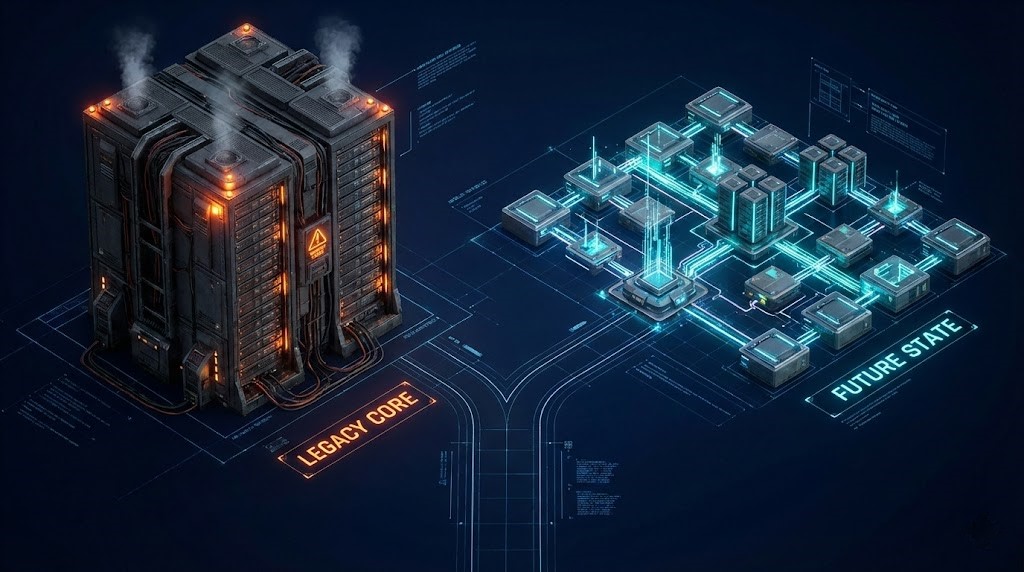
Broadcom VMware migration decisions don’t get easier with time — they get more expensive. If Year One was denial and anger, Year Two is cold, hard architectural math. The “price protection” grace periods have expired. The perpetual support contracts have finally bled out. You are now staring at a fully subscription-based OpEx model that likely consumes 3x the budget it did in 2024.
This isn’t a rant. It’s a survival guide for the architect who has to explain to the CFO why the virtualization bill just ate the AI innovation budget.
To understand the kernel-level physics of what actually changes when you migrate away from ESXi, see Part 1 of the Post-Broadcom Deterministic Migration Series. To survive this shift strategically, you must revisit the fundamentals of Virtualization Architecture — because the old rules of density and consolidation no longer apply in a per-core subscription world.
The CapEx Grave & The OpEx Reality Check
For two decades, we treated the hypervisor like a server chassis: a one-time purchase with a predictable, low-maintenance tail. That model is dead. In Year Two, the shift from CapEx to OpEx is fully realized.
If you are running a 3-Tier architecture (Legacy Storage + Blade Servers), you are in the worst possible position. Broadcom’s pricing model is designed to force you into VMware Cloud Foundation (VCF). They want you on vSAN. They want you on NSX.
Broadcom VMware Migration: The Tradeoff Matrix
Before you renew, visualize the cost impact of your architecture choice:
| Option | CapEx Impact | OpEx Impact | Notes |
| Stay on VMware (VCF) | High (Hardware Refresh) | Very High | Subscription cost escalates in Year 2; forced bundles (Aria/NSX) inflate unit cost. |
| Move to HCI (Nutanix/AHV) | Medium (New Nodes) | Low | Requires new skillset & migration effort, but caps the licensing growth. |
| Cloud Lift & Shift | Low (Zero Hardware) | High | SaaS costs & refactoring needed; “rental” costs often exceed on-prem licensing. |
The Architect’s Call: You must present two clear TCO models to leadership immediately. Before you build either model, understand that exit cost is an architectural constraint, not a line item — the exit cost architecture framework covers the four sources that make movement expensive before the first VM migrates. And before the renewal call itself, it’s worth confirming whether the decision has already effectively been made by two years of accumulated architecture choices — the negotiating position in that room is rarely as open as it looks. That dynamic isn’t unique to a general VMware renewal, either — Azure VMware Solution customers just watched it play out on a fixed calendar: two years of “we’ll decide later” collapsed into a matter of weeks the moment Microsoft attached an actual date to it.
The escalation curve itself isn’t unique to VMware licensing, either. Windows 10 ESU prices the same Year One to Year Two jump — $61 per device climbing to a cumulative $183 for anyone who waits past October 13, 2026, and $427 across a full three-year window. Different vendor, different product, identical mechanism: a deliberately escalating cost curve designed to make deferral more expensive than deciding, on a schedule the vendor sets and publishes well in advance.
- The “All-In” Model: Adopt VCF fully. Rip out external storage. Justify the cost by eliminating the SAN maintenance contracts.
- The “Hybrid” Model: Keep external storage but migrate the hypervisor to a platform that doesn’t tax you for it.
Don’t rely on spreadsheet guesswork. Use the VMware Core Calculator to model your exact licensing exposure before presenting either option to leadership.
Licensing Blast Radius: The “Zombie” Core Problem
Broadcom’s audit teams are stricter than VMware’s ever were. In the past, we could get away with some “zombie VMs” or over-provisioned hosts in a dev cluster.
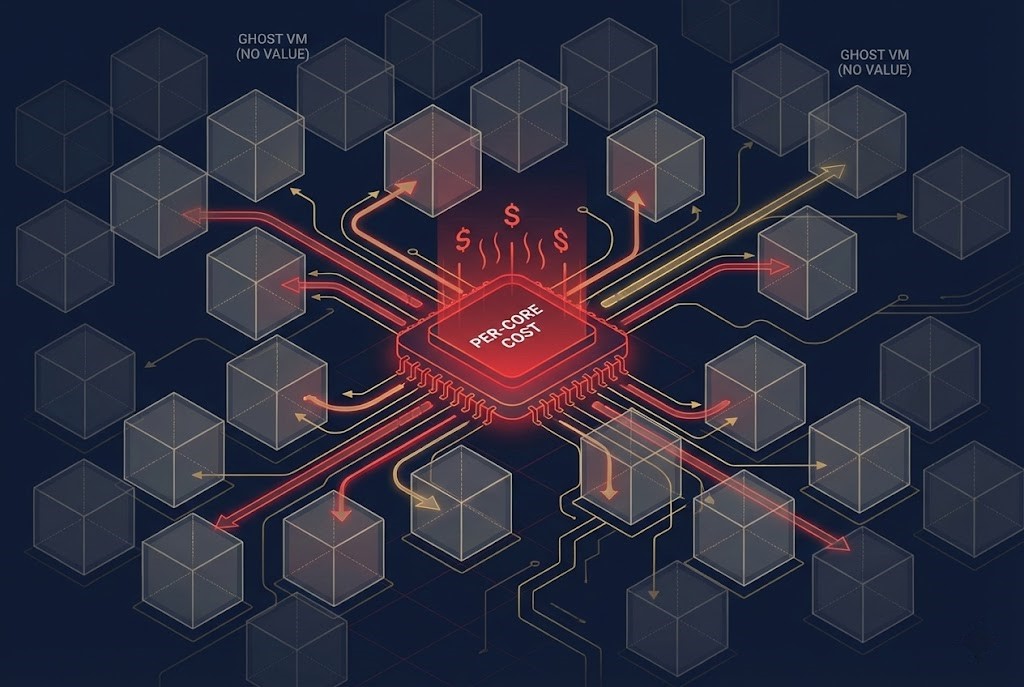
Figure 1: The Blast Radius. How “Zombie VMs” and low density exponentially increase per-core subscription costs.
Not anymore. Every core counts — literally. If you have a 64-core host running a few domain controllers and a print server, you are lighting money on fire. The density-to-license ratio is the new efficiency metric.
Field Note: We recently audited a client who renewed based on “socket count” habits. They didn’t realize their new AMD EPYC servers had 128 cores per socket. The audit bill was 4x their estimate. Check your core counts before you quote — use the VMware Core Calculator to model your exact exposure before Broadcom’s auditors do it for you.
The Sticky NSX Problem
Many organizations want to leave but find themselves trapped by micro-segmentation rules. NSX is often the “sticky” layer that prevents migration because translating firewall rules to a new platform is a manual nightmare. Before you commit to a migration, look into tools for automating the translation of NSX security policies to ensure you don’t leave your security posture behind when you leave the hypervisor.
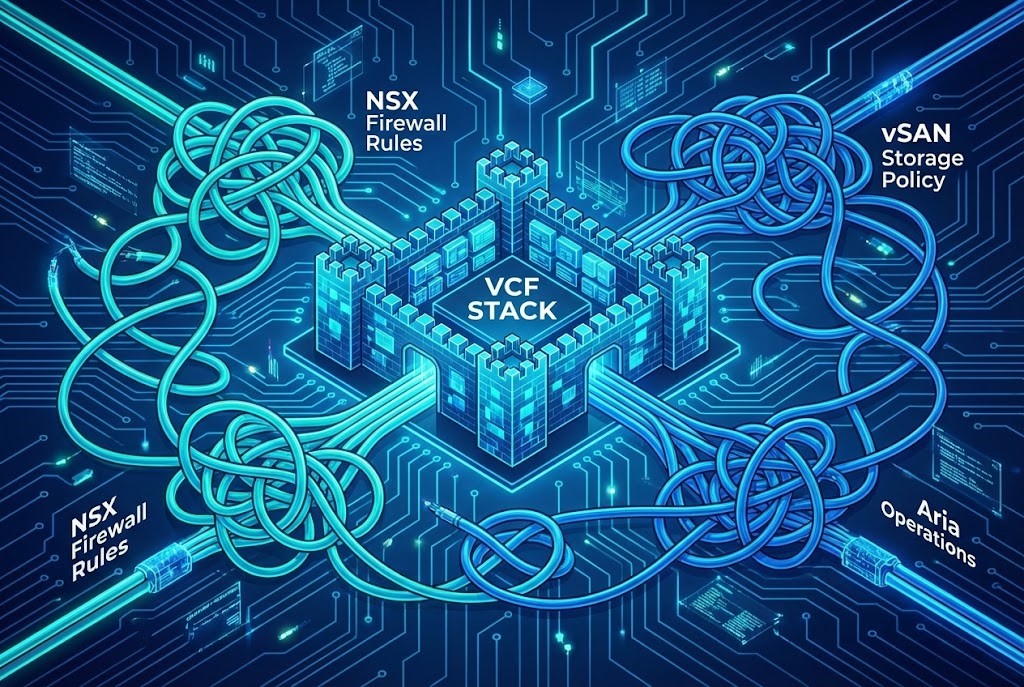
Figure 2: The Dependency Web. Why “just migrating VMs” fails without mapping the network and storage layer dependencies first.
Before you commit to a manual NSX policy translation, validate whether your rule set can be automated. The NSX-T to Flow Translator maps VMware NSX-T firewall logic to Nutanix Flow instantly — eliminating the manual translation bottleneck that stalls most migrations before they start.
War Story: The Bluff That Backfired
Observation from the field, Q4 2025.
A CIO at a mid-sized logistics firm (2,500 VMs) decided to play hardball. During the renewal call, he slammed his fist on the table. “If you don’t match our 2023 pricing, we are moving to Nutanix next quarter!”
The Broadcom rep didn’t blink. He opened his laptop. “Sir, you have 4 PB of storage on VMFS-6, deeply integrated NSX-T firewall rules, and zero alternative hardware in your data center. It will take you 18 months to migrate. Shall we proceed with the quote?”
The CIO signed. The increase was 140%.
For a deeper breakdown of the operational model differences between VMware and Nutanix — and which failure mode your organization fears more — see Nutanix vs VMware: Availability vs Authority.
Operational Recommendations: De-Risking the Stack
You can’t move everything at once. Migration fatigue is real. Instead, use a strategy of Containment and Erosion.
1. Containment (Stop the Bleeding)
Draw a line in the sand. No net-new workloads on VMware. Spin up a secondary cluster and direct all new requests there.
- Action: Start mastering Nutanix Day-2 Operations immediately. The console looks different, but the primitives are the same.
- Why: If you train the team now, the transition becomes a technical task rather than a cultural battle. The Migration Strategy Learning Path covers the full structured progression — from initial readiness through Day-2 operational handover.
Before standing up the secondary cluster, run the VMware Migration Readiness Assessment to validate licensing exposure, workload dependencies, NSX entanglement, and hardware readiness — so the containment boundary is drawn in the right place from day one.
2. The Storage Wedge
If you are locked into VCF, evaluate your storage strategy carefully:
- If staying: Aggressively move to vSAN to get value out of the license you’re forced to buy.
- If leaving: Use the refresh cycle of your storage array as the trigger event. Don’t renew the SAN — buy HCI nodes instead
Field Note — The 40TB Phantom: We saw a migration stall for three weeks because 30% of storage capacity was consumed by 2-year-old snapshots nobody knew existed. Audit your snapshot debt before you size your new hardware. The HCI Migration Advisor surfaces this automatically during the pre-flight check.
For a performance-level comparison of what you’re migrating to, see the Nutanix AHV vs vSAN 8 ESA Saturation Benchmark — which shows exactly how the two platforms behave differently under write saturation, not just at peak IOPS.
3. Visibility is Survival
If you are maintaining a hybrid environment — legacy storage arrays alongside new HCI nodes — you need unified visibility across both stacks. Flying blind on performance while running two distinct storage architectures is how ghost latency problems stay hidden for months.
For teams running Pure Storage arrays alongside Nutanix clusters, the HCI Architecture Learning Path covers the cross-platform observability patterns required for hybrid Day-2 operations.
Architect’s Verdict
Broadcom isn’t the villain — they are a business optimizing a mature asset. You must be an architect optimizing yours.
The Broadcom VMware migration decision isn’t binary. Containment and erosion is a legitimate strategy — freeze new workloads, run parallel infrastructure, migrate on your timeline, not theirs. But “waiting for the right time” without a concrete exit date is how organizations end up signing 140% renewals because the Broadcom rep knew their dependency map better than they did.
Model the three-year cost before the renewal call. The full sequence — from licensing audit through hypervisor cutover through Day-2 stabilization — is mapped in the Modern Virtualization Learning Path.
Additional Resources
For deeper technical context and financial modeling on the concepts covered in this guide:
View 5 more resources
Editorial Integrity & Security Protocol
This technical deep-dive adheres to the Rack2Cloud Deterministic Integrity Standard. All benchmarks and security audits are derived from zero-trust validation protocols within our isolated lab environments. No vendor influence.

R.M.
Senior Solutions Architect with 25+ years of experience in HCI, cloud strategy, and data resilience. As the lead behind Rack2Cloud, I focus on lab-verified guidance for complex enterprise transitions. View Credentials →
Get the Playbooks Vendors Won’t Publish
Choose the architecture problems you care about. Get field-tested playbooks and frameworks delivered to your inbox.
- > AI Infrastructure & Inference Economics
- > Cloud Strategy & Hidden Cost Models
- > Virtualization & Deterministic Migration
- > Kubernetes, IaC & Modern Infrastructure
- > Data Protection & Recovery Engineering
Zero spam. Includes The Dispatch weekly drop.
Need Architectural Guidance?
Independent review before major infrastructure decisions.
- > Validate assumptions
- > Identify hidden dependencies
- > Quantify migration risk
- > Challenge vendor narratives
Triage · Advisory · Fractional · Direct Hire