

-
-
AI Infrastructure | Cloud Architecture | Kubernetes | Modern Infrastructure | Virtualization Architecture
The Control Plane Shift: Every Infrastructure Decision Now Looks the Same
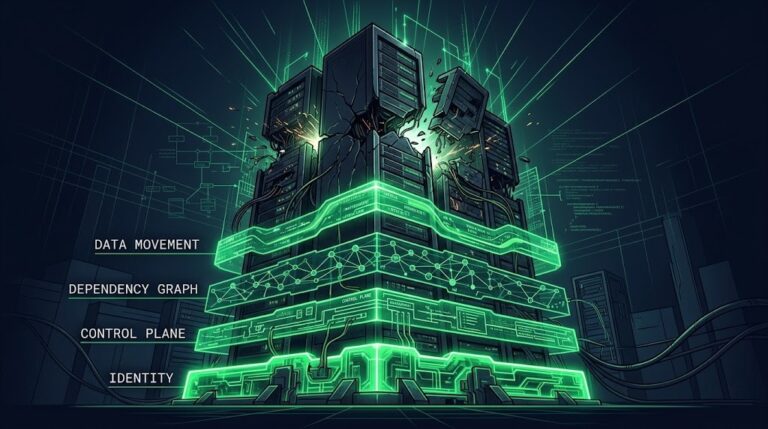
The control plane shift is the most important infrastructure concept of 2026 — and most teams are experiencing it three or four times simultaneously without recognizing it as the same decision each time. Your VMware renewal lands on the desk. The number is larger than last year. You open a spreadsheet and start modeling Nutanix….
-
Rubrik vs Cohesity: Which Architecture Holds Under Ransomware Pressure?
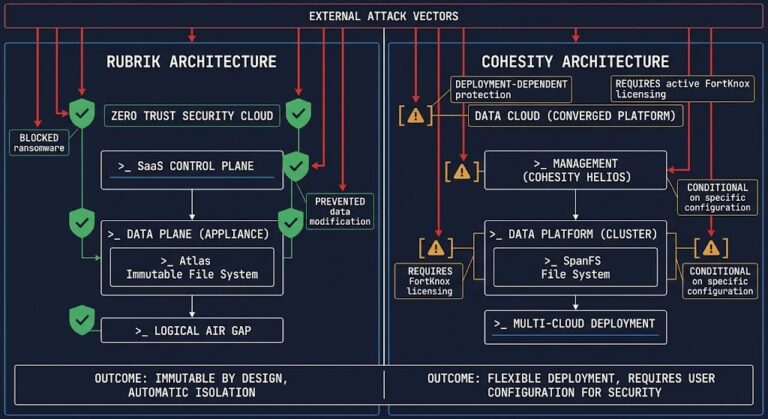
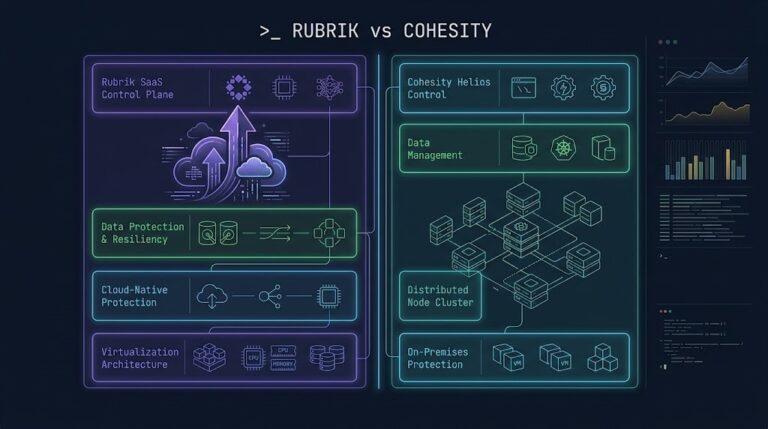
Rubrik vs Cohesity ransomware protection looks identical on paper — until you simulate an attack. The marketing story for both Rubrik and Cohesity reads well: immutable snapshots, air-gapped vaults, threat detection, rapid recovery. On paper the gap between them is marginal. Under attack pressure, the architectural differences become operational consequences. This isn’t a feature comparison….
-
Velero Going CNCF Isn’t About Backup. It’s About Control.
The Velero CNCF backup announcement at KubeCon EU 2026 in Amsterdam was framed as an open source governance story. Broadcom had contributed Velero — its Kubernetes-native backup, restore, and migration tool — to the CNCF Sandbox, where it was accepted by the CNCF Technical Oversight Committee. The Sandbox application was originally filed in February 2026….
-
Veeam vs Commvault: How Enterprise Backup Platforms Fail Differently
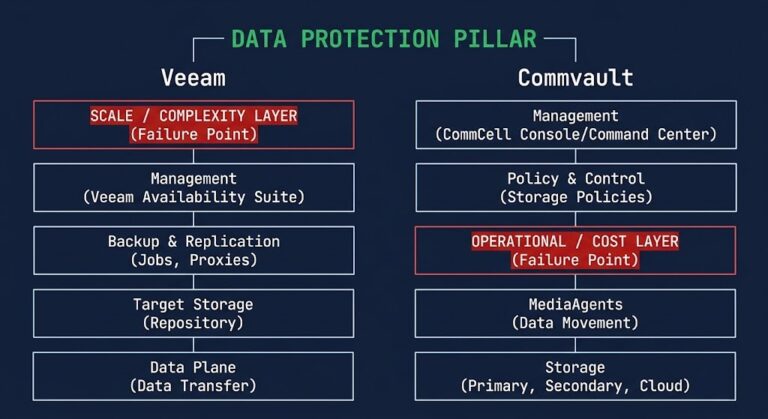
Veeam vs Commvault is not a feature comparison. I’ve seen both of these platforms fail in production — not in the way vendor docs describe, but in the way systems actually break at scale, under pressure, at 2 AM when recovery is the only thing that matters. Veeam and Commvault don’t fail the same way….
-
Immutable Backup: Why Object Lock Isn’t Enough
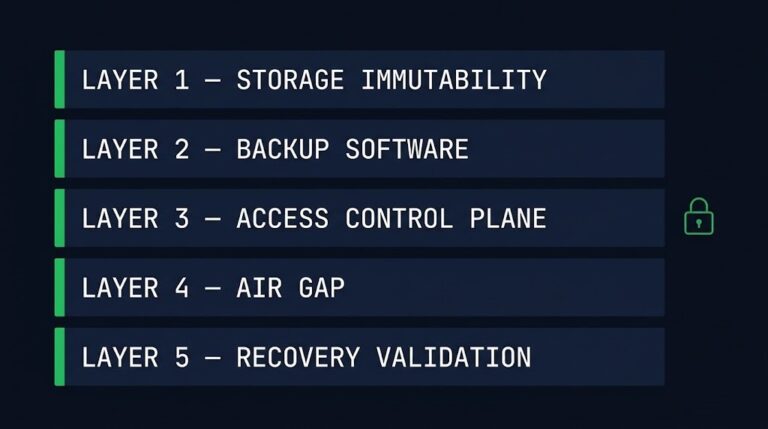
Object lock backup is the standard answer to ransomware resilience. Enable S3 Object Lock, set a retention policy, check the compliance box. Most organizations stop there — and most organizations are wrong. Object Lock prevents deletion. It does not prevent compromise. True immutability isn’t a storage feature. It’s a system property, and it has to…
-
Your Backup Costs Aren’t What You Think: Calculating the True Cost Beyond Storage
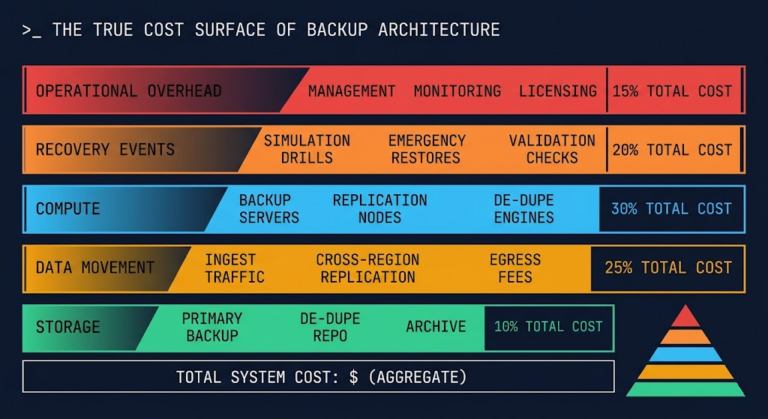
You didn’t underestimate backup storage. You underestimated your true backup costs. Storage costs are what vendors quote. GB/month is a number that fits in a spreadsheet, survives a budget review, and closes a procurement conversation. It is also the smallest component of what backup actually costs in production — and in most architectures, not the…
-
Rubrik vs Cohesity: Which Backup Architecture Actually Scales?
Most Rubrik vs Cohesity comparisons are useless. Not because the features are wrong — but because neither Rubrik nor Cohesity fails in a feature checklist. They fail when your environment scales in ways the architecture didn’t expect. The question isn’t which platform has better deduplication ratios or a cleaner UI. The question is which architectural…
-
Designing Backup Systems for an Adversary That Knows Your Playbook
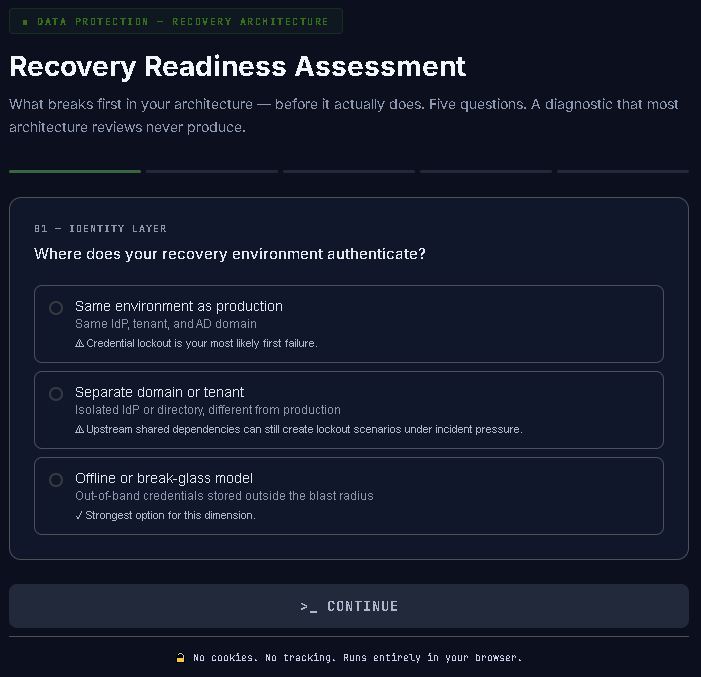
Why traditional backup strategies fail against modern ransomware — and how to design recovery systems that assume the attacker already understands your environment. Ransomware backup architecture fails the moment you design it for accidental failure instead of adversarial intent. Assume the attacker has your runbooks. Not as a theoretical exercise. As an operational reality. Modern…
-
Database Backup Fidelity: Why Crash-Consistent Is Not a Database Backup
App-consistent database backup is the difference between a recoverable database and a recovery event that fails under pressure. Backup policies are designed by architects. They are discovered by engineers during recovery. That gap — between what was configured and what actually works — is where database recovery failures live. Not in the backup tool. Not…