

Backup Placement Is Not Production Placement
A residency review that stops at the production dataset has not placed the backups, replicas or archive copies. Backup placement is its own decision: inventory it, name an owner, verify it.
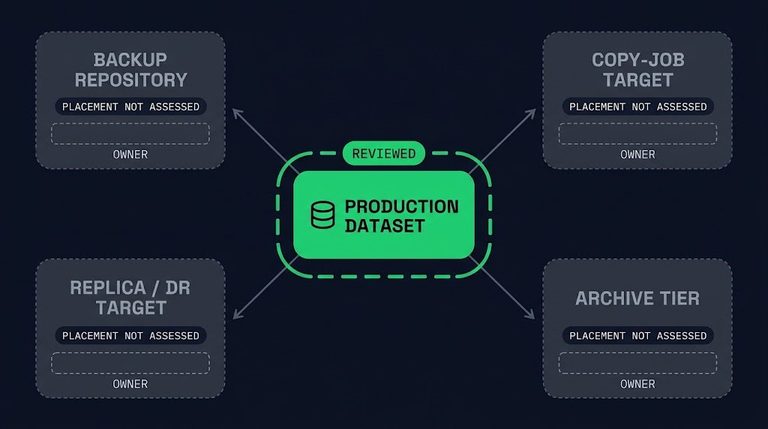
A residency review that stops at the production dataset has not placed the backups, replicas or archive copies. Backup placement is its own decision: inventory it, name an owner, verify it.
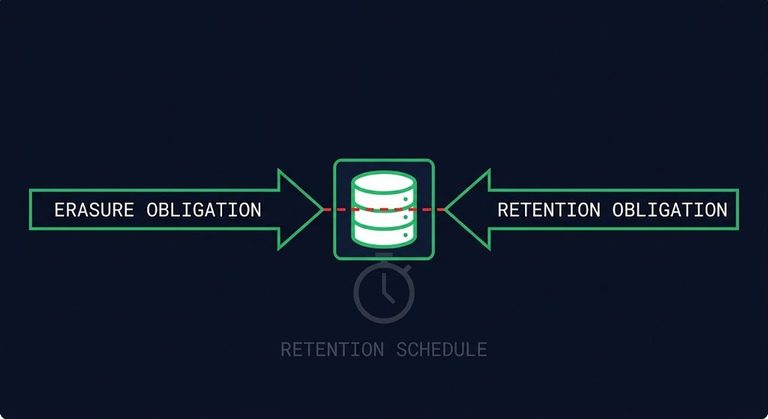
Retention conflict architecture is what happens when a backup platform designed to execute a single retention schedule becomes the enforcement point for legal obligations that disagree with each other about the same record. A GDPR erasure request lands on data under active litigation hold. A PCI-mandated retention window overlaps a customer’s Article 17 request. HIPAA’s…
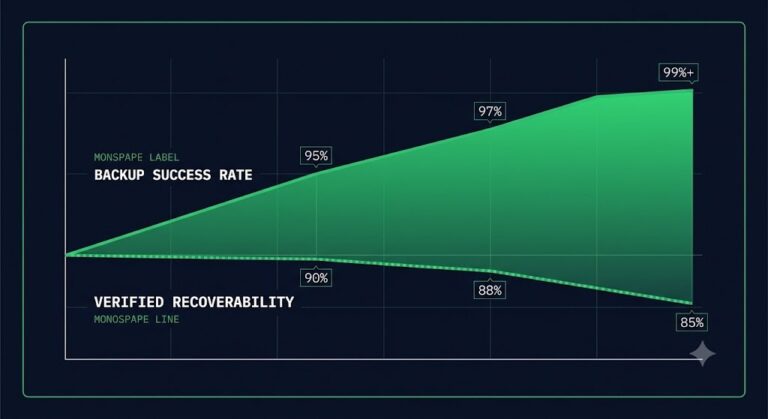
Backup success rate is a dangerous metric because it measures job completion, not recoverability. It persists for a simple reason: backup success is observable every day, and recoverability is usually only observable during testing or failure. One produces a number every morning. The other produces a number only when something has already gone wrong. Most…

Restore design failure is not a technology problem — it is an architecture problem, and most organizations discover this at the worst possible moment. 02:14 AM. The restore completes successfully. 03:07 AM. Nobody can log in. 04:11 AM. DNS is still pointing at the failed environment. 05:03 AM. Certificates are missing. 06:22 AM. The application…
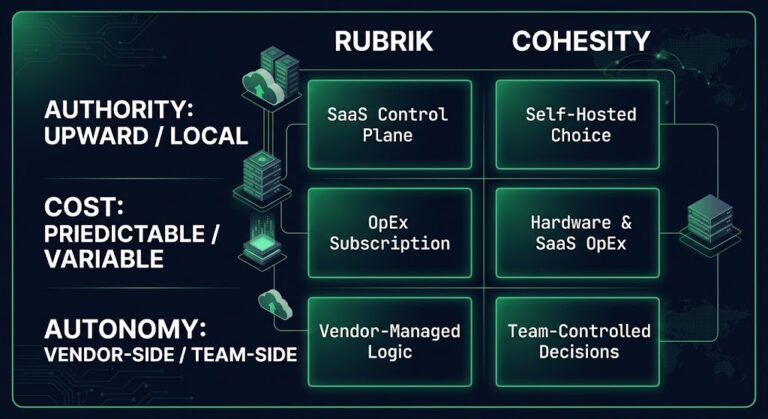
Most enterprise backup evaluations do not stall because one platform fails technically. The rubrik vs cohesity decision stalls because both pass — and then the evaluation committee realizes it has been asking the wrong question. Both platforms cleared restore testing. Both cleared immutability review. Both satisfy ransomware posture requirements. Both have credible cloud support stories….
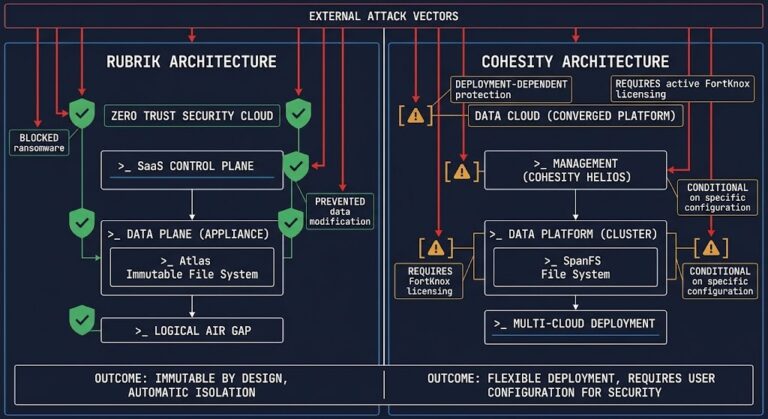
Rubrik vs Cohesity ransomware protection looks identical on paper — until you simulate an attack. The marketing story for both Rubrik and Cohesity reads well: immutable snapshots, air-gapped vaults, threat detection, rapid recovery. On paper the gap between them is marginal. Under attack pressure, the architectural differences become operational consequences. This isn’t a feature comparison….
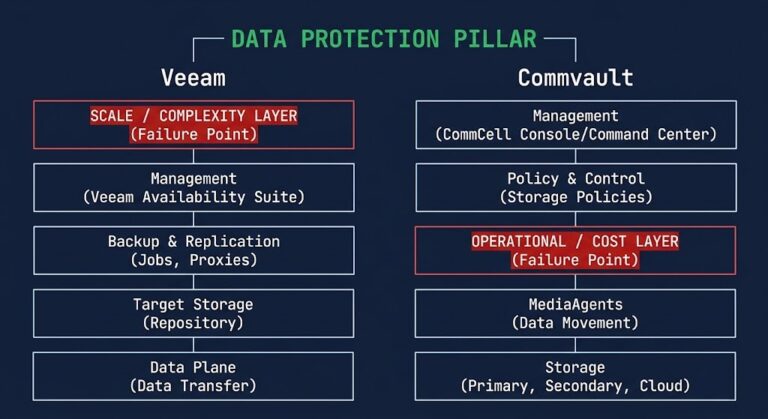
Veeam vs Commvault is not a feature comparison. I’ve seen both of these platforms fail in production — not in the way vendor docs describe, but in the way systems actually break at scale, under pressure, at 2 AM when recovery is the only thing that matters. Veeam and Commvault don’t fail the same way….