

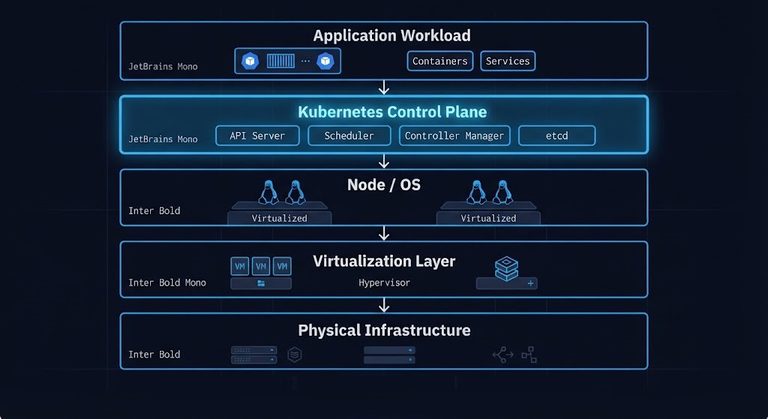
Kubernetes Did Not Replace Virtual Machines — It Changed Their Role
Kubernetes virtual machines still coexist by design in many production architectures — not because those environments are behind, but because Kubernetes was never built…
READ MORE →
ENGINEERING NOTES FROM THE COMPLEXITY GAP.
The journey from legacy infrastructure to modern cloud-native platforms is often obstructed by marketing-driven abstraction and tool-centric noise. Most technical journals focus on the "Day-1" installation — the easy path. Rack2Cloud documents the Day-2 production reality. We analyze how systems actually behave under load, at the boundaries of integration, and within the constraints of sovereign requirements.
Our field notes serve as a deterministic guide for the architect navigating the complexity gap. We prioritize the physics of data and the logic of high availability over vendor checklists.
"In production, complexity is the default state; architecture is the only defense."
Kubernetes virtual machines still coexist by design in many production architectures — not because those environments are behind, but because Kubernetes was never built…
READ MORE →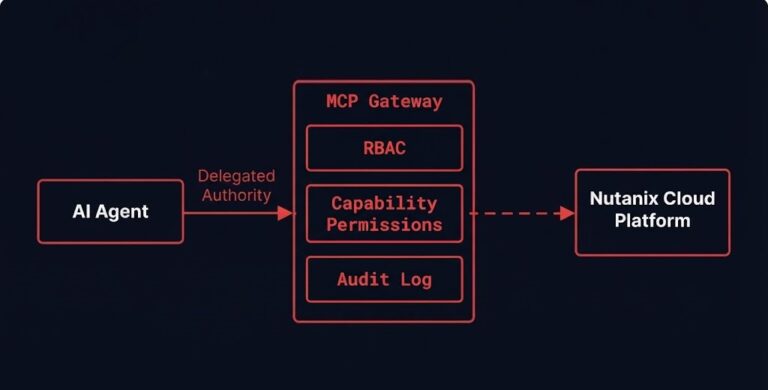
Nutanix’s MCP gateway is one of the clearest examples yet of enterprise AI infrastructure adding a real governance layer around agent access. The problem…
READ MORE →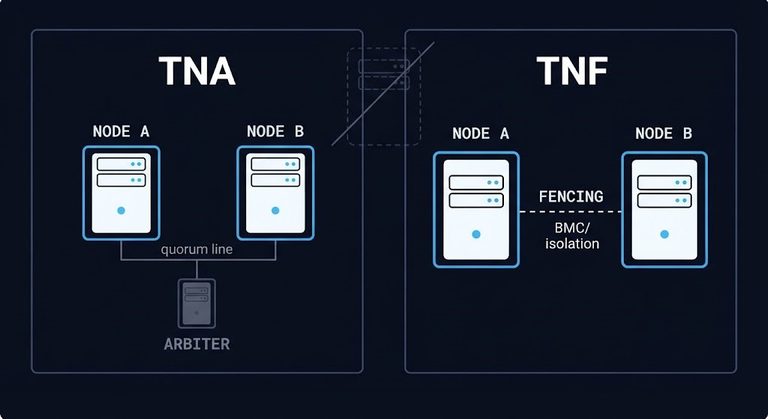
Two-node edge deployment no longer means what it meant two years ago. Red Hat now has two production-grade ways to run an OpenShift edge…
READ MORE →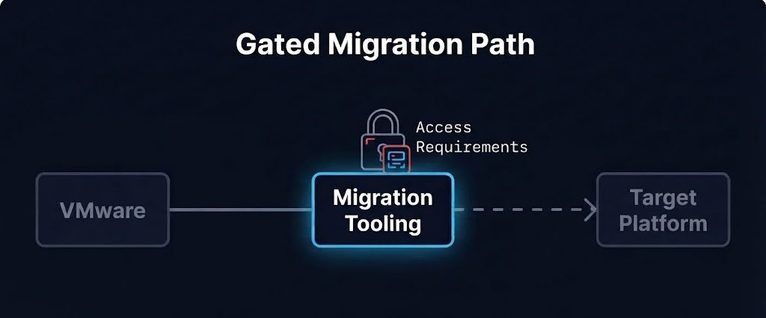
A VMware exit plan usually treats the migration tooling as a given — something you download, install, and use, not something you have to…
READ MORE →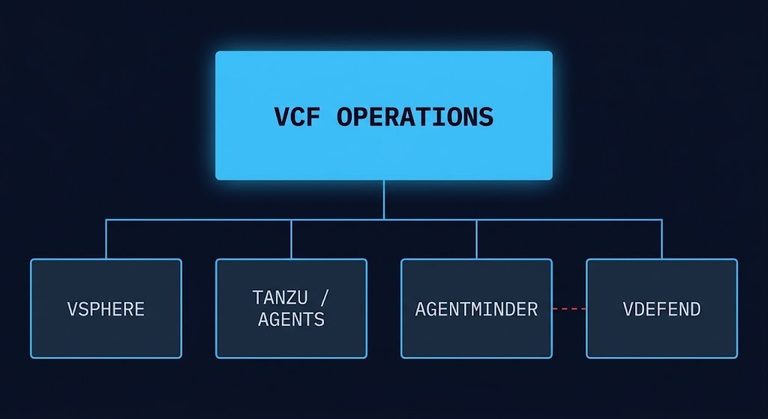
Authority relay is what VMware’s new Private AI Cloud architecture actually produces once a real incident crosses more than one of its layers —…
READ MORE →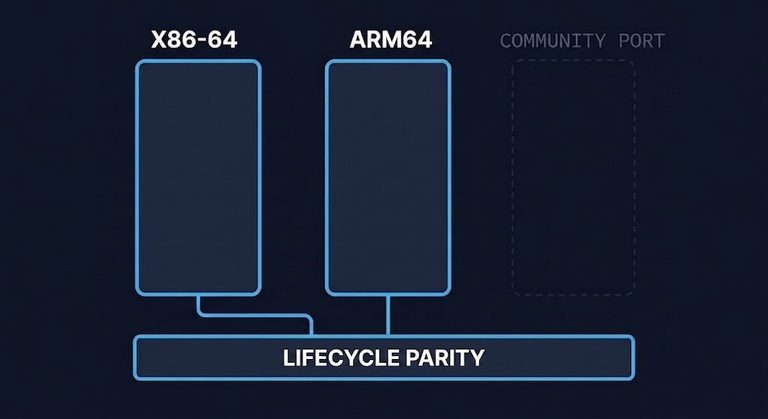
Lifecycle parity is the detail buried inside Proxmox VE 9.2’s release notes that matters more than the feature itself: Proxmox now ships an officially…
READ MORE →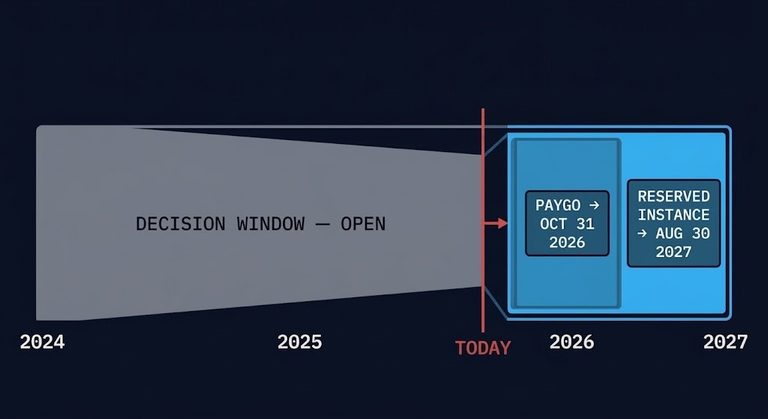
VMware deferral was a defensible posture for organizations that chose it — for the better part of two years, right up until this week,…
READ MORE →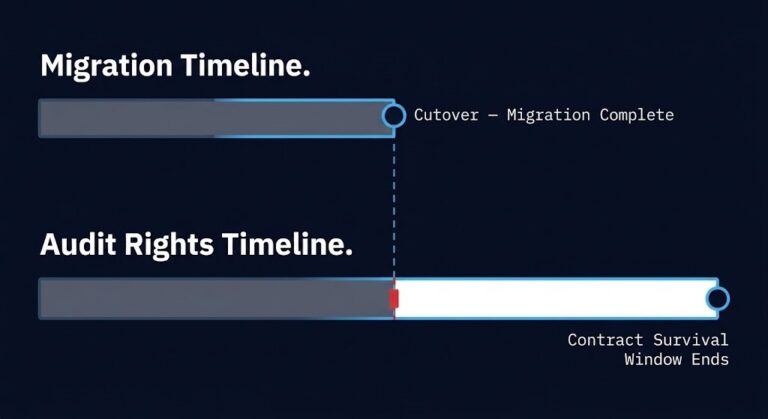
Audit rights don’t expire when a vendor relationship does. Most infrastructure teams don’t find that out until a contract clause outlives the migration project…
READ MORE →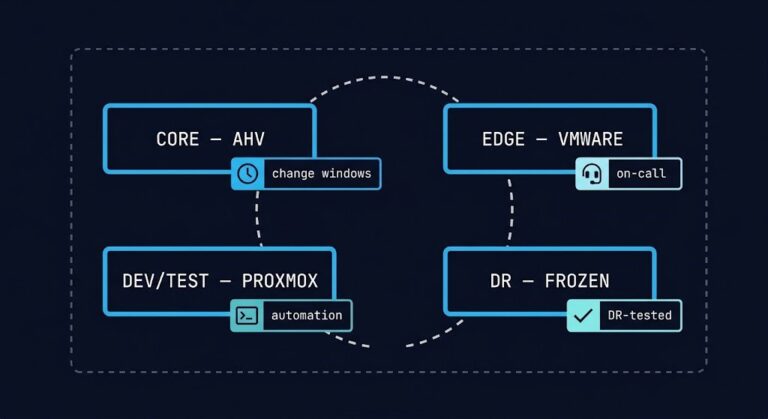
Virtualization sprawl isn’t caused by a team failing to own its platform. It’s caused by every team owning its platform correctly, on its own…
READ MORE →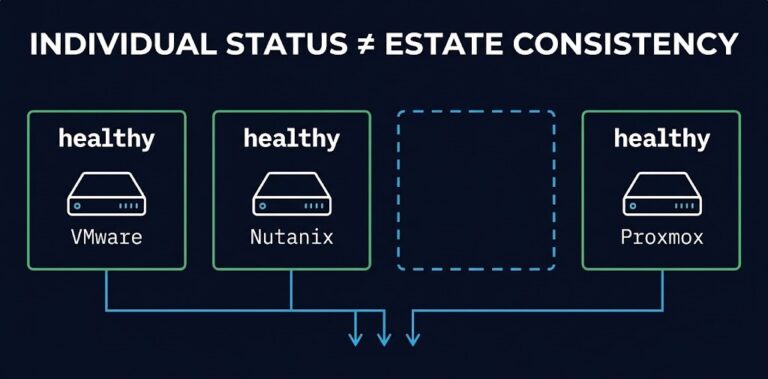
Operational parity across a multi-hypervisor estate is now harder to prove than platform competence ever was. Most enterprises can already demonstrate platform competence. Very…
READ MORE →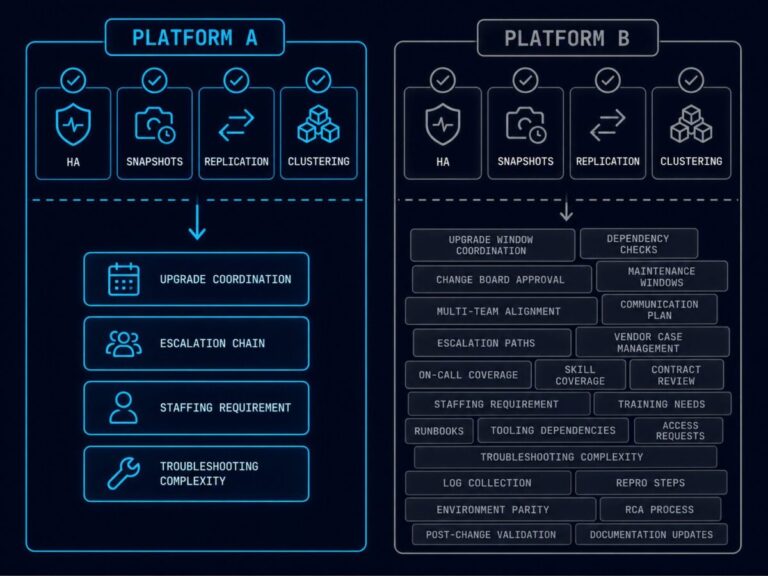
Operational simplicity is becoming the deciding factor in virtualization platform selection, not the feature checklist that used to settle the argument. For most of…
READ MORE →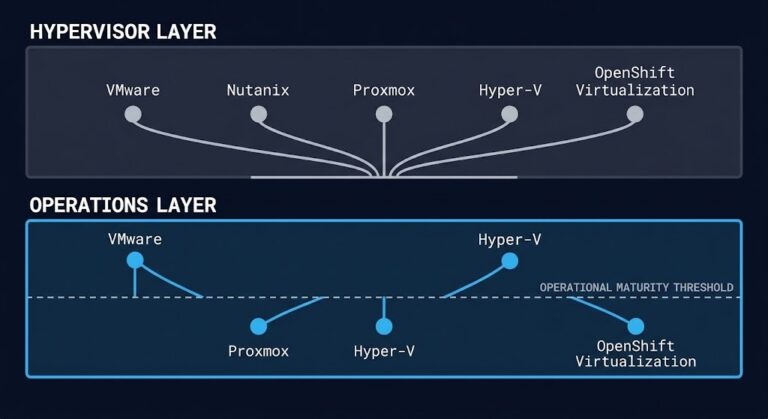
Hypervisor commoditization is changing how organizations evaluate virtualization platforms, but it is not reducing the operational complexity required to run them successfully. Twenty years…
READ MORE →