
-
-
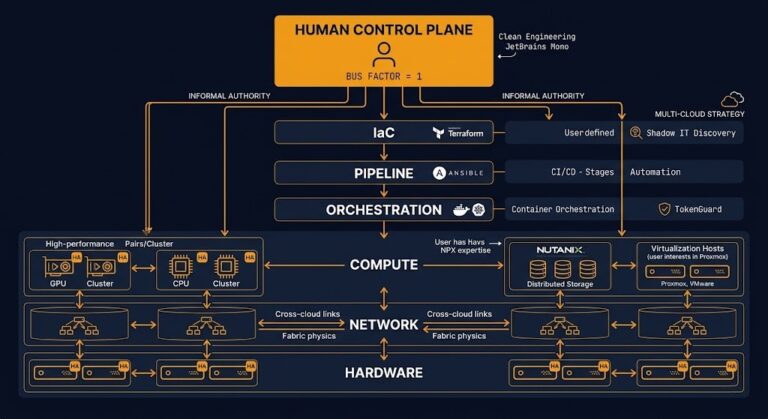
The Infrastructure Team Is the Real Single Point of Failure
Every serious infrastructure investment goes into redundant hardware, distributed systems, and multi-region failover. Almost none goes into the one dependency that sits above all of it — the small number of engineers whose departure, unavailability, or burnout makes the environment unrecoverable. The infrastructure bus factor is the organizational single point of failure that no architecture…
-
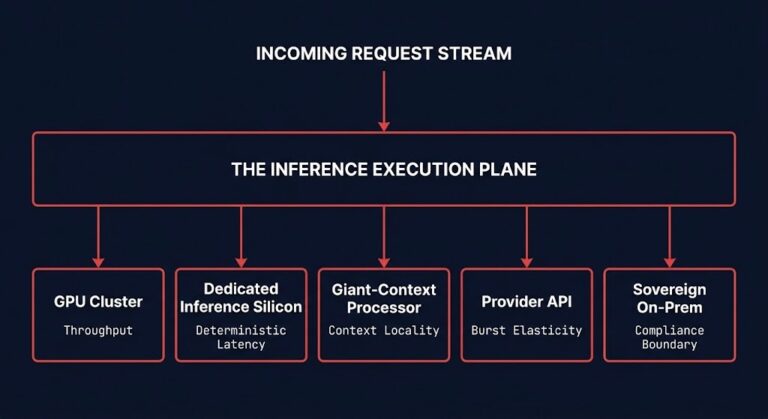
Inference Routing Is Becoming an Infrastructure Placement Problem
The request arrives. The model answers. For most teams, everything in between is invisible — a gateway rule, a load balancer entry, maybe a classifier someone wrote three months ago. That worked when inference meant one cluster and one model family. The execution environment was fixed, so the routing decision was trivial. That assumption is…
-
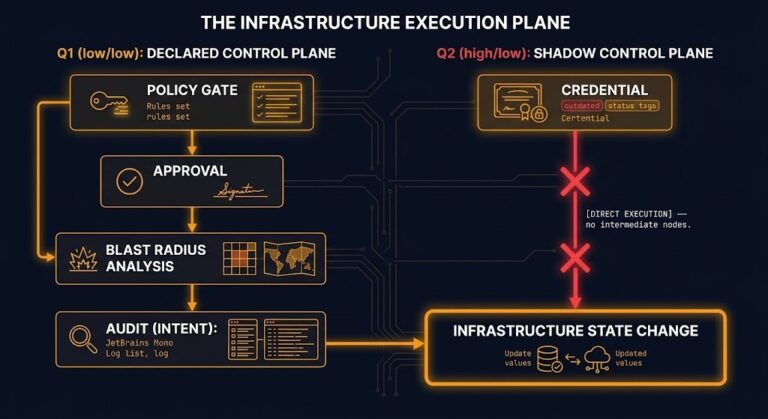
The Console Is The Shadow Control Plane
Most organizations believe they have one infrastructure control plane. They have two. The declared control plane has policy gates, approval workflows, branch protections, and an audit trail that connects change to intent. The operational control plane has a browser and a credential. Both mutate production state. Only one of them is governed. That gap —…
-
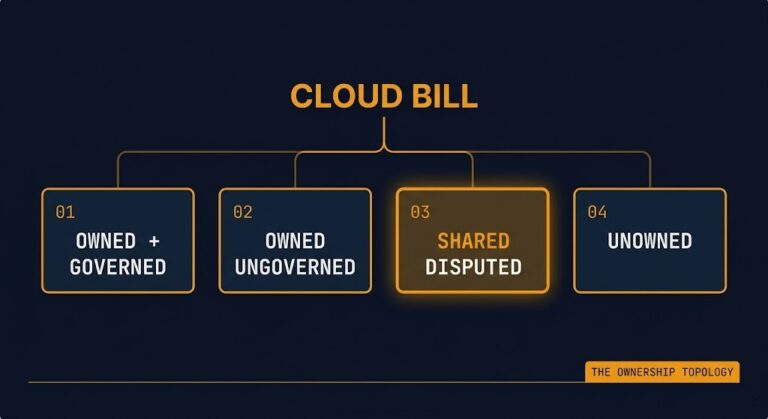
The Cloud Bill Is Your Real Org Chart
The meeting starts the same way every quarter. Someone pulls up the cloud bill. The number is higher than last quarter. Six teams are in the room, and somewhere in the line items — usually buried between data transfer charges and a cluster of snapshot storage entries — there is a resource nobody can explain….
-
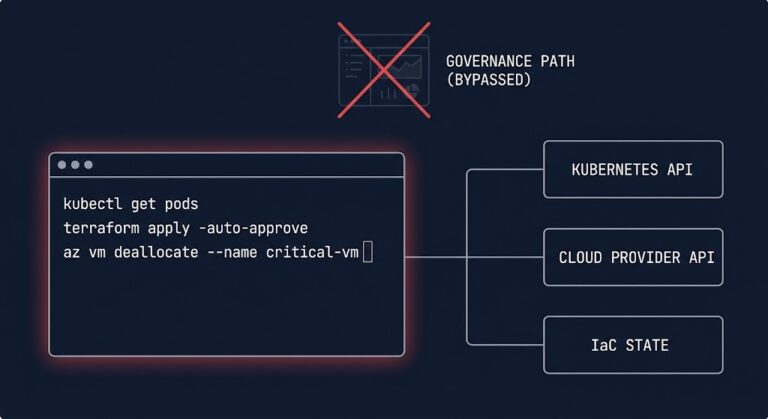
The CLI Was Always the Control Plane. Now It’s Being Handed to Machines.
The CLI control plane is the most powerful — and least governed — layer in most enterprise infrastructure stacks. Most infrastructure changes don’t happen in dashboards. They happen in terminals. The UI is where you observe. The CLI is where you commit. A console shows you a representation of state. A CLI invocation changes it…