

Migration Path Authorization: Who Approves the VDDK-Free Route?
DirectPath removes the VDDK requirement for ESXi-to-AHV migrations, not the need for privileged vCenter access. Five parts of a record decide who approves the route.
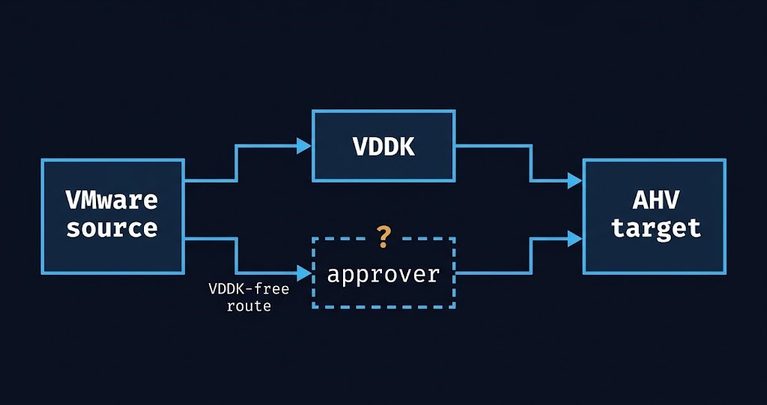
DirectPath removes the VDDK requirement for ESXi-to-AHV migrations, not the need for privileged vCenter access. Five parts of a record decide who approves the route.
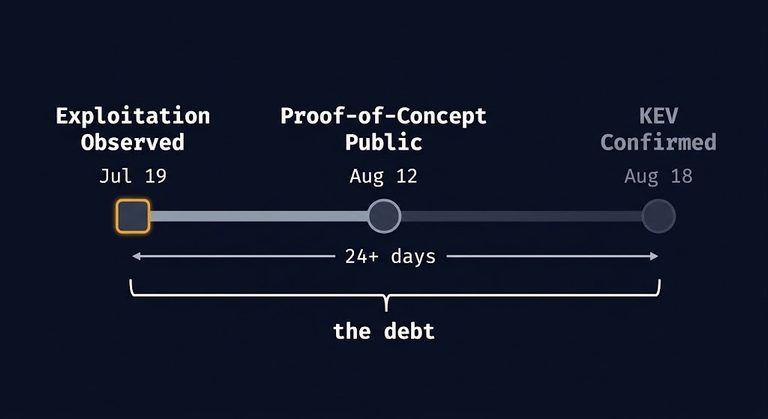
Patch visibility debt is what accumulates when remediation priority depends on confirmation signals that arrive later than attacker activity does — and the SharePoint Server vulnerability cluster CISA has been updating since April is the clearest demonstration of it this year. On July 19, something began exploiting an unauthenticated SharePoint authentication-bypass flaw. On August 12,…
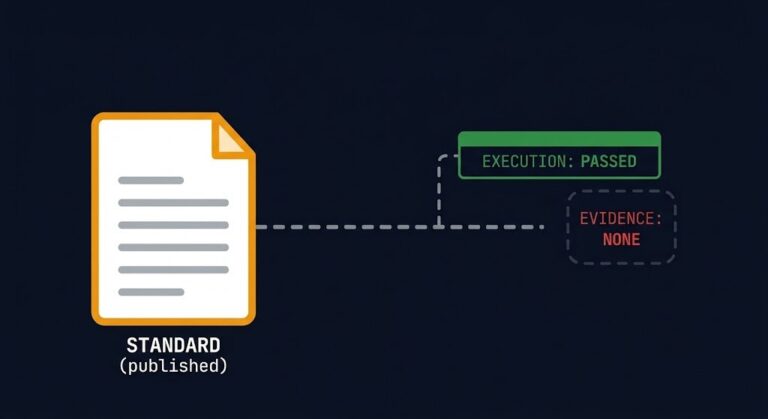
Documentation debt isn’t a writing problem — it’s what’s left when a standard exists on paper but nobody can prove it still matches deployed reality. Six months after rollout, a security review asks a simple question: is the naming convention in the wiki still what’s actually running in production? Nobody can answer with evidence. Everybody…
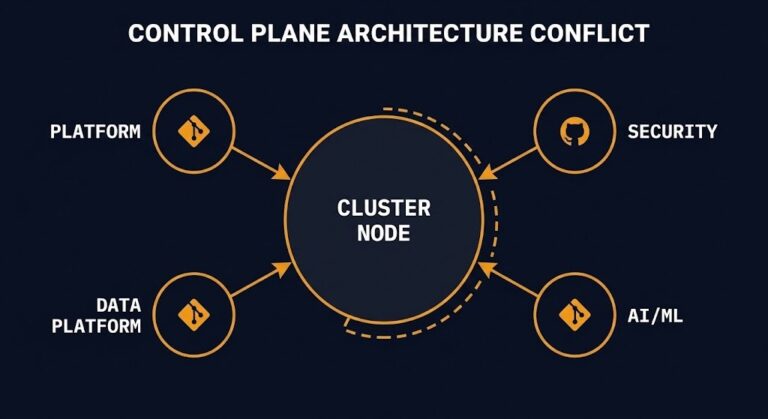
GitOps governance broke down for a reason nobody predicted at the start: not because GitOps failed, but because it succeeded so completely that every team adopted it on its own terms. Platform engineering rolled it out first, as a single reconciliation loop with one Git repository as the source of truth for the cluster. Then…
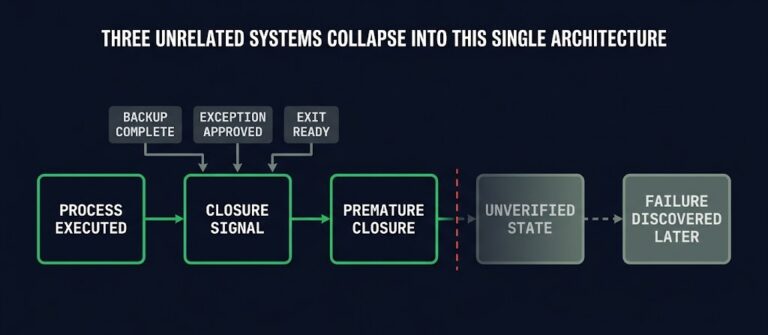
Premature closure is the pattern behind the failures your monitoring never saw coming. It happens when a system declares success because a process executed, even though the state the process was meant to create was never verified. The dashboard goes green. The ticket closes. The exception gets approved. None of that means the thing you…
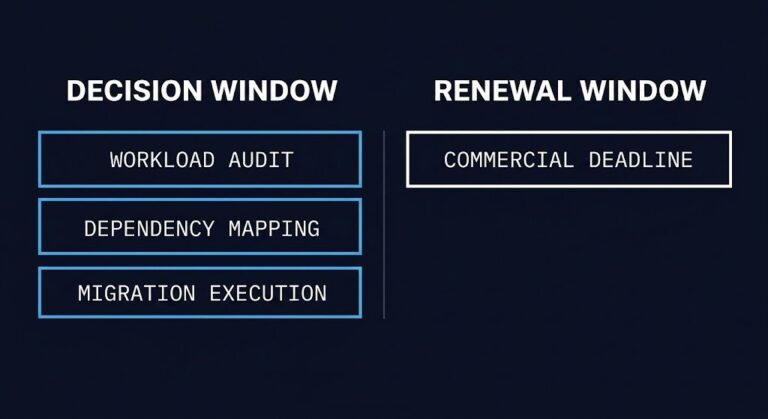
The vmware renewal decision most enterprise architects are facing in 2026 was not made at the renewal table. Most organizations approaching renewal aren’t choosing between renewing and migrating — they’re choosing between completing a migration they already started and accepting a price structure that validates the exit they delayed. The commercial deadline arrived. The architectural…
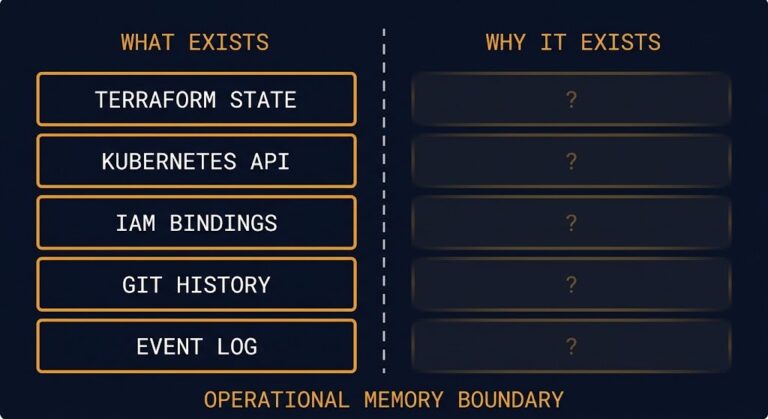
Infrastructure can reconstruct its configuration state. It cannot reconstruct why that state exists. This is Framework #129 — the Operational Memory Boundary — and the series closer for the Authority Layer.
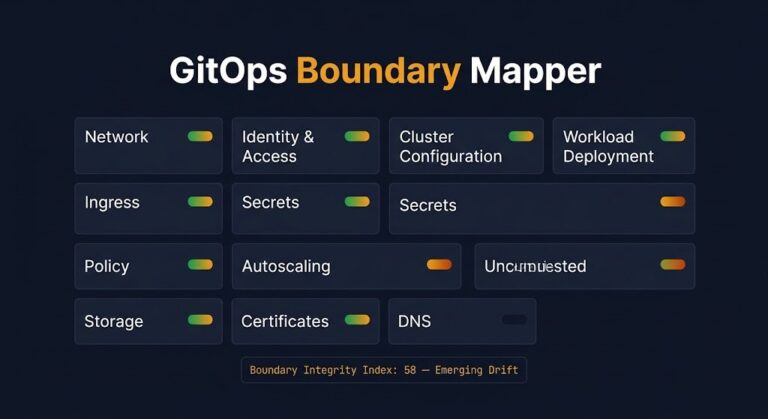
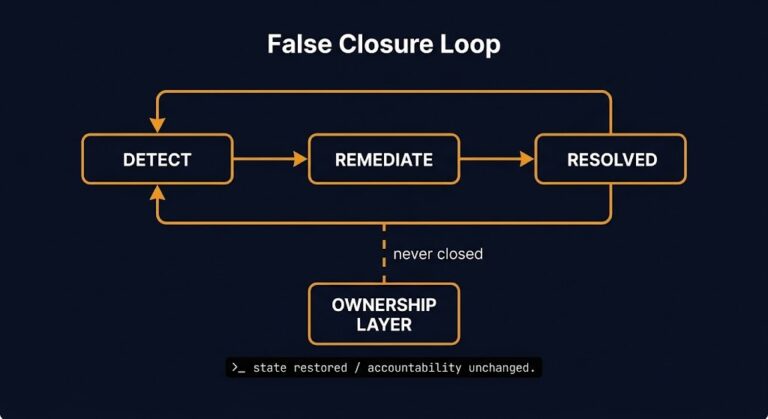
Configuration drift is treated as a visibility problem solved by tooling. It isn’t. Configuration drift ownership is the real breakdown — accountability over declared infrastructure state — and no detection pipeline closes that gap. The industry built a full tooling category around drift: scanners, policy-as-code engines, GitOps reconciliation loops, IaC state management. Engineers get alerted…
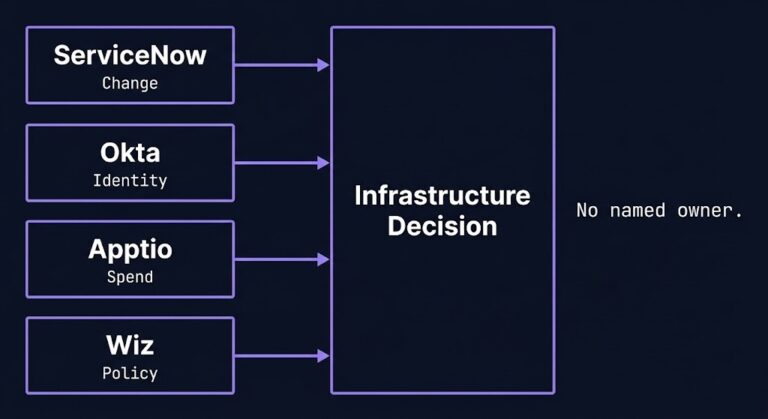
Most organizations do not have a SaaS governance problem. They have a SaaS authority problem — and the distinction matters because governance problems have vendors selling solutions to them. Authority problems do not surface until an audit, a contract renewal, or an incident reveals that a set of workflow tools your infrastructure team approved individually…