-
-
Your Ransomware Recovery Plan Has a Recoverability Gap
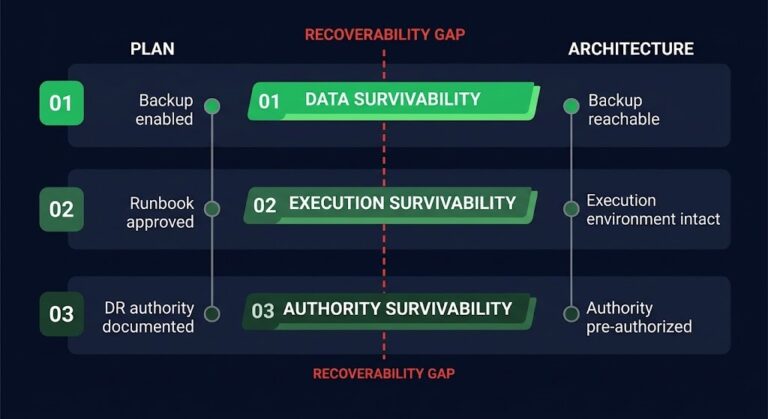
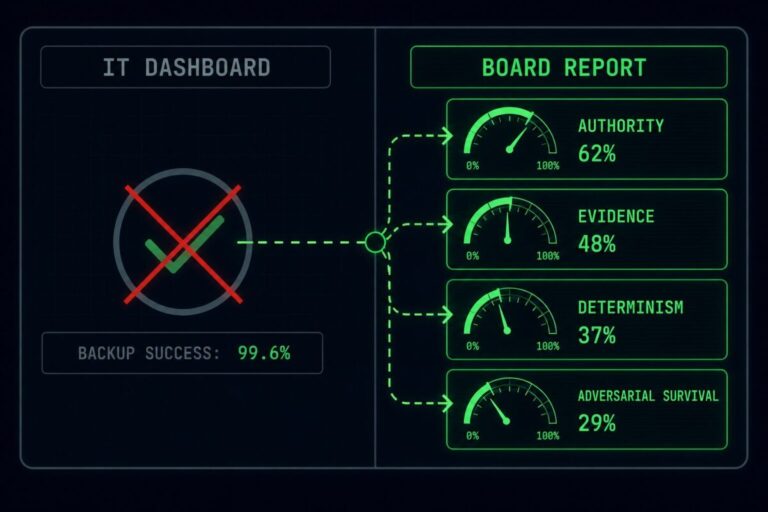
The recoverability gap is the structural distance between what your recovery plan assumes and what your infrastructure can actually deliver under failure conditions. Most organizations don’t discover it during planning. They discover it on day three of an incident. The ransomware tabletop passed. The backup dashboard was green. The recovery runbook was approved. Day three…
-
Ransomware Recovery Time Is an Architecture Problem, Not a Backup Problem
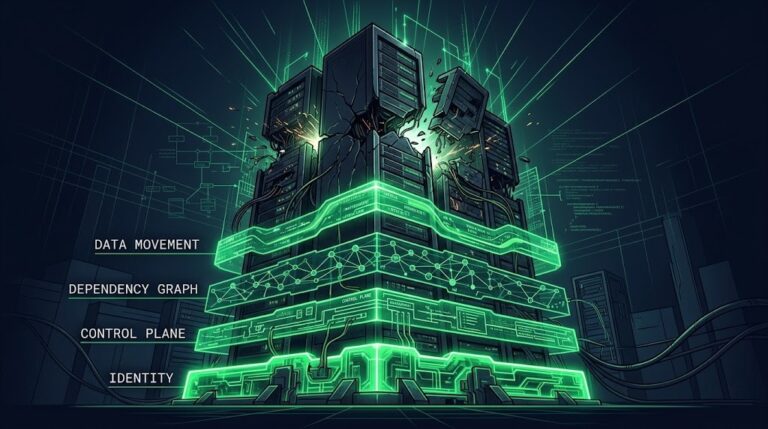
Ransomware recovery architecture is where most enterprise resilience programs break down — not because organizations lack backups, but because they never designed systems that could be rebuilt under pressure. Most organizations have backups. Most have runbooks. Many have incident response plans on file and backup automation running on schedule. And yet, when ransomware hits, recovery…
-
-
Rubrik vs Cohesity: Which Architecture Holds Under Ransomware Pressure?
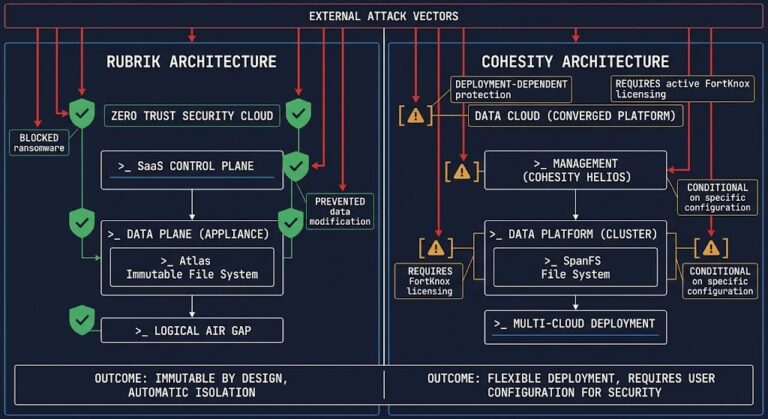
Rubrik vs Cohesity ransomware protection looks identical on paper — until you simulate an attack. The marketing story for both Rubrik and Cohesity reads well: immutable snapshots, air-gapped vaults, threat detection, rapid recovery. On paper the gap between them is marginal. Under attack pressure, the architectural differences become operational consequences. This isn’t a feature comparison….
-
Designing Backup Systems for an Adversary That Knows Your Playbook
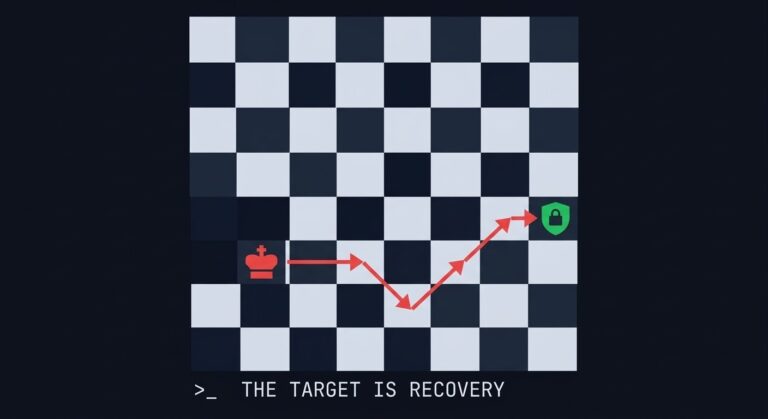
Why traditional backup strategies fail against modern ransomware — and how to design recovery systems that assume the attacker already understands your environment. Ransomware backup architecture fails the moment you design it for accidental failure instead of adversarial intent. Assume the attacker has your runbooks. Not as a theoretical exercise. As an operational reality. Modern…
-
Backups Are Compromised First: Inside Cohesity FortKnox and the Rise of Cyber Vaulting
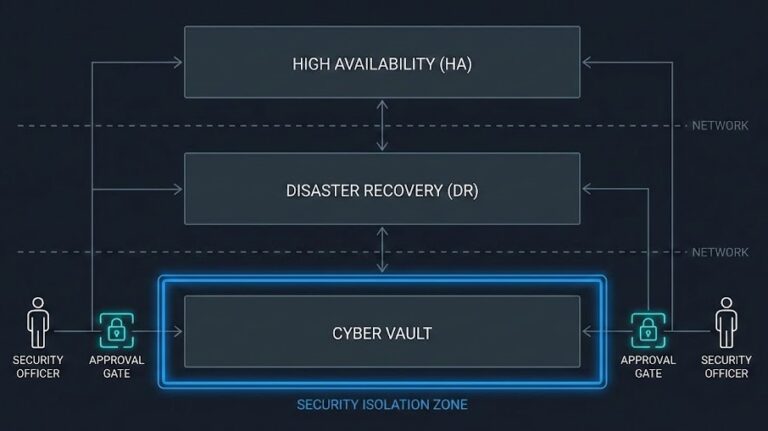
Backups: The First Thing Hackers Go After For years, cyber vault backup strategy felt like an engineering debate. We obsessed over dedupe ratios, throughput, and how fast we could recover—all built on one big assumption: when production failed, backups would still be safe. Ransomware shattered that idea. Hackers don’t treat backups as an afterthought anymore….
-
The Backup Rehydration Bottleneck: Why Your Deduplication Engine Is Killing Your RTO
Data protection is the only discipline in IT where you can do everything right and still fail spectacularly during a disaster. The backup rehydration bottleneck is a perfect example — you can check every box, follow every “best practice,” and still end up with nothing when things go sideways. You hit your backup windows. You…
-
3-2-1-1-0 Backup Rule: Modernizing Protocols for 2026 Cyber-Resilience
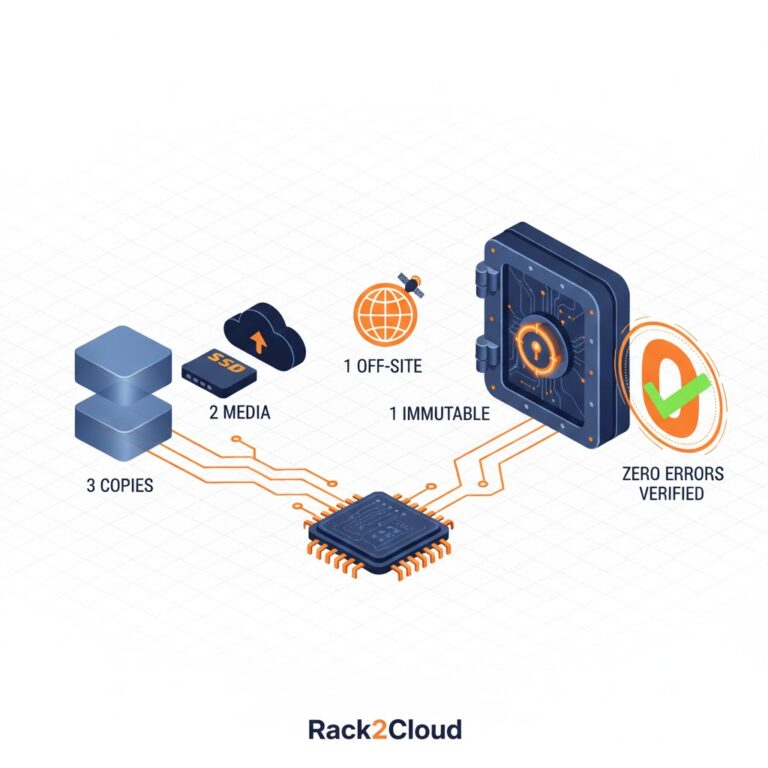
The 3-2-1-1-0 backup rule represents the architecture shift from legacy redundancy to adversarial resilience. The traditional 3-2-1 strategy was designed to solve for hardware failure — the 3-2-1-1-0 extension is engineered to solve for adversarial intent. In a landscape where 94% of ransomware attacks now specifically target the backup server, a “copy” is no longer…
-