
-
-
Sovereign Infrastructure Strategy: When Hybrid Cloud Becomes Dependency with Latency
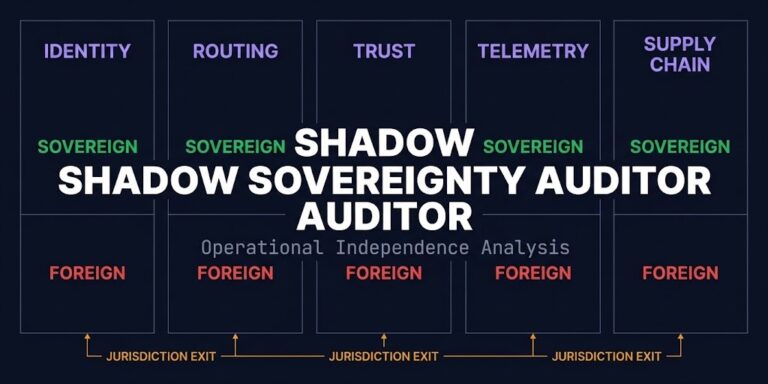
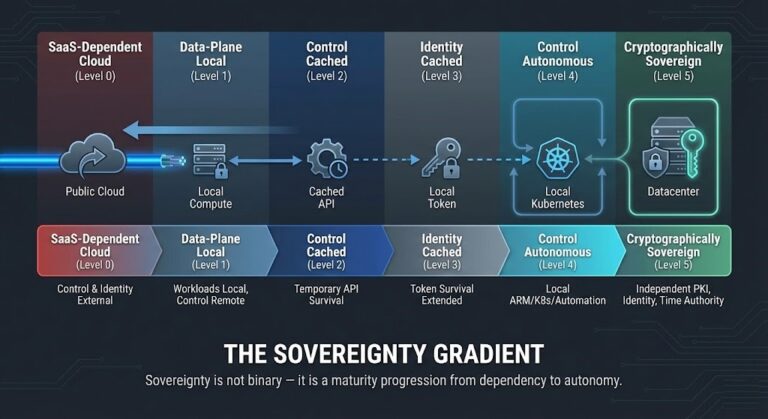
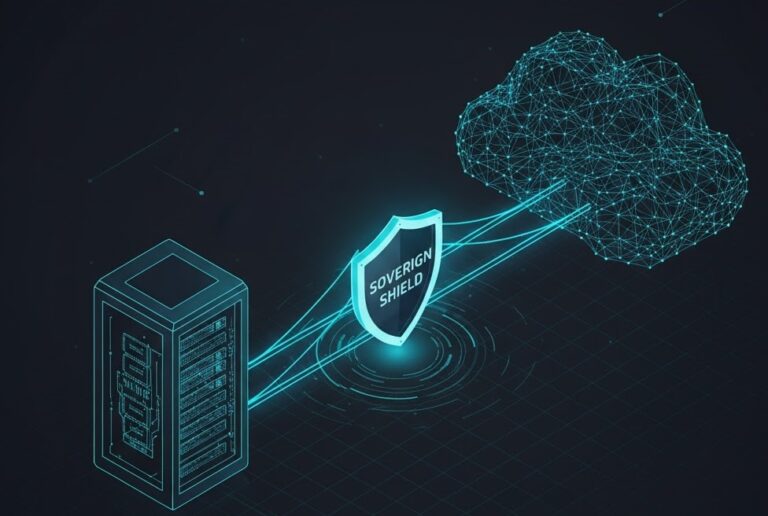
Why Sovereignty Is a Control-Plane Problem — Not a Marketing Feature Sovereign infrastructure and disconnected cloud architecture are not the same problem — but they share the same failure mode: a control plane that cannot survive without external reachability. For a decade, “hybrid cloud” was positioned as independence. In practice, it usually meant placing infrastructure…
-
Rubrik vs Veeam — Appliance Immutability vs Infrastructure Control
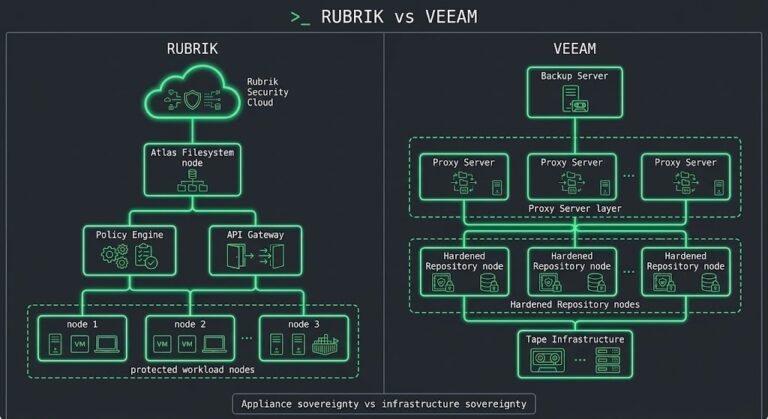
Most Rubrik vs Veeam comparisons start with the wrong question. Not which platform has better deduplication ratios or a cleaner dashboard. Not which vendor has a stronger roadmap or a bigger channel. Those comparisons exist everywhere and they don’t help you make the decision. The question that matters is architectural: where does operational authority live…
-
Sovereign Cloud vs. Public Cloud: Navigating Compliance in a Non-Deterministic Landscape
Sovereign cloud compliance requirements are hard constraints on provider selection — not post-migration considerations. Azure’s sovereign cloud depth, GCP’s data residency model, and AWS’s GovCloud each create different compliance profiles that must be evaluated before a workload is placed. The Cloud Provider Decision Framework: AWS vs Azure vs GCP covers compliance and data residency as…
-
Closing the Console Gap: Detecting Manual Cloud Console Changes Before They Break Your Terraform State
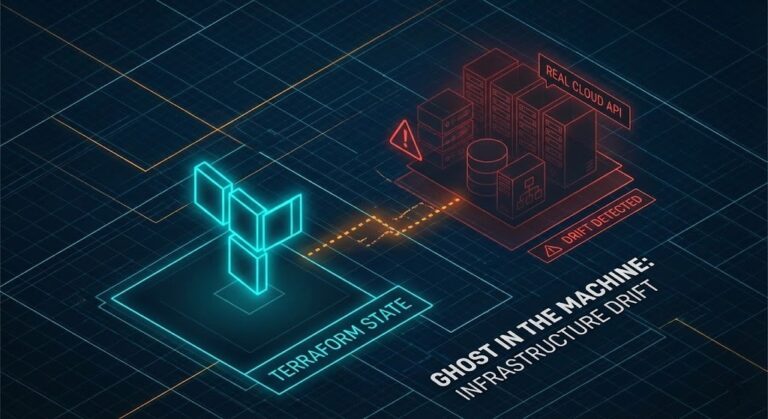
Terraform drift detection is the discipline most teams skip until it causes an outage. “Infrastructure as Code” is a lie the moment someone with valid credentials logs into the AWS console. You can have the strictest CI/CD pipelines in the world, but if a junior admin manually opens a security group port to “debug” an…
-
The European Sovereign Cloud is a Hard Fork, Not a Region
AWS European Sovereign Cloud architecture is not a region you casually select in a dropdown. Stop thinking of the AWS European Sovereign Cloud as “another region in Germany.” Architecturally, aws-eusc is a Partition — a hard fork of the AWS control plane, similar to AWS GovCloud or AWS China. It has its own IAM root,…
-
Project Phoenix: An Enterprise Field Manual for the Great OpenTofu Migration
The “Sovereignty” ROI Don’t wait for the March 31, 2026 deadline to find out your infrastructure is locked.. Project Phoenix—our enterprise case study involving 1,200+ managed resources—proved that a move to OpenTofu v1.11 isn’t just about avoiding a $15,000/year “resource tax.” It’s about ensuring your engineering velocity isn’t dictated by a vendor’s licensing shifts. The…
-
The Sovereign Baseline: Restoring Determinism to Hybrid-Cloud IaC
The Sovereign Drift Auditor exists because of a problem every cloud architect eventually faces: IaC drift. In my 15 years as a cloud architect, I’ve witnessed a recurring Day 2 disaster — the degradation of Infrastructure-as-Code into Ghost Infrastructure. It starts with an engineer making a five-minute fix in the AWS Console to troubleshoot a…
-
Sovereign Cloud Architecture: What the Nutanix Distributed Model Means for Hybrid Architects
The era of the “borderless cloud” is hitting a geopolitical wall. For the past decade, the primary directive for cloud architects was speed and scalability. We deployed to regions based on latency to the user, largely ignoring jurisdictional lines. Today, regulatory frameworks like GDPR in Europe, the upcoming Digital Operational Resilience Act (DORA), and increasing…