-
-
-
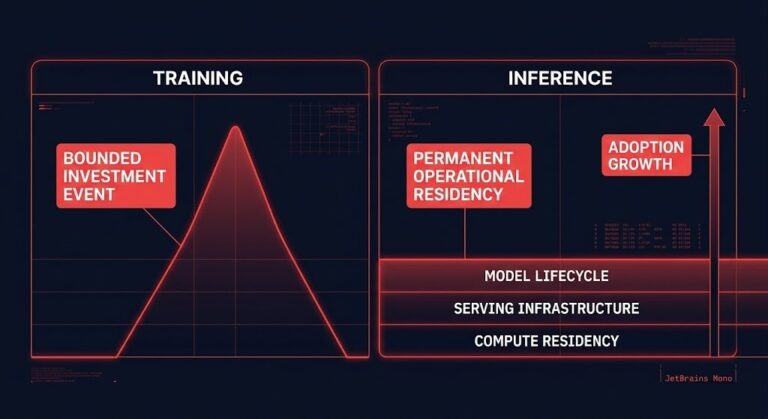
Inference Is Becoming the New Steady-State Cost Center
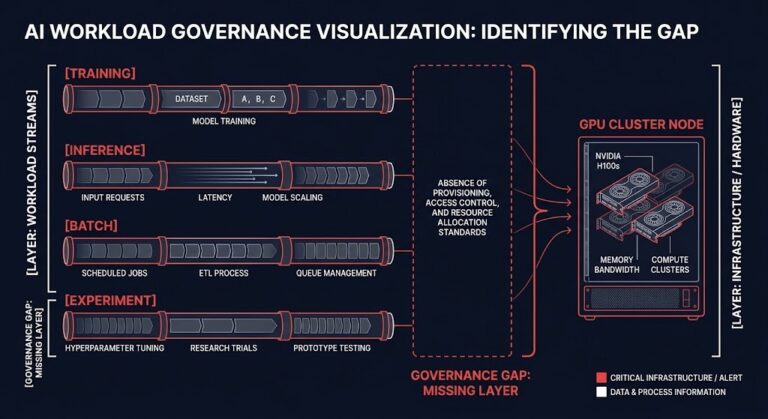
Training was a bounded investment event. Inference is an unbounded operational residency problem. That distinction is the one most AI cost conversations refuse to make. The infrastructure budget conversation for AI has moved — not from “cheap” to “expensive,” but from “event” to “permanent.” Training had a finish line. Inference steady state does not. Every…
-
-
Egress Audit Framework: How to Find Unbounded Movement Paths
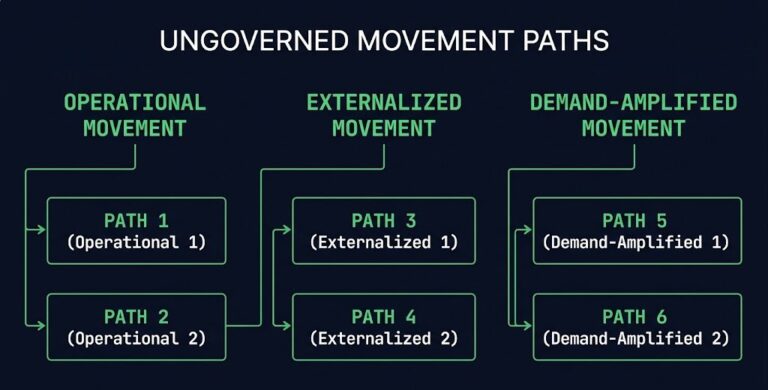
Every unbounded egress path is an architectural permission boundary that was never intentionally designed. That framing matters because it changes what you’re actually looking for. The conventional approach treats egress as a billing problem — costs go up, FinOps investigates, the dashboard shows a spike, someone gets asked to reduce spend. That sequence consistently fails…
-
PersistentVolumes vs StorageClasses: When You Actually Need Each
The PersistentVolume vs StorageClass confusion is not a syntax problem. It is an architectural model problem. Teams get confused because they compare the factory to the disk and forget the claim is what the workload actually touches. PersistentVolume and StorageClass are not alternatives. They operate at different layers of the same provisioning stack — and…
-
etcd Is Your Kubernetes Database: What It Does, What Breaks, and What to Watch
etcd kubernetes is the only component in your control plane that holds state — and most teams don’t think about that until the cluster starts behaving in ways they can’t explain. Kubernetes doesn’t store state in your pods. It doesn’t store state in your nodes, your scheduler, or your API server. It stores state in…
-
Operating Gateway API in Production: What the Migration Guides Don’t Cover
>_ Kubernetes Ingress Architecture Series >_ Part 0 The Decision Layer: Four Paths, Four Failure Modes How to evaluate the ingress-nginx retirement before picking a direction >_ Part 1 Gateway API Is the Direction. Your Controller Choice Is the Risk. The architectural shift and what annotation sprawl costs over time >_ Part 1.5 The Control…
-
Kubernetes Is Not an LLM Security Boundary
The LLM security boundary problem isn’t a Kubernetes misconfiguration. It’s a category error. You’re applying infrastructure isolation to a system whose failure mode is behavioral. Kubernetes was designed to answer one question: is the workload running correctly? It answers that question well. But when the workload is a large language model, “running correctly” and “behaving…
-
Azure VMware Solution vs Native Azure: Architecture Trade-offs, Costs, and Exit Risk
Azure VMware Solution looks like the safe path out of a Broadcom licensing conversation. Your team already knows vSphere. Your tooling already maps to VMware constructs. AVS lets you move workloads to Azure without retraining anyone or rearchitecting anything. On paper, the risk profile looks low. In practice, you’re not choosing where to run workloads….