-
-
VPA vs HPA: Why Most Teams Choose the Wrong Autoscaler
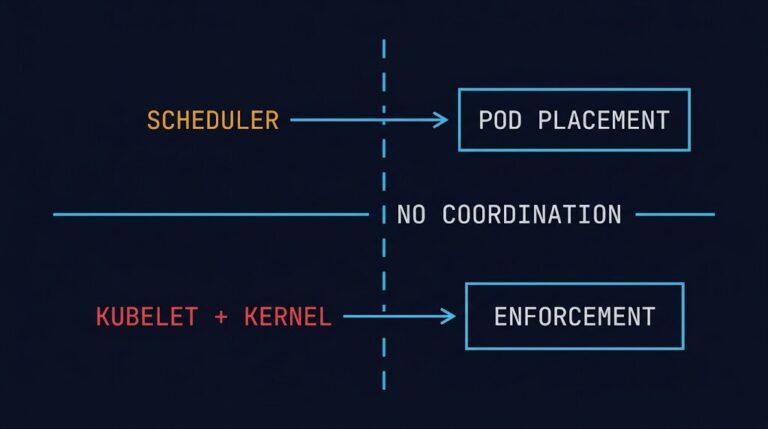
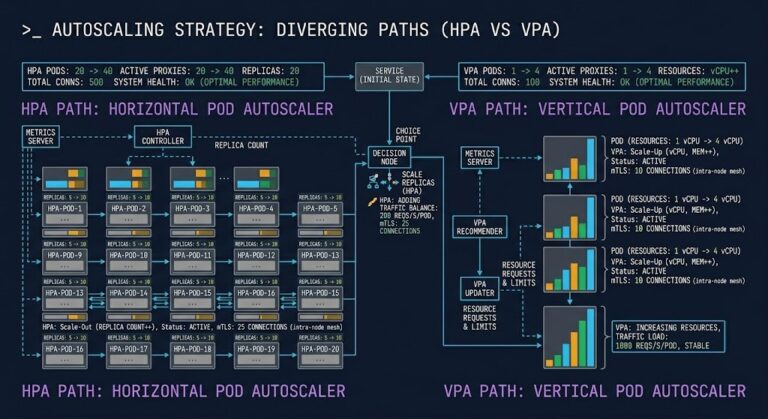
The VPA vs HPA decision is one of the most misunderstood choices in Kubernetes resource management. Most Kubernetes teams reach for HPA first. It’s visible, it’s familiar, and the CPU metric dashboard makes the decision feel obvious. When traffic spikes, pods scale out. When traffic drops, they scale back. The mental model is clean. The…
-
-
Cloud Egress Costs Explained: Why Your Architecture Is Paying a Tax You Never Modeled
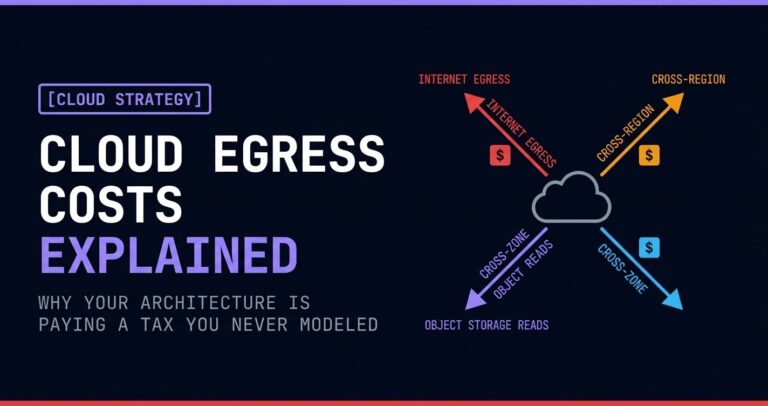
You modeled compute. You modeled storage. You built cost estimates, ran capacity planning, and got sign-off on the architecture before a single resource was provisioned. You did not model what it costs to move data. Cloud egress is the tax that accumulates invisibly — not from a single expensive operation, but from thousands of small…
-
Vertical Pod Autoscaler in Production: In-Place Resize Works — Until It Doesn’t
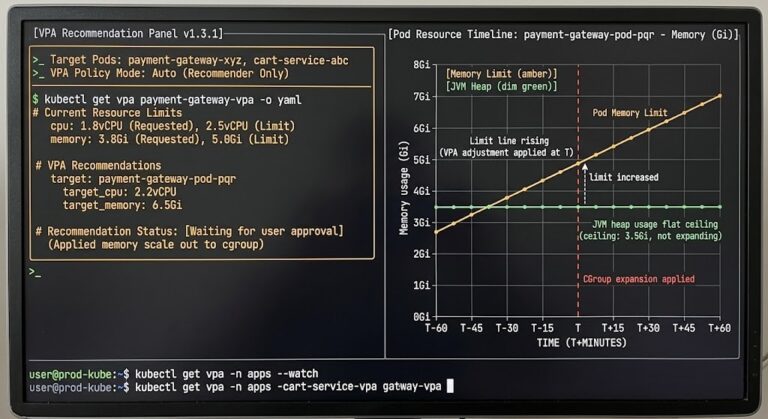
Kubernetes 1.35 made in-place pod resize stable. Most of the coverage stopped there. The narrative wrote itself: Vertical Pod Autoscaler finally works for stateful workloads. No more restarts. Enable InPlaceOrRecreate and let the autoscaler do its job. The restart tax is gone. That framing is accurate about one thing and misleading about everything else. In-place…
-
Kubernetes Is Moving Past Ingress. Most Clusters Aren’t.
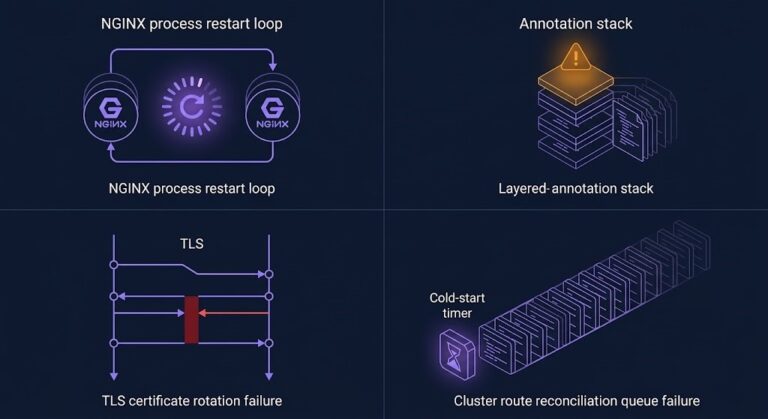
The Kubernetes Gateway API project is not forcing you to migrate away from Ingress NGINX. There is no hard cutoff date, no deprecation warning in your cluster logs, no upgrade blocker. The project has simply moved on — and that quiet, undramatic shift is exactly what makes it operationally dangerous. Ingress NGINX is no longer…
-
Kubernetes 1.35 Removes the Restart Tax — Why Stateful Workloads Just Became Easier to Operate
Kubernetes 1.35 in-place pod resize graduates to stable — and with it, six years of a hidden operational tax on stateful workloads comes to an end. If a container needed more CPU or memory, the only safe answer was a restart. That design made sense for stateless services. It was painful for everything else. Increase…
-
Policy Translation: Mapping VMware DRS, SRM, and NSX to Nutanix Flow
>_ The Post-Broadcom Migration Series Complete — Part 1 — Execution Physics Beyond the VMDK: Translating Execution Physics from ESXi to AHV Complete — Part 2 — Resource Contention The Controller Tax: Modeling Hyperconverged Resource Contention Complete — Part 3 — High-I/O Cutover Migration Stutter: Handling High-I/O Cutovers Without Data Loss ▶ Part 4 —…
-
containerd in Production: 5 Day-2 Failure Patterns at High Pod Density
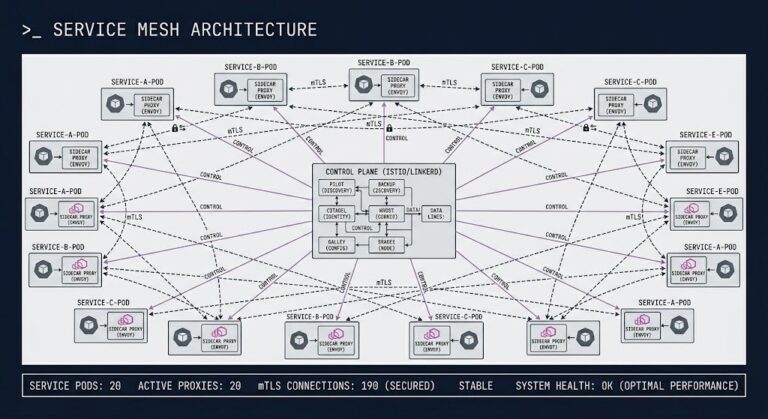
Your containerd metrics look healthy. Pod density is climbing. Node CPU is stable. Memory pressure is low. Then somewhere around 800–900 containers per node, something quiet happens: containerd-shim processes begin accumulating memory. Each failure signature maps directly to the diagnostic loops in the Rack2Cloud Kubernetes Day-2 Method. For environments running a service mesh alongside containerd,…
-
Kubernetes as the VMware Exit Ramp: How Platform Teams Are Reducing VMware Dependence
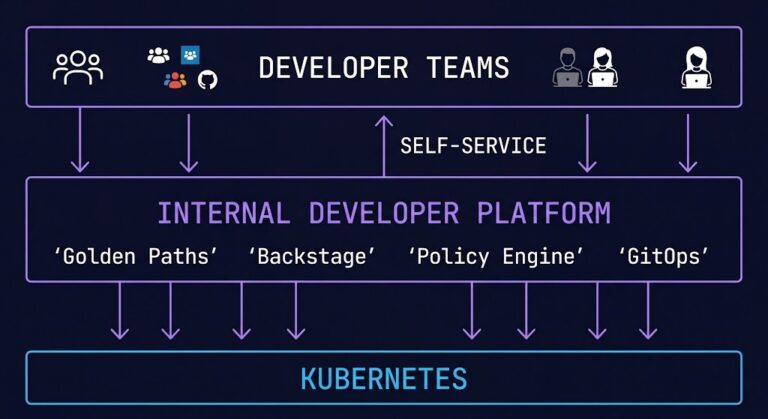
The Kubernetes VMware migration path is not what most platform teams expect. Thirty-three percent of enterprises evaluating VMware alternatives are selecting Kubernetes as their primary control plane for the transition. Not as the destination — as the mechanism. The distinction matters architecturally, and most of the coverage on this topic misses it entirely. Kubernetes does…