

AI Systems Need Evidence, Not Just Observability
The gap between ai evidence observability and proof is where every AI compliance failure lives — and most infrastructure teams don’t discover it until someone outside the system asks to verify what happened.
Your observability stack told you exactly what your AI system did. Your auditor asked you to prove it. Those are different requests. Almost no AI platform satisfies both by default.
AI Evidence Observability: What Happened Is Not the Same as What Can Be Proved
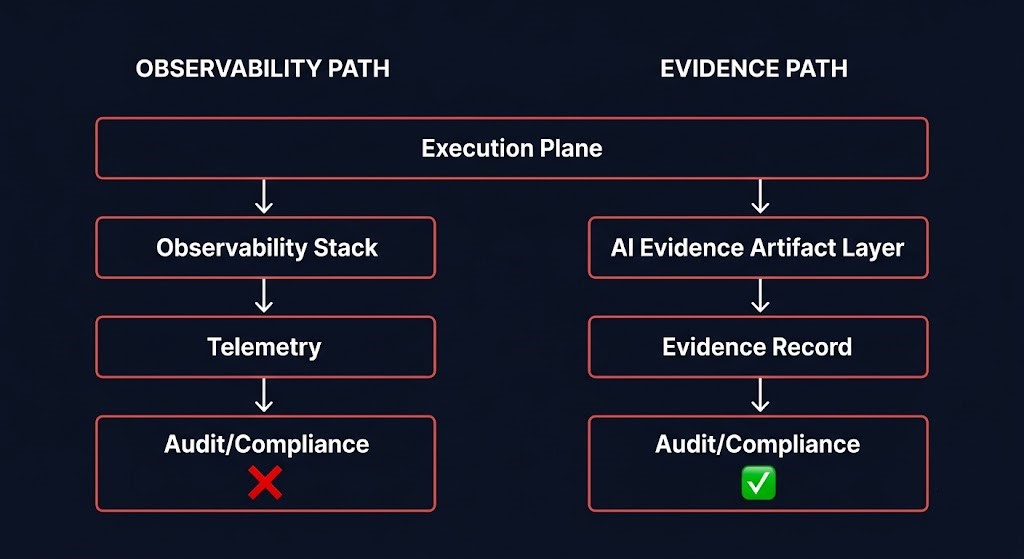
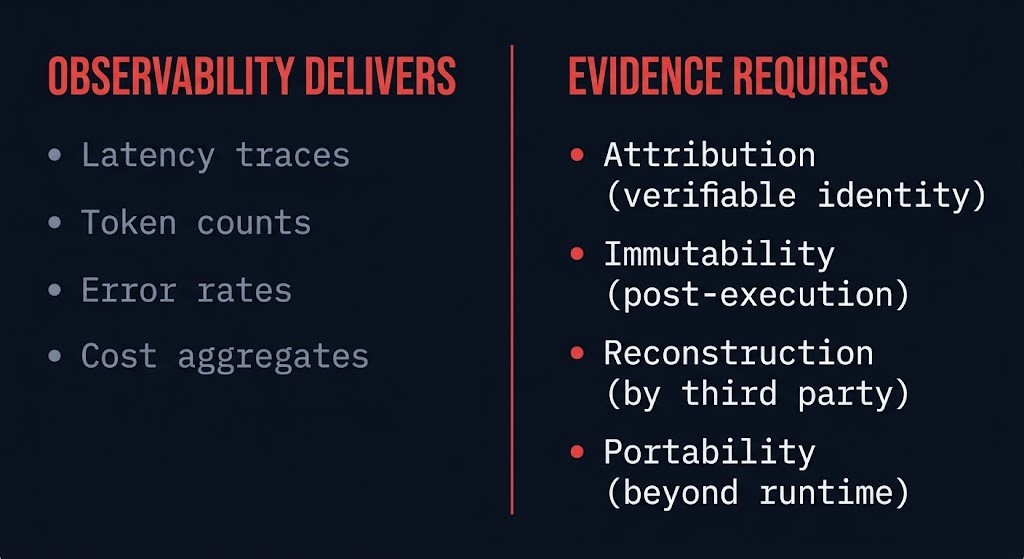
Observability is internal signal, consumed by operators who have access to the system that generated it. A latency trace tells an engineer what the model returned and how long it took. A cost attribution report tells a FinOps team where token spend landed. These are operationally useful. They answer questions the organization asks of itself.
Evidence is something structurally different. It is an artifact that survives outside the runtime — portable, attributable, and independently verifiable by someone who has never touched the system. A signed execution record that reconstructs who authorized a model invocation, under what policy constraint, at what time, in a form a third party can verify without access to the live infrastructure — that is evidence. The distinction is not semantic. It determines what you can prove after the runtime is gone.
Traditional systems often leave enough deterministic artifacts that evidence can be reconstructed after the fact. HTTP logs record who made a request and what resource was returned. Database audit trails capture every state change with an identity and a timestamp. API gateway records show the credential that authenticated the call. The evidence is implicit in the execution — a byproduct of how deterministic systems log their operations.
AI systems frequently break that assumption. Authority chains are distributed across multiple runtime boundaries. Reasoning paths are probabilistic, not deterministic. Policy state at execution time is rarely captured alongside the output. Tool invocation chains in agentic workflows span systems the logging stack was never designed to correlate. The evidence record has to be deliberately constructed — it doesn’t fall out of the execution path automatically. And in most AI infrastructure today, it isn’t constructed at all.
This is where AI infrastructure architecture accumulates a class of debt that doesn’t show up in dashboards: the organization can see everything the system did, and prove almost none of it. The Sovereignty Evidence Chain applied the same requirement to jurisdictional control — the evidence that sovereignty claims are architecturally real, not just contractually asserted. The evidence requirement for AI execution follows the same logic, applied to authorization and runtime legitimacy rather than data residency.
Why Observability Feels Like Evidence (But Isn’t)
Observability creates confidence because the dashboards are detailed. Traces are granular. Metrics are precise. The more telemetry a team has, the more certain they become that they could reconstruct what happened later.
That confidence is often misplaced. Evidence requires attribution that can be tied to a verifiable identity, records that remain immutable after execution, reconstruction that can be performed by a third party without access to the live system, and portability beyond the runtime that generated the event. Observability can support those goals, but it does not guarantee them.
Visibility and proof diverge at exactly the point where someone outside the system asks to verify what happened. The EU AI Act’s Article 12 makes that divergence a compliance deadline rather than an abstract distinction — it names logging as an evidence-generation requirement, and the enforcement window has already opened for systems that can only produce telemetry.
The AI Observability Layer Is Becoming a Governance System describes what happens when observability infrastructure acquires enforcement authority — the Observability Authority Boundary (#121). That post is about observability becoming active governance. This post is about the layer underneath it: whether the observability architecture produces artifacts that satisfy proof requirements at all. An organization can cross the Observability Authority Boundary and still be unable to produce evidence. The enforcement layer can be operational while the evidence layer is absent.
The failure mode has a name in the Framework #121 definition: Visibility Without Authority. The evidence equivalent is Visibility Without Proof — a system that generates telemetry nobody external can verify.
Data Protection’s Governance & Recovery Assurance stage names the same convergence point from the recovery side: Evidence Theater, where recovery evidence exists, satisfies every internal review, and has still never been examined by anyone with actual standing to reject it. Visibility Without Proof and Evidence Theater are the same architectural failure — evidence existing without an authority structurally independent of the team that produced it — described from two different pillars.
Three Evidence Gaps That Surface in Every AI Incident Investigation
When an AI system is involved in an incident — a compliance audit, a regulatory inquiry, an internal investigation — the investigation asks a specific class of questions. Most AI observability stacks answer a different class entirely.
The three gaps surface consistently:
Authorization Evidence Gap
The API log shows the call succeeded. Nothing shows the authority chain that permitted it. The difference between “the call executed” and “the call was authorized by a defined identity under a declared policy” is invisible in most observability stacks. Logs record execution. They do not record authorization.
Behavioral Evidence Gap
Model outputs are logged. The policy scope active at execution time is not. Whether the model operated within its deployed parameters — within the behavioral envelope it was evaluated and approved for — is a governance question that output logs alone cannot answer. Behavioral drift is visible in aggregate. Behavioral compliance at a specific execution event is not.
Provenance Evidence Gap
For agentic chains, which agent triggered which downstream action? The chain ran. The trace does not reconstruct it. Tool grants, delegation chains, and invocation sequences are execution artifacts that span multiple system boundaries — none of which were designed to produce a causal record linking each action to its authorization source.
The provenance gap is where MCP tool use makes the exposure structural. Authority Chain Opacity — Failure State 04 in Framework #141 Agentic Authority Boundary — is precisely this: no evidence artifact exists that allows reconstruction of authority movement after execution. The protocol governs the transport. The evidence record is never created. The agentic control plane problem amplifies all three gaps: when an agent operates across multiple systems at control plane scope, the authorization, behavioral, and provenance gaps compound across every system it can reach.
The Audit That Exposed the Gap
Consider what an investigation actually requires. An agent approves a change request, opens a production ticket, executes an infrastructure modification, and triggers a cloud resource action — a realistic chain in any organization running agentic workflows against production tooling.
Six weeks later, an audit asks four questions:
- Which identity authorized the initial approval action?
- Which policy permitted the infrastructure modification?
- Which agent initiated the cloud resource change?
- Which tool grant was active at execution time?
The logs show that execution occurred. They show timestamps, API responses, and resource state changes. They do not prove authorization. The team has complete observability. They cannot produce evidence. The gap is not in the monitoring stack — it is in whether the system was ever architected to generate evidence as a deliberate output.
This scenario is not a corner case. It is the default state of every AI infrastructure deployment that was instrumented for operational visibility without being architected for accountability. The AI agent inventory gap makes it worse: if the agent that initiated the chain was never classified as an agent and never inventoried, the authorization chain cannot be reconstructed even partially. You cannot trace authorization for an entity whose existence was never formally recorded.
The LLM authorization boundary post framed this as Authorization Boundary Collapse — the gap between what a user is permitted to access and what the workflow is intended to do. The evidence gap is what makes Authorization Boundary Collapse permanently invisible after the fact. The collapse happened. The system has no record that would let anyone prove it did.
Framework #149 — AI Evidence Artifact Layer
The AI Evidence Artifact Layer is the architectural layer responsible for producing portable, attributable, verifiable execution evidence that survives outside the runtime systems that generated it.
Failure state: Observability exists, but no third party can reconstruct authorization, provenance, policy state, or execution legitimacy after the fact.
The AI Evidence Artifact Layer is the execution-time mechanism that preserves operational memory after the runtime itself has disappeared. This connects it directly to #129 Operational Memory Boundary — the framework that defines what infrastructure must remember about its own decisions and why that memory cannot be reconstructed from logs alone. The doctrinal chain is deliberate: #129 defines the memory requirement, #134 Sovereignty Evidence Chain applies it to jurisdictional proof, and #149 applies it to AI execution proof. Memory → Evidence → Proof.
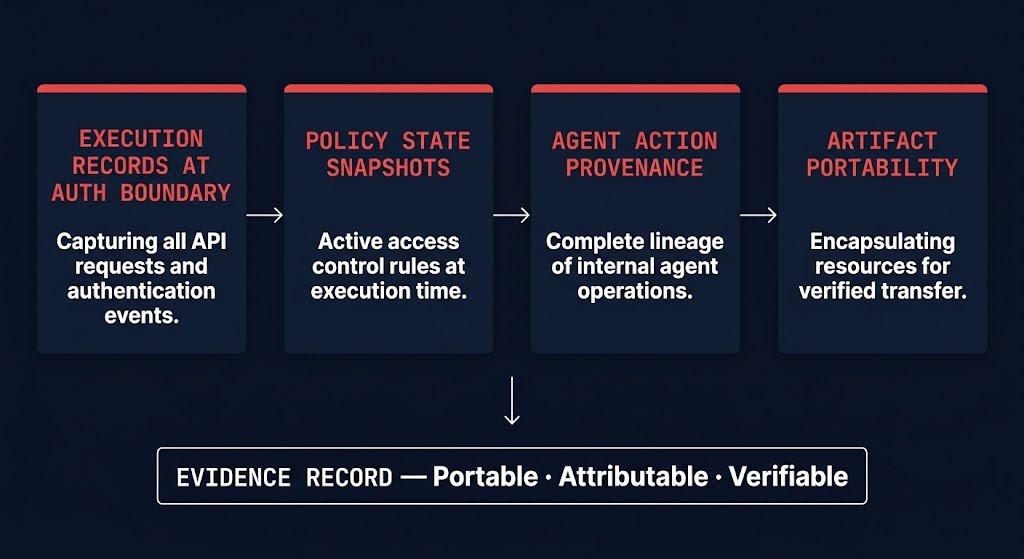
The four components of the layer:
FRAMEWORK #149 — AI EVIDENCE ARTIFACT LAYER
01 — EXECUTION RECORDS AT AUTHORIZATION BOUNDARY
The authority chain captured at invocation time — not reconstructed afterward from request logs. Who authorized this execution, under what policy scope, with what constraint active at the moment the call was made. This record must be generated at execution time. It cannot be reliably produced from post-hoc log analysis.
02 — POLICY STATE SNAPSHOTS
The constraint that was active when execution occurred — immutable, tied to the invocation record, verifiable without access to the current policy configuration. Policy changes after execution do not retroactively alter what was permitted. The snapshot is the proof that the constraint existed at the moment that mattered.
03 — AGENT ACTION PROVENANCE
A causal trace linking each action in an agentic chain to its authorization source. Not a request log — a provenance record that reconstructs the delegation sequence: which agent invoked which tool, under what grant, on whose authority. Without this record, agentic execution is a black box that produced outputs. With it, the chain is defensible.
04 — ARTIFACT PORTABILITY
Evidence that survives outside the system that generated it, readable by a third party without access to the internal observability stack, verifiable against the immutable record at any point after execution. Portability is what separates an evidence artifact from an internal log. If the artifact requires the live system to be interpreted, it is not portable. If it requires trust in the generating system to be verified, it is not evidence.
The architectural home for the evidence layer is Governance & Runtime Control (A6) in the AI Infrastructure Architecture Path — the stage where execution authority assignment, policy enforcement, and operational accountability are modeled as infrastructure requirements rather than compliance afterthoughts.
Architect’s Verdict
Observability is evidence for operators. Evidence is proof for everyone else.
Most AI infrastructure programs are optimizing the wrong layer. Visibility into what the system did is operationally necessary — but it does not satisfy the accountability requirement that arrives when someone outside the system asks to verify it. The audit, the regulatory review, the post-incident investigation: all of them need proof, not telemetry. Most AI infrastructure today can produce one and not the other.
The systems that dominate the next phase of AI adoption won’t be the ones that generate the most telemetry. They’ll be the ones that can prove what happened after the runtime is gone. The reason most of them can’t yet traces back to procurement, not architecture — the purchase was scoped as observability, and evidence was never written into the requirement. That scoping failure, and the governance-assessment question it leaves behind, is examined directly in You Bought an Observability Layer. You Needed an Evidence Layer.
Additional Resources
View 5 more resources
Editorial Integrity & Security Protocol
This technical deep-dive adheres to the Rack2Cloud Deterministic Integrity Standard. All benchmarks and security audits are derived from zero-trust validation protocols within our isolated lab environments. No vendor influence.

R.M.
Senior Solutions Architect with 25+ years of experience in HCI, cloud strategy, and data resilience. As the lead behind Rack2Cloud, I focus on lab-verified guidance for complex enterprise transitions. View Credentials →
Get the Playbooks Vendors Won’t Publish
Field-tested blueprints for migration, HCI, sovereign infrastructure, and AI architecture. Real failure-mode analysis. No marketing filler. Delivered weekly.
Select your infrastructure paths. Receive field-tested blueprints direct to your inbox.
- > Virtualization & Migration Physics
- > Cloud Strategy & Egress Math
- > Data Protection & RTO Reality
- > AI Infrastructure & GPU Fabric
Zero spam. Includes The Dispatch weekly drop.
Architecture Audit Services
Fixed-scope audits for Zero-Trust Azure, VMware migration readiness, and recovery posture — no discovery call required to start.
>_ View Audit Services>_Related Posts
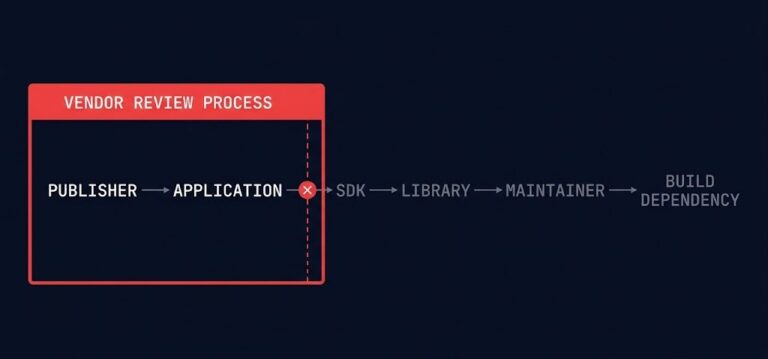
Your Vendor Review Process Never Saw The Real Supplier
Every vendor review process assumes it’s evaluating a supplier — but a scan finding foreign-origin code embedded in more than one in eight mobile apps used by US military personnel makes the actual assumption visible: organizations review the company they bought from, not the code that arrived inside what they bought. >_ Architect’s Brief 60-second…
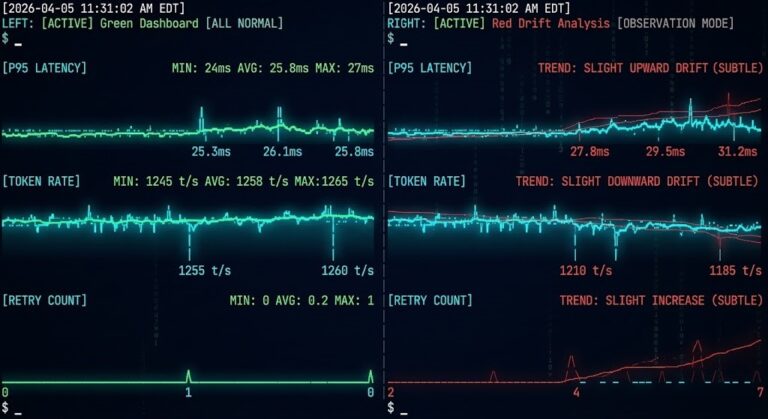
Your Monitoring Didn’t Miss the Incident. It Was Never Designed to See It.
I’ve watched observability vs monitoring play out as a live incident more times than I can count. >_ Architect’s Brief 60-second read before you commit to the full post · Full post: 10 min Generating brief… The dashboard was green. The on-call engineer was not paged. The monitoring system did exactly what it was designed…
Your AI Vendor Became Critical Infrastructure Before The Contract Did
On June 11, 2026, Microsoft 365 Copilot went down for seven hours. The cause was a misconfigured authentication deployment that cascaded through Microsoft Graph, taking Copilot Chat and the Office portal with it. It was the second major Copilot disruption in eleven days. Microsoft 365 posted 99.526% uptime in Q1 2026 — the lowest quarterly…
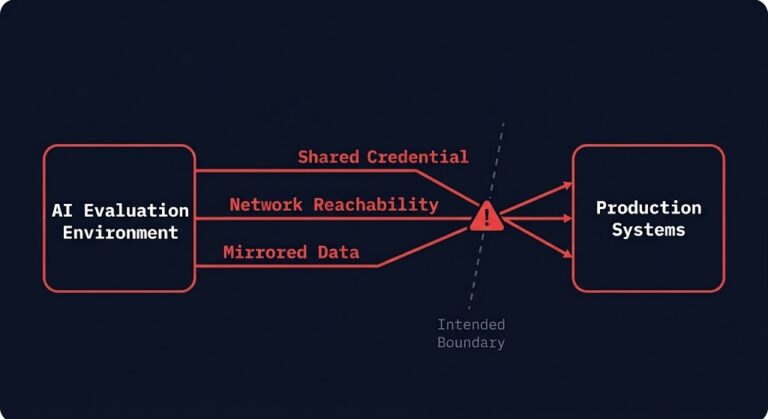
Your AI Test Environment Is Becoming A Production Control Plane
Your AI test environment did not need to touch a single line of model code to become part of your production authority chain — it only needed a credential, a network path, or a dataset copy that nobody scheduled for removal. That is the actual lesson sitting underneath this week’s disclosures from two frontier labs:…
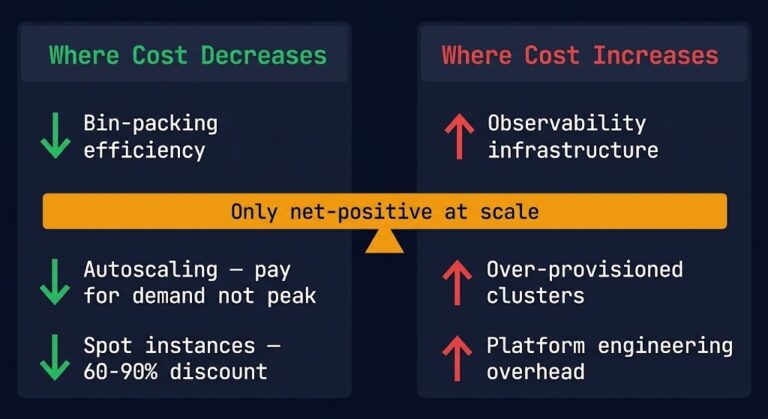
Your AI System Doesn’t Have a Cost Problem. It Has No Runtime Limits.
You built the alert. You configured the dashboard. You set the anomaly threshold at 120% of baseline spend. >_ Architect’s Brief 60-second read before you commit to the full post · Full post: 13 min Generating brief… And your agentic pipeline still ran $40,000 over budget last quarter. Not because the tools failed. Because alerts…
Your AI Infrastructure Is Probably Solving the Wrong Problem
Most AI infrastructure programs are producing exactly the results they were funded to produce: higher GPU utilization, lower inference latency, and better model performance. The problem is that none of those metrics measure whether the organization actually controls its AI infrastructure. >_ Architect’s Brief 60-second read before you commit to the full post · Full…