

Nutanix Put MCP Behind a Gateway. The Real Problem Is Authority.
Nutanix’s MCP gateway is one of the clearest examples yet of enterprise AI infrastructure adding a real governance layer around agent access. The problem is that access governance and authority governance are not the same thing.
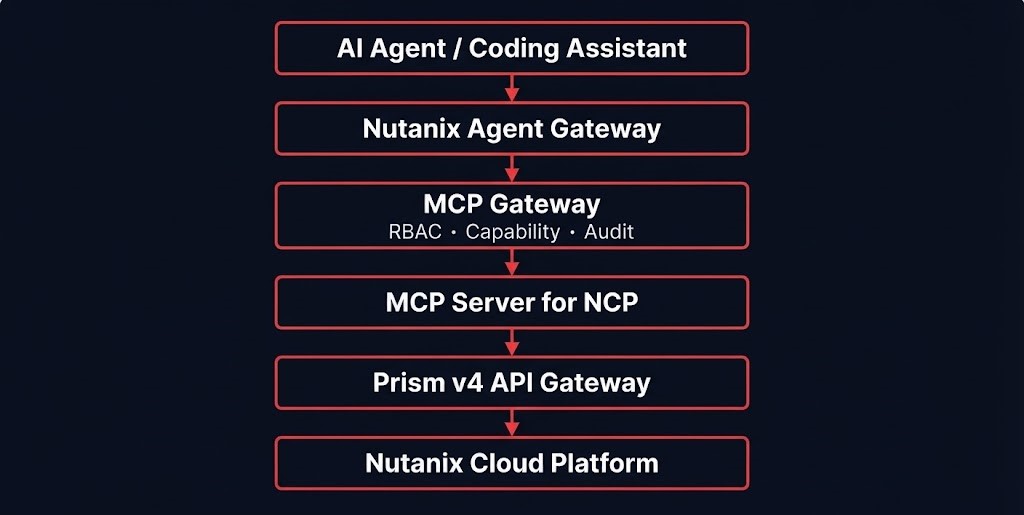
On August 26, Nutanix made MCP server management generally available in Nutanix Enterprise AI 2.8 through Nutanix Agent Gateway, adding a unified governance layer — including tool permissions, observability, and rate limiting — for agents connecting to MCP servers. That followed the August 10 release of the open-source MCP Server for Nutanix Cloud Platform, which connects AI tools to NCP through the existing Prism v4 API Gateway. The two layers are distinct: the August 10 release is the server agents talk to; the August 26 release is the governance layer sitting in front of it. Both are shipping, GA, and positioned by Nutanix as production agentic-AI governance — not a roadmap slide. That’s exactly why it’s worth taking seriously enough to find where it actually stops.
What Nutanix’s MCP Gateway Actually Ships
Strip the marketing language and the mechanism is straightforward. The MCP Gateway sits inside Nutanix Agent Gateway as a central point for governing which tools and data AI agents can reach through MCP. Access control inherits from the Prism v4 API Gateway’s existing RBAC — an agent connecting through the gateway is authorized the same way any other Prism-authenticated caller would be. Beyond identity, the gateway also exposes fine-grained capability controls — read-only versus write permissions, and which capabilities are exposed per API key — so it isn’t a pure authentication layer either. Nutanix’s broader Agent Gateway roadmap also includes token-governance and rate-limiting capabilities, with header-based rate limiting introduced as a Tech Preview feature in NAI 2.8 — the architectural objective is clear: reduce the risk of uncontrolled agent consumption as AI workloads scale. Auditing is expanded alongside the GA controls.
This is the standard shape of AI infrastructure architecture maturing under real production load: a protocol adoption phase, followed immediately by an access-control retrofit once the protocol proves genuinely load-bearing. Nutanix is not doing anything unusual here. It is doing the obvious next thing, competently, ahead of most of the hyperconverged and hybrid-cloud field.
Nutanix Solved The Problem A Gateway Can Solve
Here’s the concession worth stating plainly: gateway controls are necessary, gateway controls measurably reduce risk, and an enterprise running unmanaged, ungoverned MCP connections against production infrastructure is worse off than one running Nutanix’s gateway. None of what follows is an argument against building it.
But a gateway governs the connection. It does not govern the delegation. RBAC, capability permissions, token budgets, and audit logging all govern something about the interaction — who is calling, what it can access, how much activity it can generate, and what happened afterward. None of them establishes whether the specific authority exercised in a specific action still matches the intent that existed at the moment it was delegated. Similar to how private AI platforms can relocate authority-coordination problems rather than eliminate them, MCP gateways can relocate governance concerns without resolving delegation intent itself. The concern doesn’t disappear at the gateway. It moves past it, unchanged, riding on credentials the gateway correctly verified.
An access grant issued at 9 a.m. for a narrow diagnostic task does not, by virtue of being an access grant, acquire knowledge that the task is complete at 9:15 a.m. The gateway can enforce the grant; the delegation context has to tell the system when that authority should cease to be valid — and nothing about a network-layer control gives it a way to know that on its own. Rack2Cloud has seen this exact shape before, just in a different domain: the authority persistence boundary that governs third-party cloud access is precisely the gap between a trust relationship changing and the authority it granted actually becoming invalid. A gateway session is a narrower version of the same category boundary — a different domain, the same underlying architectural gap.
Identity Governance Is Not Authority Governance
Rack2Cloud named this precisely in Framework #141, Agentic Authority Boundary: the formal boundary within which an agentic system may delegate execution authority, constrained by explicit scope, identity, ownership, and revocability. The framework defines four failure states — Scope Creep Delegation, Implicit Trust Inheritance, Non-Revocable Grant, and Authority Chain Opacity — and the useful thing about Nutanix’s gateway is that it’s a clean, current, real-world instrument for testing which of the four a network-layer control can actually close.
The instinct when reading a well-built gateway announcement is to assume the security question is handled. That instinct is the actual subject of this piece, not a vendor’s execution quality. It’s worth being explicit about why the assumption is so easy to make: a gateway maps cleanly onto a boundary model every architect already trusts — perimeter enforcement, RBAC, rate limiting, audit trails. Every one of those controls is legible, testable, and familiar. That legibility is precisely why the authority question underneath it goes unexamined; it isn’t hidden, it’s just standing next to something that looks like it already answered it.
What Each Control Actually Answers
Matched honestly to its own category, every control inside the MCP gateway is doing exactly what it claims:
| Nutanix Control | Most Directly Addresses |
|---|---|
| RBAC (inherited from Prism v4) | Scope Creep Delegation, at the role/identity level |
| Gateway authentication | Unauthorized access |
| Tool/capability permissions (read vs. write, per-key exposure) | Capability exposure, at the API-key level |
| Audit logging | Post-execution visibility |
Nothing in that table is wrong. The problem isn’t that Nutanix mapped its controls to the wrong categories — it’s that authority failures and security controls are not the same category of problem to begin with, and no amount of tightening the left column closes the gap on the right.
The Questions The Gateway Can’t Answer
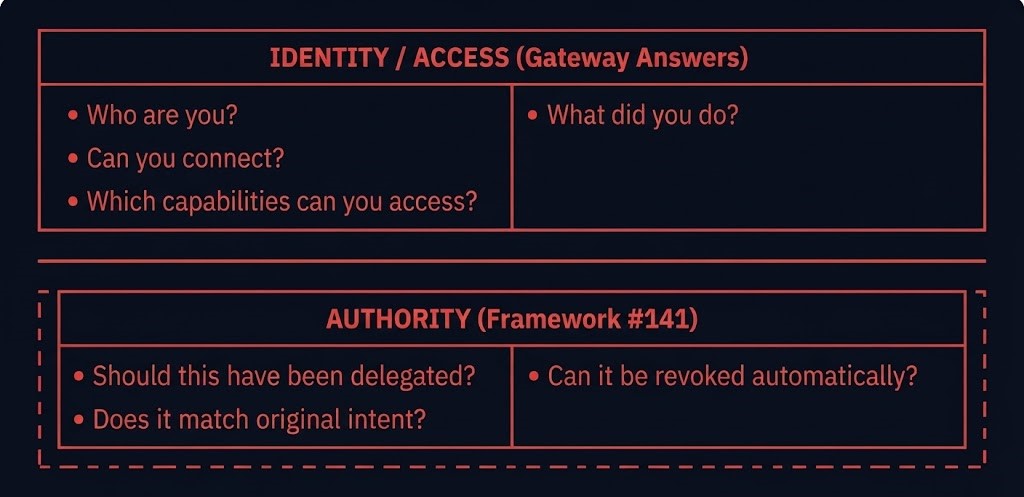
Every control Nutanix describes governs some property of identity, access, capability, consumption, or visibility. None establishes whether a delegated action remains within the authority originally granted for that specific context. An MCP client sitting behind this gateway can be authenticated, permitted specific tool capabilities, rate-limited, and fully logged — and still exceed the authority that was originally intended at the moment the delegation was made. This is the exact territory Rack2Cloud’s AI Architecture Learning Path maps under Governance & Runtime Control, and it’s the precise question the model answered but nobody asked — who actually authorized this specific action, versus who was merely a valid, permitted caller.
| Question | Gateway Answers? |
|---|---|
| Who are you? | Yes |
| Can you connect? | Yes |
| Which capabilities can you access? | Yes |
| What did you do? | Yes |
| Should this authority have been delegated at all? | No |
| Does delegated authority still match original intent? | No |
| Can the delegation be revoked automatically when context changes? | No |
The top half of that table is a gateway’s native territory. The bottom half is Framework #141’s, and nothing in NAI 2.8’s release notes claims to touch it — which is, to Nutanix’s credit, more honest than a lot of “AI governance” marketing copy currently in market.
Audit Logs Are Not An Authority Chain
The audit-logging expansion deserves its own scrutiny, because it’s the control most likely to be mistaken for having closed Authority Chain Opacity. It hasn’t. A log records that a call happened, by whom, and roughly what it touched. It does not, by itself, reconstruct why that authority existed at that moment, what scope it was originally granted under, or whether it should still have been valid when it was exercised. That distinction is the same one Rack2Cloud has made about recovery evidence: logs are not evidence if the system producing them can’t demonstrate the chain of custody behind what they claim. An event record and an authority-movement record are different artifacts, and building the first does not get you the second for free.
What Would Authority-Aware MCP Governance Require?
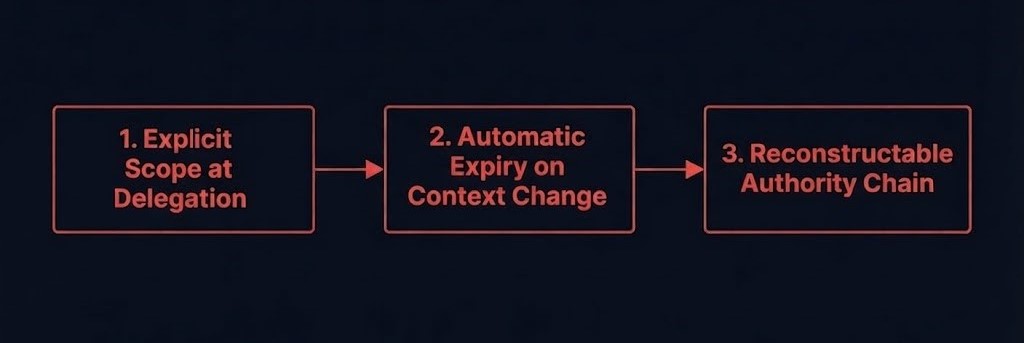
Not a new framework, and not a product recommendation — just the three questions a gateway, however well built, cannot currently answer:
- Can delegated authority be explicitly scoped at the point of delegation, not inferred from role membership afterward?
- Can that authority expire automatically when the context that justified it changes, rather than persisting until a credential is manually rotated?
- Can authority movement be reconstructed as a chain — who delegated what, to what, and why — rather than recovered piecemeal from an event log after the fact?
Nutanix’s current MCP gateway does not claim to answer these questions, and these are precisely the authority questions that remain outside its stated governance model. That’s not a criticism of the engineering — it’s why an MCP gateway, however well built, is table stakes, not a finish line.
Architect’s Verdict
Nutanix built a real gateway that does real governance work, and enterprises adopting NAI 2.8 are meaningfully better off than enterprises running MCP unmanaged. That much isn’t in dispute.
But identity governance and authority governance are different problems, and conflating them is the actual risk here — not because Nutanix’s engineering is weak, but because a competent gateway is exactly convincing enough to make the remaining question invisible. Every control described governs some property of identity, access, capability, consumption, or visibility. None validates whether the authority being exercised still matches what was originally intended when it was delegated.
Adopt the gateway. Don’t mistake it for having closed Framework #141. Nutanix built the right gateway. The gateway is not the authority boundary.
Additional Resources
Editorial Integrity & Security Protocol
This technical deep-dive adheres to the Rack2Cloud Deterministic Integrity Standard. All benchmarks and security audits are derived from zero-trust validation protocols within our isolated lab environments. No vendor influence.

R.M.
Senior Solutions Architect with 25+ years of experience in HCI, cloud strategy, and data resilience. As the lead behind Rack2Cloud, I focus on lab-verified guidance for complex enterprise transitions. View Credentials →
Get the Playbooks Vendors Won’t Publish
Field-tested blueprints for migration, HCI, sovereign infrastructure, and AI architecture. Real failure-mode analysis. No marketing filler. Delivered weekly.
Select your infrastructure paths. Receive field-tested blueprints direct to your inbox.
- > Virtualization & Migration Physics
- > Cloud Strategy & Egress Math
- > Data Protection & RTO Reality
- > AI Infrastructure & GPU Fabric
Zero spam. Includes The Dispatch weekly drop.
Architecture Audit Services
Fixed-scope audits for Zero-Trust Azure, VMware migration readiness, and recovery posture — no discovery call required to start.
>_ View Audit Services>_Related Posts
Your Vendor Review Process Never Saw The Real Supplier
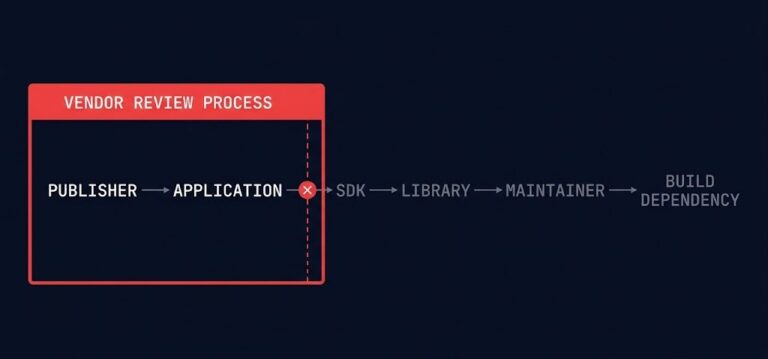
Every vendor review process assumes it’s evaluating a supplier — but a scan finding foreign-origin code embedded in more than one in eight mobile apps used by US military personnel makes the actual assumption visible: organizations review the company they bought from, not the code that arrived inside what they bought. >_ Architect’s Brief 60-second…
Your Monitoring Didn’t Miss the Incident. It Was Never Designed to See It.
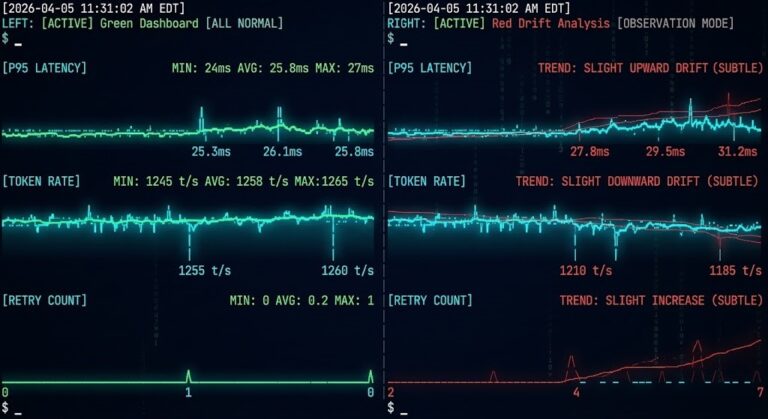
I’ve watched observability vs monitoring play out as a live incident more times than I can count. >_ Architect’s Brief 60-second read before you commit to the full post · Full post: 10 min Generating brief… The dashboard was green. The on-call engineer was not paged. The monitoring system did exactly what it was designed…
Your AI Vendor Became Critical Infrastructure Before The Contract Did
On June 11, 2026, Microsoft 365 Copilot went down for seven hours. The cause was a misconfigured authentication deployment that cascaded through Microsoft Graph, taking Copilot Chat and the Office portal with it. It was the second major Copilot disruption in eleven days. Microsoft 365 posted 99.526% uptime in Q1 2026 — the lowest quarterly…
Your AI Test Environment Is Becoming A Production Control Plane
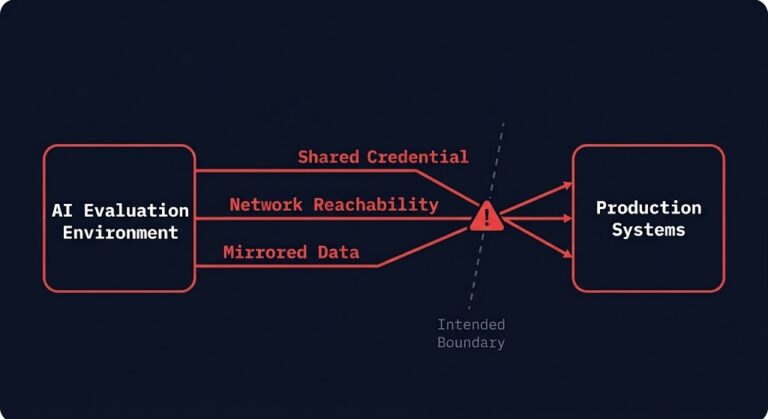
Your AI test environment did not need to touch a single line of model code to become part of your production authority chain — it only needed a credential, a network path, or a dataset copy that nobody scheduled for removal. That is the actual lesson sitting underneath this week’s disclosures from two frontier labs:…
Your AI System Doesn’t Have a Cost Problem. It Has No Runtime Limits.
You built the alert. You configured the dashboard. You set the anomaly threshold at 120% of baseline spend. >_ Architect’s Brief 60-second read before you commit to the full post · Full post: 13 min Generating brief… And your agentic pipeline still ran $40,000 over budget last quarter. Not because the tools failed. Because alerts…
Your AI Infrastructure Is Probably Solving the Wrong Problem
Most AI infrastructure programs are producing exactly the results they were funded to produce: higher GPU utilization, lower inference latency, and better model performance. The problem is that none of those metrics measure whether the organization actually controls its AI infrastructure. >_ Architect’s Brief 60-second read before you commit to the full post · Full…