

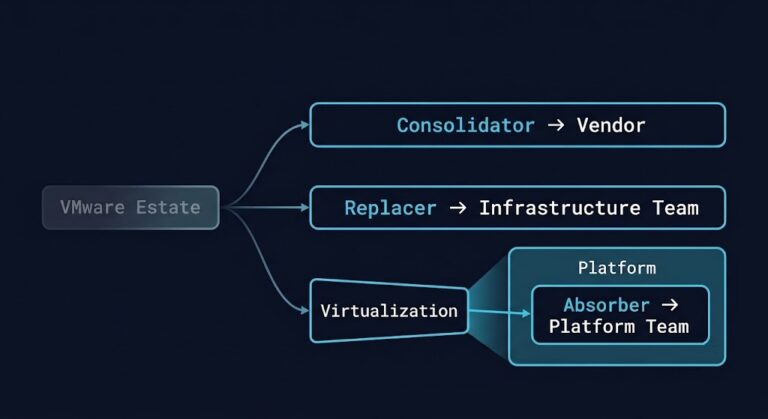
The Virtualization Market Is Splitting Into Three Camps
The virtualization market has stopped behaving like a two-sided argument about which hypervisor wins, and if you’re still evaluating it that way, you’re answering…
READ MORE →
ENGINEERING NOTES FROM THE COMPLEXITY GAP.
The journey from legacy infrastructure to modern cloud-native platforms is often obstructed by marketing-driven abstraction and tool-centric noise. Most technical journals focus on the "Day-1" installation — the easy path. Rack2Cloud documents the Day-2 production reality. We analyze how systems actually behave under load, at the boundaries of integration, and within the constraints of sovereign requirements.
Our field notes serve as a deterministic guide for the architect navigating the complexity gap. We prioritize the physics of data and the logic of high availability over vendor checklists.
"In production, complexity is the default state; architecture is the only defense."
The virtualization market has stopped behaving like a two-sided argument about which hypervisor wins, and if you’re still evaluating it that way, you’re answering…
READ MORE →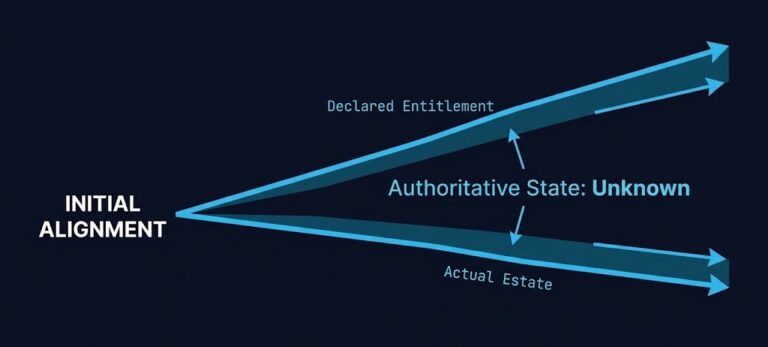
Audit risk used to show up after a licensing negotiation closed. Increasingly, it shows up while the negotiation is still open — because a…
READ MORE →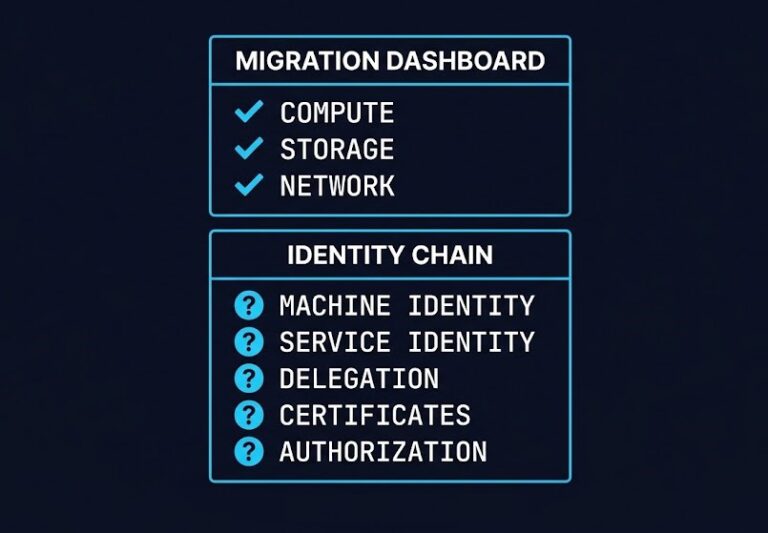
Identity chain continuity is the thing every migration runbook assumes and almost none of them prove. A migration dashboard can go fully green —…
READ MORE →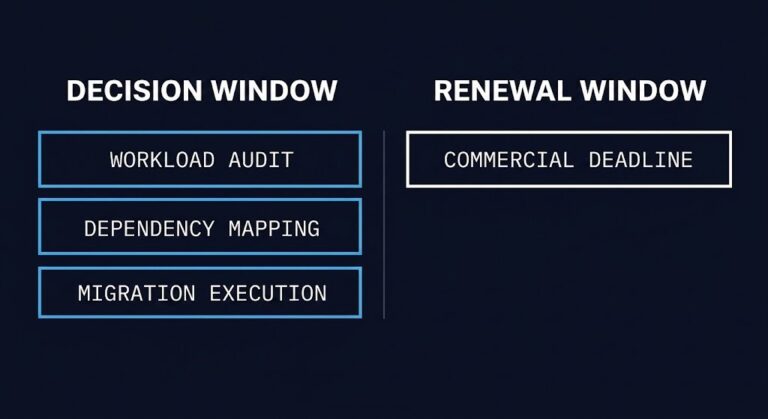
The vmware renewal decision most enterprise architects are facing in 2026 was not made at the renewal table. Most organizations approaching renewal aren’t choosing…
READ MORE →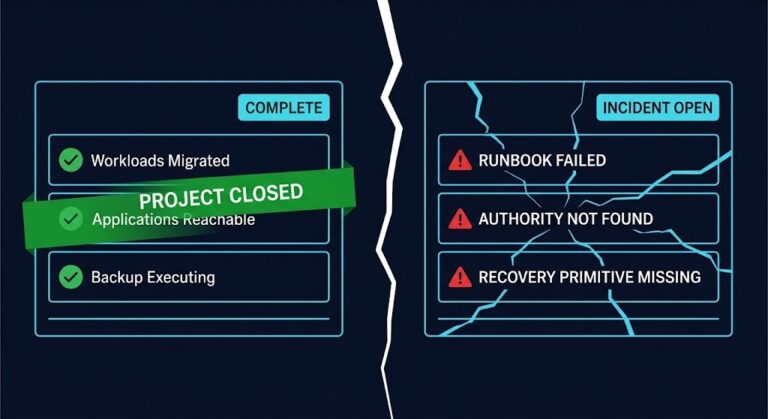
VMware exit survivability is the question your migration project never formally scheduled — and the first production incident on the new platform will answer…
READ MORE →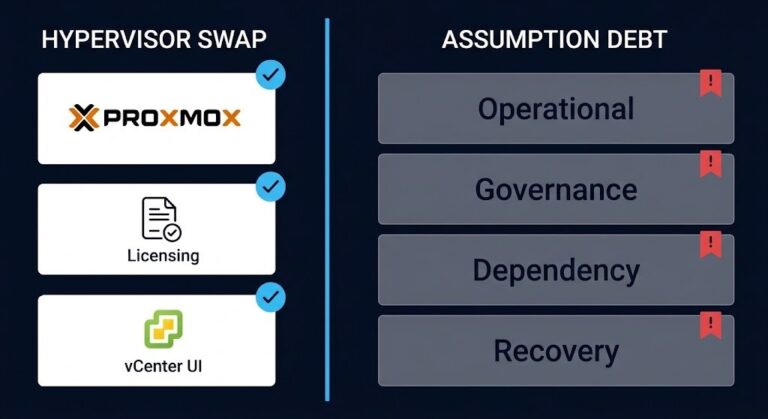
Proxmox migration assumptions are the part of the VMware exit that doesn’t appear on any migration checklist — and the part that causes the…
READ MORE →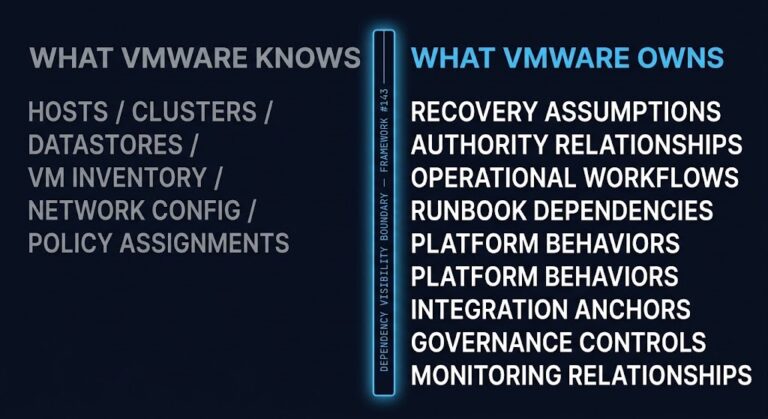
The VMware dependency audit problem didn’t start with the Broadcom renewal. Most organizations could answer what ran on VMware. Very few could answer what…
READ MORE →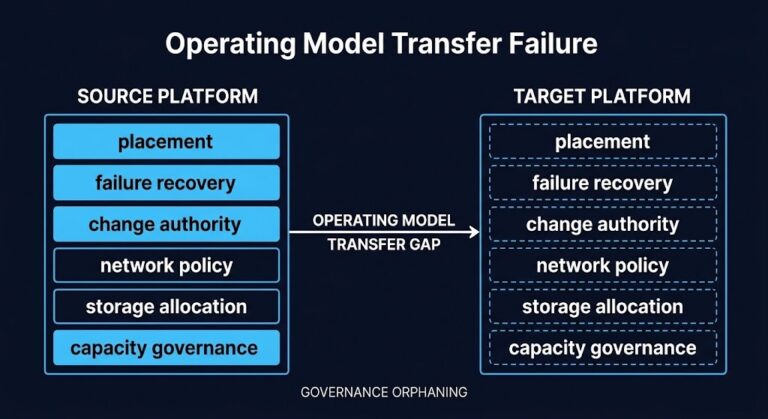
The post-migration incident report almost never blames the hypervisor. Workloads came up clean. Networking was verified. Storage performed. The technical migration, by every measure…
READ MORE →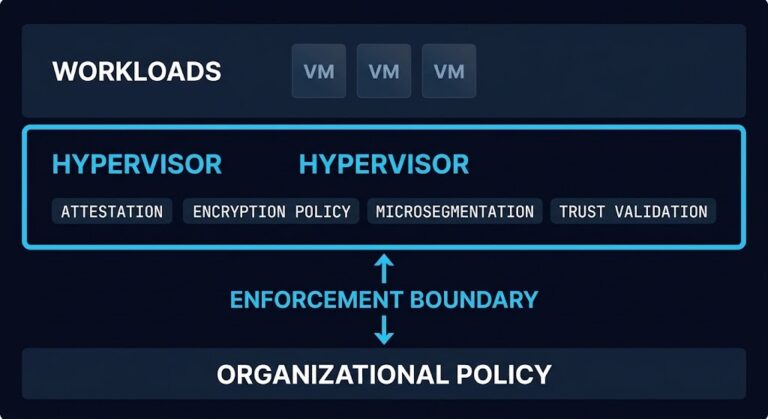
The hypervisor is no longer just deciding where workloads run. It's deciding what they're allowed to do. Most organizations are still operating it like…
READ MORE →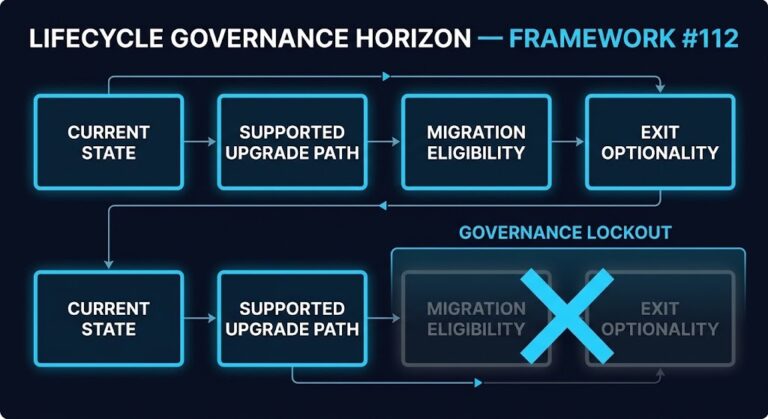
Most vSphere environments treat lifecycle management as a patching workflow. The architectural problem is that lifecycle management governs upgrade eligibility, migration readiness, and exit…
READ MORE →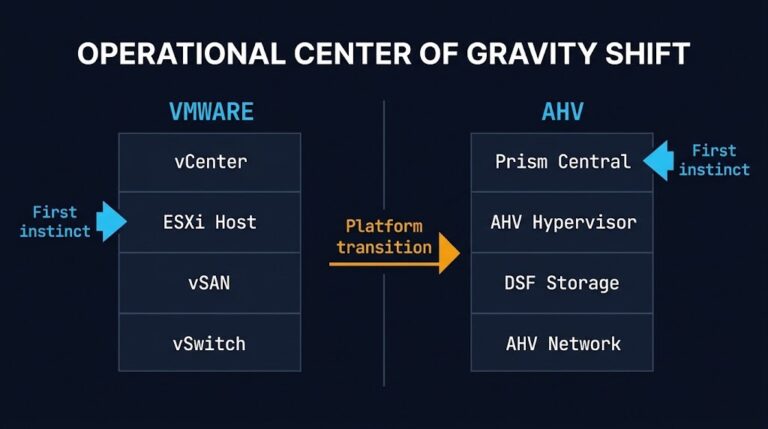
The operational friction begins after the migration succeeds. Workloads are running. Clusters are stable. Teams declare victory — then discover that platform relocation and…
READ MORE →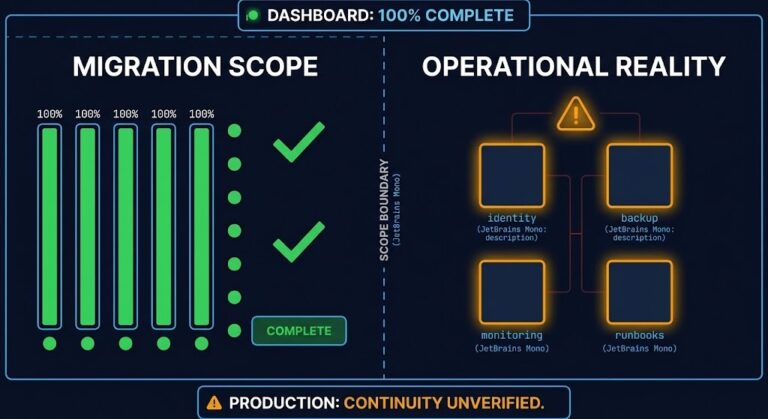
Migration dashboard failure has a consistent pattern: the tooling reports 100% complete, health checks pass, services respond — and production discovers a different set…
READ MORE →