

-
-
-
The Configuration Drift Discovery During a Drill
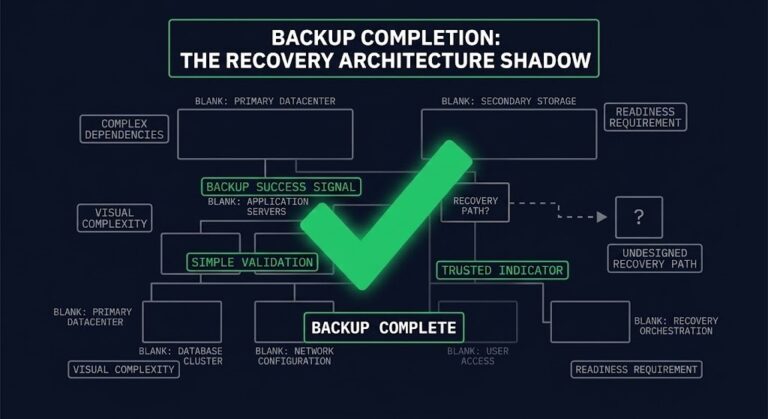
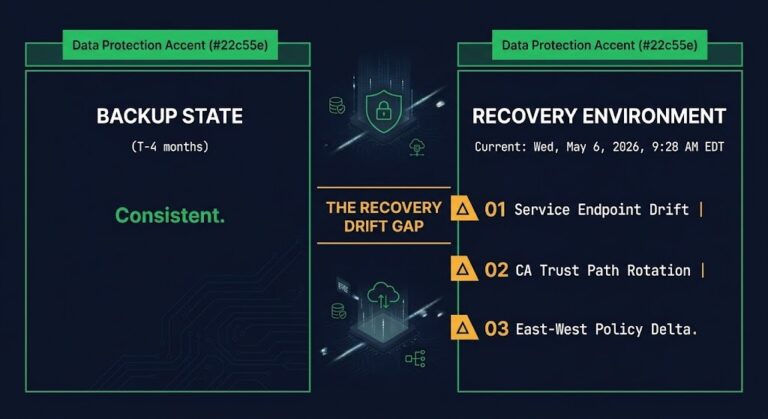
Quarterly recovery drill. Backup job green for four months. Restore executes cleanly — data intact, VM boots, database service starts. The application fails on the first transaction. Three hours disappear into backup triage before anyone checks the environment. The backup was not the problem. It never was. This is recovery configuration drift — and it…
-
Rubrik vs Cohesity: The Enterprise Decision Framework
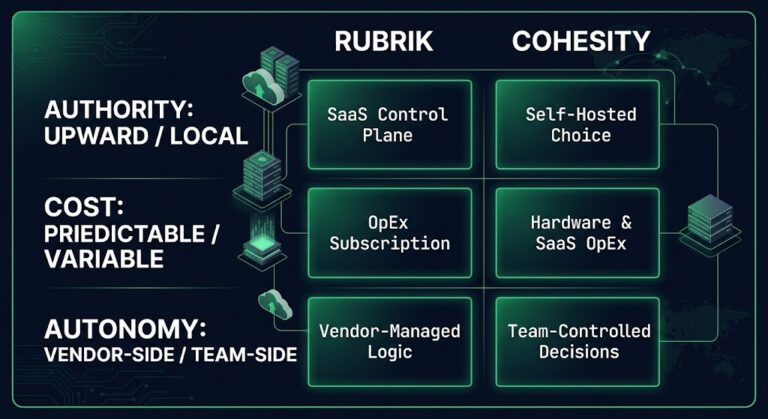
Most enterprise backup evaluations do not stall because one platform fails technically. The rubrik vs cohesity decision stalls because both pass — and then the evaluation committee realizes it has been asking the wrong question. Both platforms cleared restore testing. Both cleared immutability review. Both satisfy ransomware posture requirements. Both have credible cloud support stories….
-
The Connected Air Gap: Why Most Backup Isolation Fails
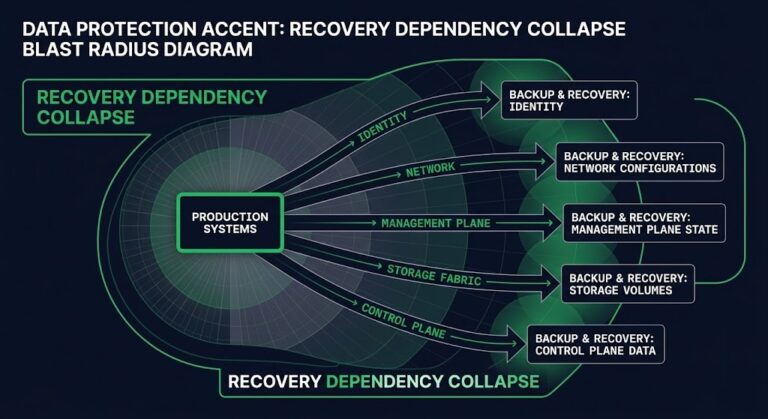
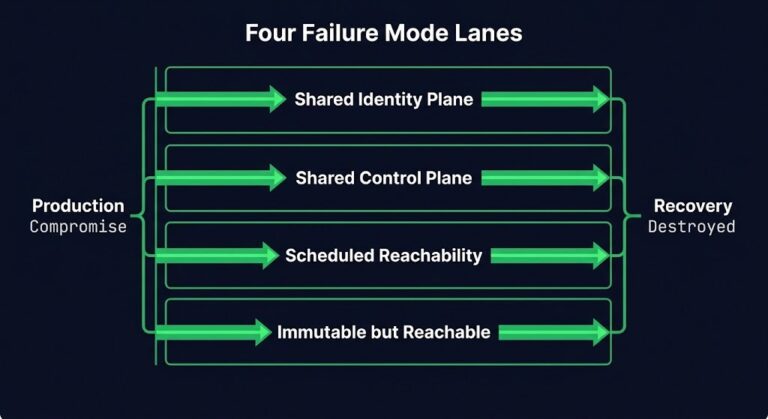
Most backup architectures marketed as air-gapped are not isolated. They are reachable systems with better storage controls. Shared identity, shared control plane, scheduled connectivity, and immutable-but-addressable storage all produce the same outcome: production compromise can still destroy recovery without touching backup data. Data protection and blast-radius isolation are different architectural properties. Data protection answers whether…
-
Incident Recovery Process: Why the Incident Isn’t Over After Restore
THE RECOVERY ENGINEERING SERIES PART 01 The Retry Storm Is a Self-Inflicted DDoS LIVE PART 02 Incident Recovery Process: Why the Incident Isn’t Over After Restore YOU ARE HERE PART 03 Recovery Ends the Outage. It Doesn’t End the Incident. LIVE PART 04 The Degradation Ladder: How Systems Fail Before They Fail LIVE The restore…
-
The Restore Path Is the Most Neglected Part of Backup Design
The restore path is where backup architectures fail — not the backup job, not the retention policy, not the storage tier. The path from a completed backup to a verified, production-usable state is the part of data protection design that most teams never model, never test, and discover only under incident conditions. This is not…
-
Ransomware Recovery Time Is an Architecture Problem, Not a Backup Problem
Ransomware recovery architecture is where most enterprise resilience programs break down — not because organizations lack backups, but because they never designed systems that could be rebuilt under pressure. Most organizations have backups. Most have runbooks. Many have incident response plans on file and backup automation running on schedule. And yet, when ransomware hits, recovery…
-
-
Rubrik vs Cohesity: Which Architecture Holds Under Ransomware Pressure?
Rubrik vs Cohesity ransomware protection looks identical on paper — until you simulate an attack. The marketing story for both Rubrik and Cohesity reads well: immutable snapshots, air-gapped vaults, threat detection, rapid recovery. On paper the gap between them is marginal. Under attack pressure, the architectural differences become operational consequences. This isn’t a feature comparison….