
-
-
Vendor Relationships End. Audit Rights Often Don’t.
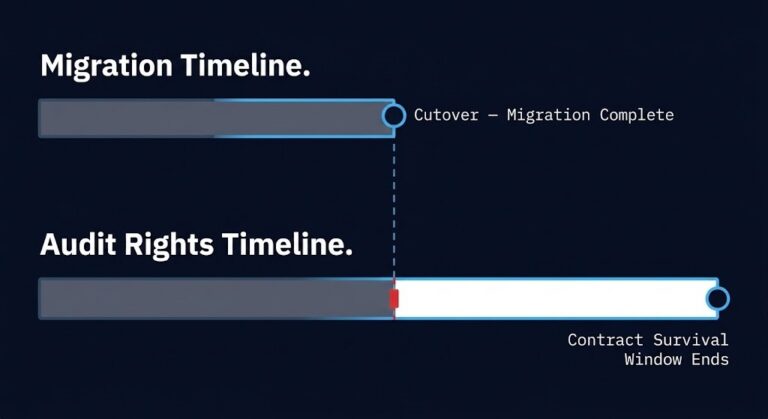
Audit rights don’t expire when a vendor relationship does. Most infrastructure teams don’t find that out until a contract clause outlives the migration project that was supposed to close the book on it. That’s the architectural question sitting underneath a federal lawsuit that has nothing to do with server racks. Broadcom-owned VMware is suing Allstate…
-
The Next Virtualization Battle Is Operational Simplicity
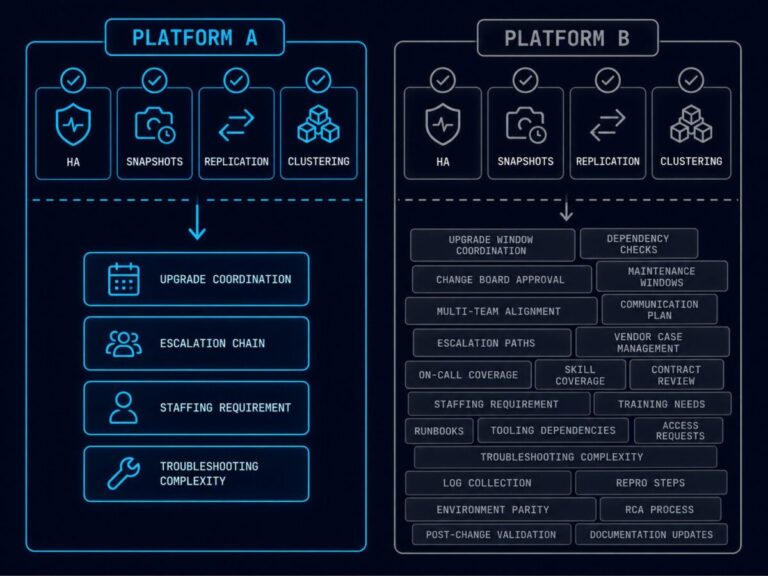
Operational simplicity is becoming the deciding factor in virtualization platform selection, not the feature checklist that used to settle the argument. For most of the last two decades, hypervisor competition was a capability race — who could virtualize more, scale further, and eventually replace VMware’s own feature set. That race is effectively over. HA, snapshots,…
-
The Dashboard Said the Migration Succeeded
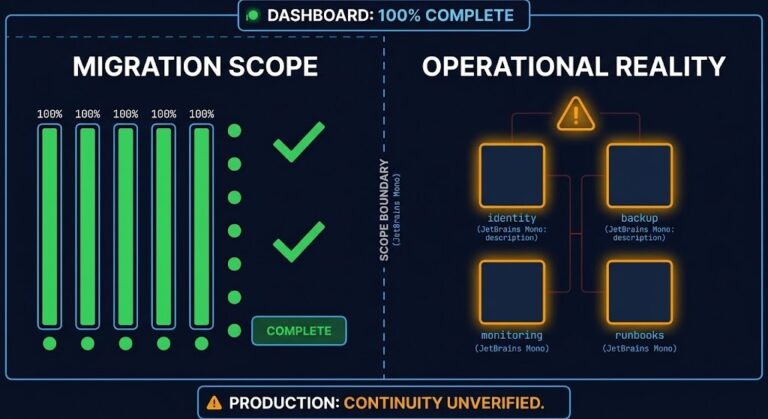
Migration dashboard failure has a consistent pattern: the tooling reports 100% complete, health checks pass, services respond — and production discovers a different set of facts three weeks later. The dashboard wasn’t wrong. It measured exactly what it was designed to measure. Task completion against a pre-defined scope. Operational continuity was never in that scope….
-
-
The VM That Survived the Migration But Lost Its Identity
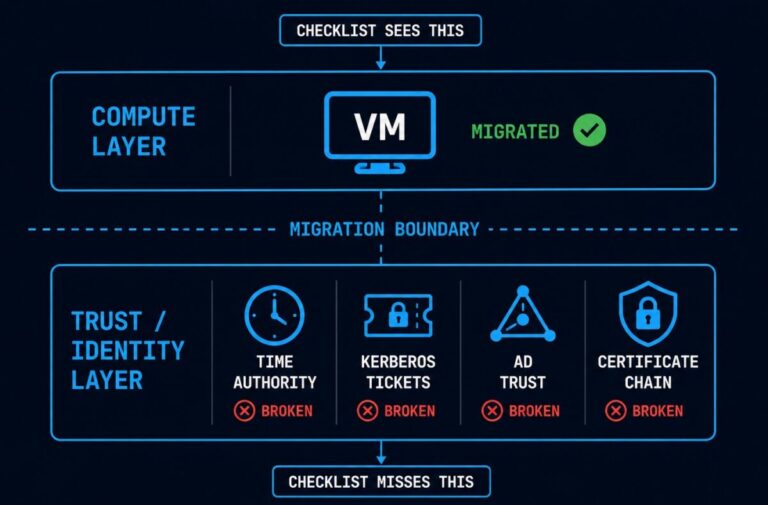
The most expensive vmware migration issues don’t happen at cutover. They happen three days later, when something that passed every checklist starts failing in ways nobody can trace back to the migration. The migration ran clean. The VM came up on AHV within the expected window. Storage latency was nominal. The health check returned green….
-
The Control Plane Problem In VMware Alternatives
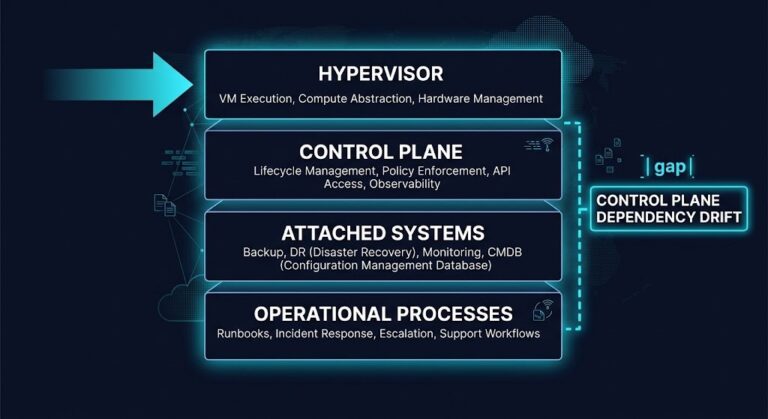
Most VMware migration plans inventory VMs, clusters, storage, and licensing. Very few inventory the operational assumptions attached to vCenter itself. The result is predictable: the hypervisor migration succeeds in staging, but production operations degrade because the virtualization control plane functions the organization depended on were never modeled as architecture. This isn’t a technology maturity problem….
-
The “Lift-and-Shift to KVM” Fallacy
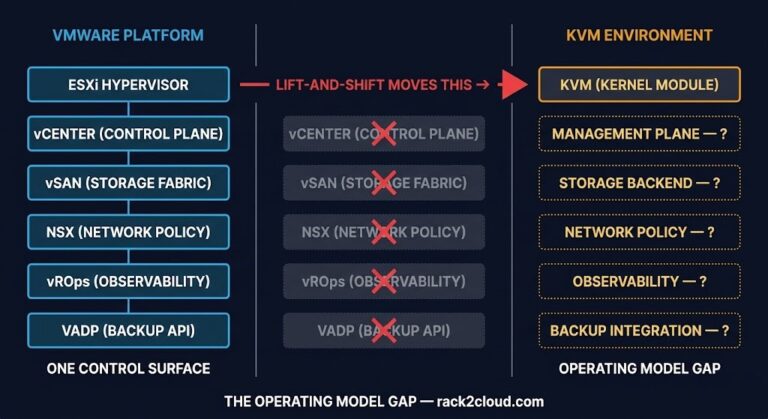
The VM conversion completed without errors. Every workload made it across. The migration dashboard showed green, the project lead closed the ticket, and the consultants left the building. Three weeks later, backup verification jobs are silently failing. Monitoring dashboards are dark. The on-call team is operating without baselines. Nobody knows what normal looks like on…
-
Azure VMware Solution vs Native Azure: Architecture Trade-offs, Costs, and Exit Risk
Azure VMware Solution looks like the safe path out of a Broadcom licensing conversation. Your team already knows vSphere. Your tooling already maps to VMware constructs. AVS lets you move workloads to Azure without retraining anyone or rearchitecting anything. On paper, the risk profile looks low. In practice, you’re not choosing where to run workloads….
-
Nutanix vs VMware: The Post-Broadcom Decision Framework (2026)
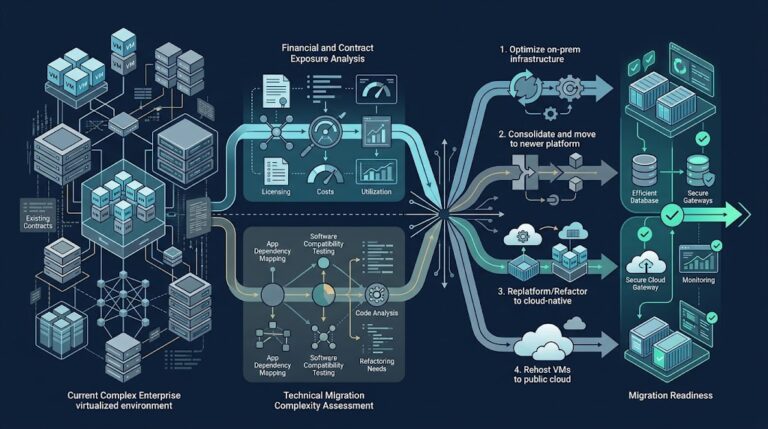
The Nutanix vs VMware post-Broadcom decision isn’t a hypervisor evaluation anymore — it’s a vendor-exposure decision with multi-year budget consequences. Pre-Broadcom, the VMware vs. Nutanix conversation was an architecture conversation. You weighed feature sets, performance characteristics, ecosystem depth, and operational fit. The hypervisor was a technical decision. Post-Broadcom, the unit of decision changed entirely. You…