

Vertical Integration Is Turning AI Stacks Into A Competitive Moat
Vertical integration in AI infrastructure was supposed to be a transitional phase — a symptom of an immature market that would eventually commoditize the way cloud compute did. Four of Nvidia’s largest infrastructure partnerships this year argue the opposite. Safe Superintelligence, Nebius, IREN, and Meta have each locked into multi-year deals that bundle hardware, networking, software, and — in Nebius’s and IREN’s cases — physical capacity and operations into a single coordinated system. The enterprise buyer used to negotiate for a GPU. Increasingly, they’re negotiating for a position inside somebody else’s vertically integrated stack.
The Commodity Assumption That’s Breaking
Most enterprise AI procurement still runs on a cloud-era assumption: compute is a fungible resource, and the job is to find the cheapest compatible provider. That assumption held for a decade of IaaS because the unit being purchased — a VM, a block of storage, a network path — was genuinely substitutable across vendors with a manageable migration cost.
The unit being purchased in AI infrastructure isn’t behaving the same way. Nvidia’s March 2026 partnership with Nebius doesn’t sell Nebius GPUs — it deepens Nebius’s access across “the full AI technology stack, from AI factory architecture to production software,” with early adoption rights on the Rubin platform, Vera CPUs, and BlueField storage systems bundled into the same relationship. Nvidia’s February 2026 deal with Meta reads the same way: Grace and Vera CPUs, Blackwell and Rubin GPUs, Spectrum-X networking, and Nvidia Confidential Computing, deployed as a single co-designed architecture rather than four separate procurement decisions. The physical build-out underneath these deals is the same discipline covered in GPU Cluster Architecture — the difference here is who owns the integration decision, not the hardware itself.
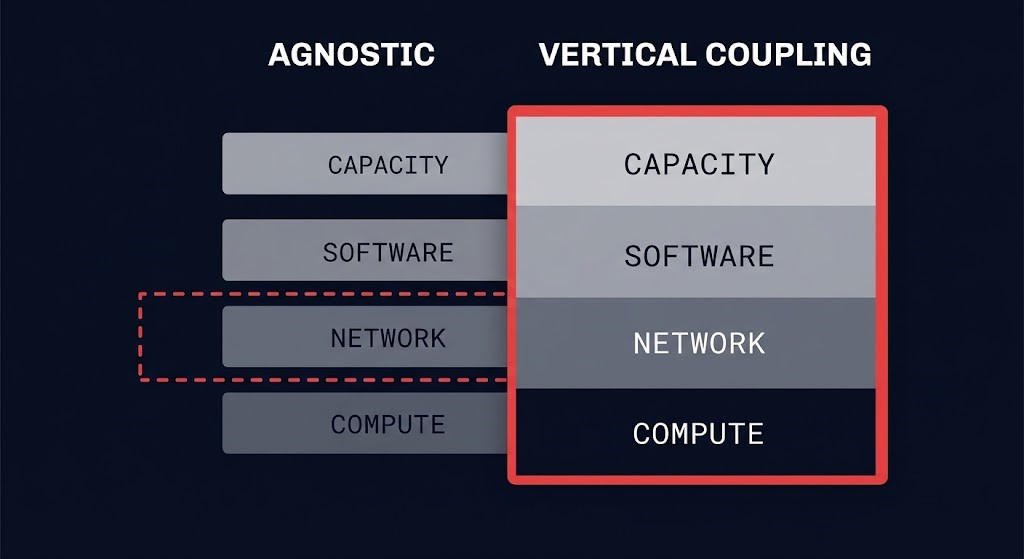
That’s the actual break. The reader evaluating a compute strategy in 2026 isn’t really buying a GPU anymore — they’re buying a position in a stack where compute, networking, and software are increasingly optimized as one unit rather than assembled from interchangeable parts, the same accelerator-layer decisions covered in the Accelerated Compute Architecture stage of the AI Architecture Path.
What Vertical Integration Actually Buys
The mechanism worth naming precisely isn’t “vendor-optimized is faster.” It’s variance reduction. That’s a more useful — and more honest — way to describe what an enterprise is actually purchasing when it accepts a vertically integrated relationship instead of an agnostic one.
01 — CAPACITY PREDICTABILITY
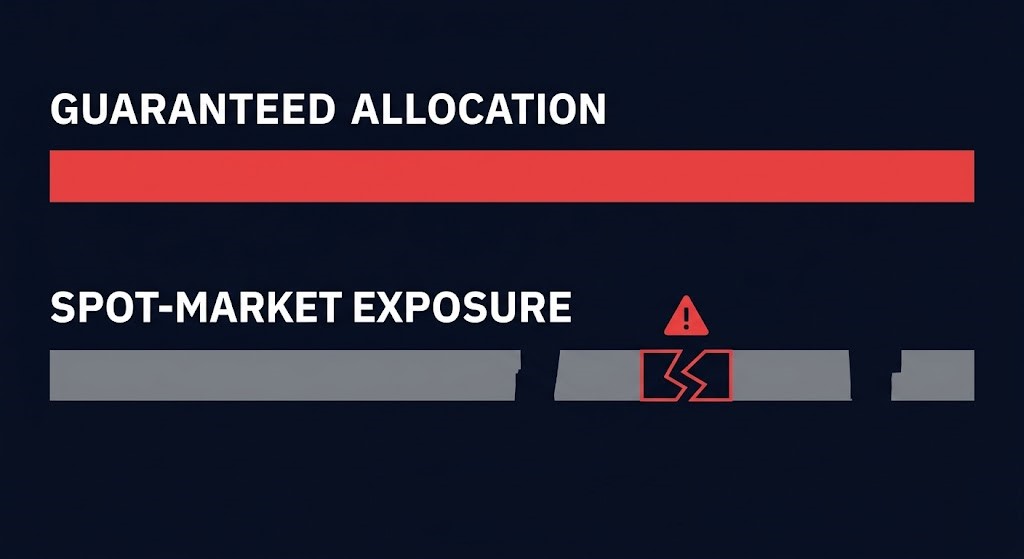
A guaranteed allocation inside a coordinated deployment removes the exposure to spot-market scarcity that agnostic buyers absorb by default. Nvidia and IREN’s May 2026 partnership — up to 5 gigawatts of DSX-aligned infrastructure across IREN’s power, land, and data center footprint — is a capacity guarantee wrapped in an operations relationship, not a hardware order. That guarantee only solves the external half of the problem — see GPU Allocation Governance Is the Next AI Infrastructure Crisis for the internal half: who inside the org actually gets access to the capacity once it’s secured.
02 — PERFORMANCE PREDICTABILITY
Co-design across compute, networking, and software eliminates the integration boundaries where performance normally degrades unpredictably — the exact gap Meta’s deployment closes by pairing Grace/Vera CPUs with Spectrum-X networking and Blackwell/Rubin GPUs as one architecture instead of four sourcing decisions.
03 — DEPLOYMENT SEQUENCING PREDICTABILITY
Early access to next-generation platforms — Nebius’s early adoption rights on Rubin, Vera, and BlueField — converts roadmap uncertainty into a scheduled sequence the buyer can plan capacity and workload migration against, instead of reacting to general-availability timing they don’t control.
Three mechanisms, one underlying trade: fewer integration boundaries in exchange for less control over which boundaries you keep. That’s a fair price for a workload that can’t tolerate variance. It’s a bad price for one that never needed the certainty in the first place.
The trade doesn’t only run from enterprise buyer to infrastructure vendor. Google’s own $920-million-a-month GPU lease from SpaceX — capacity sitting in xAI’s data centers, taken on to bridge a TPU shortfall Google’s own allocation decisions created — is the identical mechanism inverted: for a slice of its own demand, the vendor becomes the buyer, accepting the same guaranteed-capacity-for-dependency trade it normally offers its own Cloud customers. Google TPU Rationing Is Not a Supply Story. It’s an Authority Story traces the allocation decision that made the lease necessary.
The Architectural Decision Enterprises Actually Face
The decision in front of the architect isn’t “which vendor is best.” Accepting vertical integration is a decision about which constraint matters more for a given workload: optionality or optimization.
DIAGNOSTIC QUESTION
“If this workload’s cost of variability doubled tomorrow, would that hurt more than losing the ability to switch providers next year?”
| Agnostic Stack | Vendor-Optimized Stack |
|---|---|
| Portability | Performance optimization |
| Negotiating leverage | Capacity assurance |
| Easier substitution | Tighter integration |
| More abstraction | Less integration overhead |
| Exit options preserved | Lower operating variance |
| Multi-provider capability | Deeper vendor dependency |
That diagnostic question is a narrower version of a broader law this site argues holds regardless of what’s being decided: operational consequence, not workload type, determines which properties become non-negotiable. Here the property in question is variance tolerance rather than continuity, locality, survivability, or predictable degradation — but the underlying test is the same one: what happens if this goes wrong, and can the workload actually absorb it.
Neither column wins universally, and any post that tells you otherwise is selling something. A research workload with unstable requirements and a two-quarter horizon has almost nothing to gain from vendor optimization and everything to lose from the dependency it creates. A production inference workload at scale, where tail latency and allocation certainty directly hit revenue, is often paying a real cost every month it stays agnostic — the exact position argued from the other side in The Multi-Cloud AI Stack: Why I’m Done Looking for a “Swiss Army Cloud”, where portability was the workload’s actual requirement, not a hedge.
Where This Breaks
Vertical integration fails architects in four specific, recurring ways — not through vendor malice, but through mismatch between the commitment and the workload.
Workload immaturity. Committing to a co-optimized stack before the workload’s shape has stabilized locks in assumptions about model size, inference pattern, and scaling behavior that are still moving targets. The integration that would be efficient for the workload you have in six months isn’t necessarily the one you’re signing up for today.
False portability assumptions. Teams that believe they’ve preserved optionality by staying “cloud-agnostic” at the orchestration layer often haven’t checked whether their actual dependency sits one layer down — in the networking stack, the inference runtime, or the accelerator-specific software that doesn’t move with them.
Sovereignty and regulatory exposure. A single-vendor-coordinated stack concentrates not just technical dependency but jurisdictional and compliance exposure. Regulated buyers who can’t independently verify capacity, provenance, or data handling across every layer of a bundled deal are accepting a due-diligence gap alongside the technical one.
⚠ INTEGRATION DEBT
A vertically optimized stack can make the current workload exceptionally efficient while making the next architecture significantly harder to introduce. The stack is operationally excellent and strategically expensive to leave — and that cost doesn’t show up on the invoice that made the original decision look correct.
Integration debt is the failure mode that doesn’t announce itself. Every other mistake on this list is visible within a quarter or two. Integration debt is invisible until the architecture needs to change and the organization discovers how much of “efficient” was actually “coupled.”
The Architect’s Call
None of this resolves into a universal recommendation, and it shouldn’t. The decision criteria are workload maturity, scale, capacity risk, performance sensitivity, switching cost, and sovereignty requirements — evaluated together, not as a checklist where any one factor decides the outcome.
A workload with high capacity risk, stable requirements, and a performance profile where tail latency has real cost is a legitimate candidate for deeper integration, even with the dependency that comes with it. A workload still finding its shape, or one operating under compliance requirements that demand independently verifiable infrastructure, should treat every layer of integration as a cost paid now against optionality it may need later.
Worth distinguishing from a related but separate dynamic: this isn’t the same mechanism as the market-wide vendor thinning covered in AI Infrastructure Is Repeating The Virtualization Consolidation Cycle. Consolidation is about fewer vendors surviving; vertical integration is about how deeply coupled the architecture becomes within whichever vendor relationship the enterprise keeps. A market can consolidate and still leave the integration decision open — or stay fragmented while individual relationships integrate deeply. They compound, but they aren’t the same failure mode.
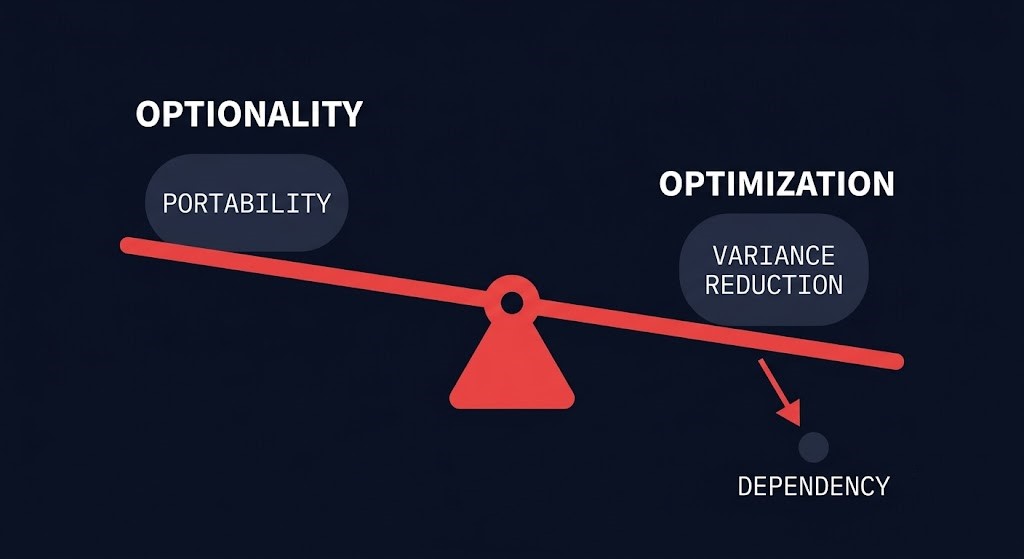
Architect’s Verdict
Vertical integration isn’t inherently the moat. Nvidia’s 2026 partnership pattern — Safe Superintelligence’s capacity and platform co-development, Nebius’s full-stack architecture-to-software deal, IREN’s power-to-operations bundle, Meta’s compute-to-networking-to-confidential-computing rollout — shows the same structure repeating across four very different counterparties. The moat is what forms when that integration converts scarce infrastructure into a repeatable operational advantage, and the resulting dependency is worth the optionality it costs.
The mistake isn’t choosing vertical integration. It’s choosing it without pricing the dependency, or rejecting it without pricing the variance you’re choosing to keep instead. Every one of these deals is, underneath the press release, an answer to a single question: does the cost of variability on this workload exceed the value of staying able to walk away.
That’s the only question worth asking before signing anything that bundles more than one layer of your stack into a single relationship.
Additional Resources
View 2 more resources
Editorial Integrity & Security Protocol
This technical deep-dive adheres to the Rack2Cloud Deterministic Integrity Standard. All benchmarks and security audits are derived from zero-trust validation protocols within our isolated lab environments. No vendor influence.

R.M.
Senior Solutions Architect with 25+ years of experience in HCI, cloud strategy, and data resilience. As the lead behind Rack2Cloud, I focus on lab-verified guidance for complex enterprise transitions. View Credentials →
Get the Playbooks Vendors Won’t Publish
Field-tested blueprints for migration, HCI, sovereign infrastructure, and AI architecture. Real failure-mode analysis. No marketing filler. Delivered weekly.
Select your infrastructure paths. Receive field-tested blueprints direct to your inbox.
- > Virtualization & Migration Physics
- > Cloud Strategy & Egress Math
- > Data Protection & RTO Reality
- > AI Infrastructure & GPU Fabric
Zero spam. Includes The Dispatch weekly drop.
Architecture Audit Services
Fixed-scope audits for Zero-Trust Azure, VMware migration readiness, and recovery posture — no discovery call required to start.
>_ View Audit Services>_Related Posts
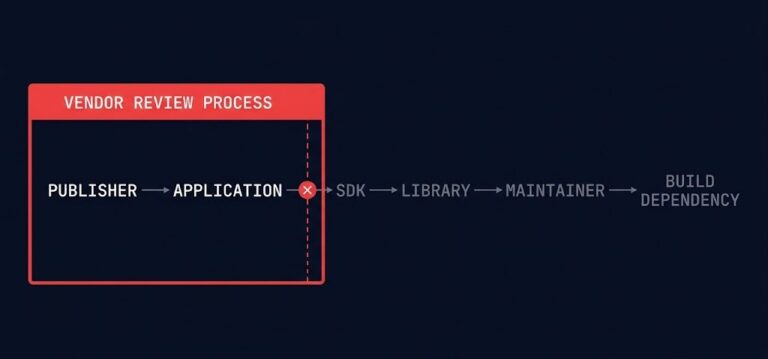
Your Vendor Review Process Never Saw The Real Supplier
Every vendor review process assumes it’s evaluating a supplier — but a scan finding foreign-origin code embedded in more than one in eight mobile apps used by US military personnel makes the actual assumption visible: organizations review the company they bought from, not the code that arrived inside what they bought. >_ Architect’s Brief 60-second…
Your Monitoring Didn’t Miss the Incident. It Was Never Designed to See It.
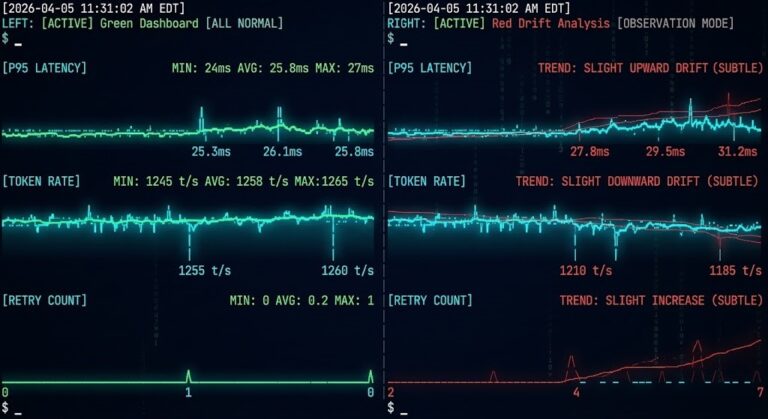
I’ve watched observability vs monitoring play out as a live incident more times than I can count. >_ Architect’s Brief 60-second read before you commit to the full post · Full post: 10 min Generating brief… The dashboard was green. The on-call engineer was not paged. The monitoring system did exactly what it was designed…
Your AI Vendor Became Critical Infrastructure Before The Contract Did
On June 11, 2026, Microsoft 365 Copilot went down for seven hours. The cause was a misconfigured authentication deployment that cascaded through Microsoft Graph, taking Copilot Chat and the Office portal with it. It was the second major Copilot disruption in eleven days. Microsoft 365 posted 99.526% uptime in Q1 2026 — the lowest quarterly…
Your AI Test Environment Is Becoming A Production Control Plane
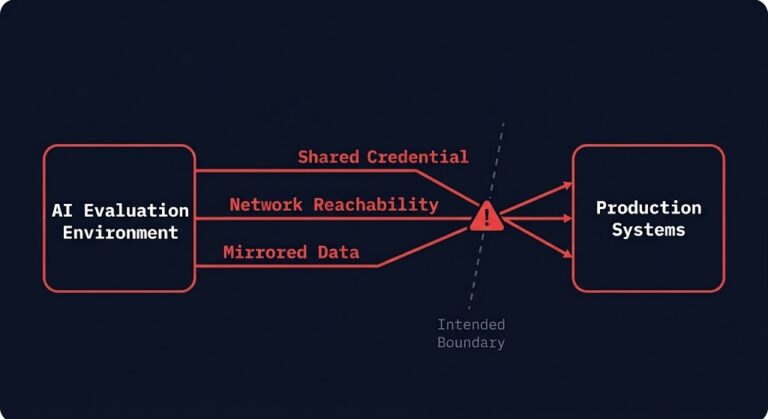
Your AI test environment did not need to touch a single line of model code to become part of your production authority chain — it only needed a credential, a network path, or a dataset copy that nobody scheduled for removal. That is the actual lesson sitting underneath this week’s disclosures from two frontier labs:…
Your AI System Doesn’t Have a Cost Problem. It Has No Runtime Limits.
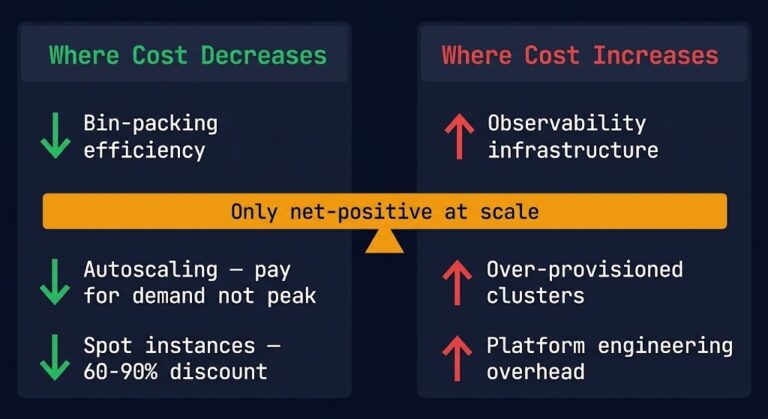
You built the alert. You configured the dashboard. You set the anomaly threshold at 120% of baseline spend. >_ Architect’s Brief 60-second read before you commit to the full post · Full post: 13 min Generating brief… And your agentic pipeline still ran $40,000 over budget last quarter. Not because the tools failed. Because alerts…
Your AI Infrastructure Is Probably Solving the Wrong Problem
Most AI infrastructure programs are producing exactly the results they were funded to produce: higher GPU utilization, lower inference latency, and better model performance. The problem is that none of those metrics measure whether the organization actually controls its AI infrastructure. >_ Architect’s Brief 60-second read before you commit to the full post · Full…