

GM’s Brake-by-Wire Investigation Is a Verification Story

The growing investigation into the eBoost brake failure issue has become more than an automotive reliability story. It is increasingly a verification story: the difference between a failure mode documented in design assumptions and the behavior reported in production.
This is what the eBoost brake failure investigation actually involves, in numbers. General Motors’ electro-hydraulic eBoost system is now the subject of NHTSA Engineering Analysis EA26006, an escalation from the preliminary evaluation opened in 2024. The scope: 1,164,820 vehicles across fourteen nameplates spanning General Motors, Honda, and Acura, model years 2023 through 2026. The Office of Defects Investigation has logged 745 unique incident reports, 22 crashes or fires, and six injuries. No fatalities. No recall — yet. The 1,164,820 figure is the population under investigation, not a count of vehicles confirmed to have experienced the failure, and the 745 reports are reports — not 745 confirmed instances of a single defect.
What makes this eBoost brake failure story a Rack2Cloud story isn’t the hardware. It’s the shape of the discrepancy that triggered the escalation.
What GM’s Design Says Should Happen
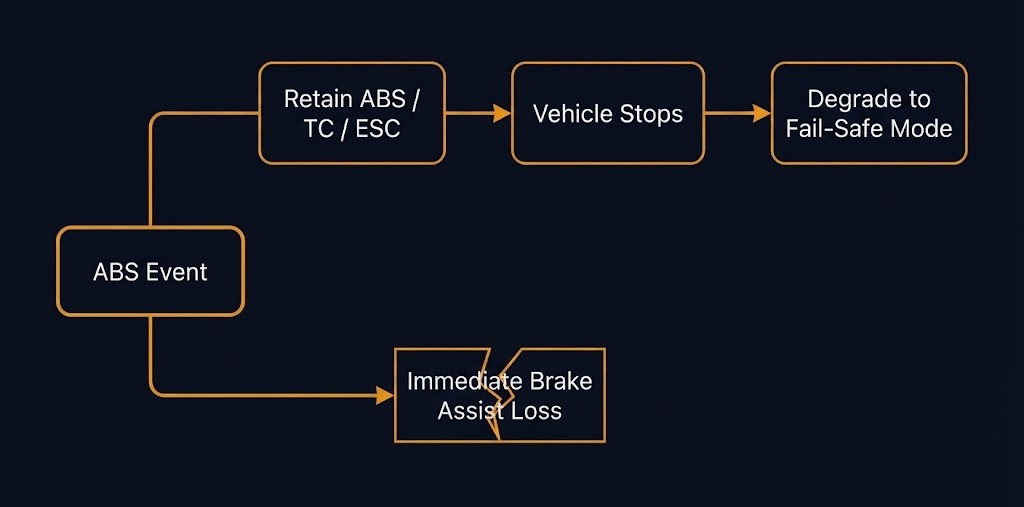
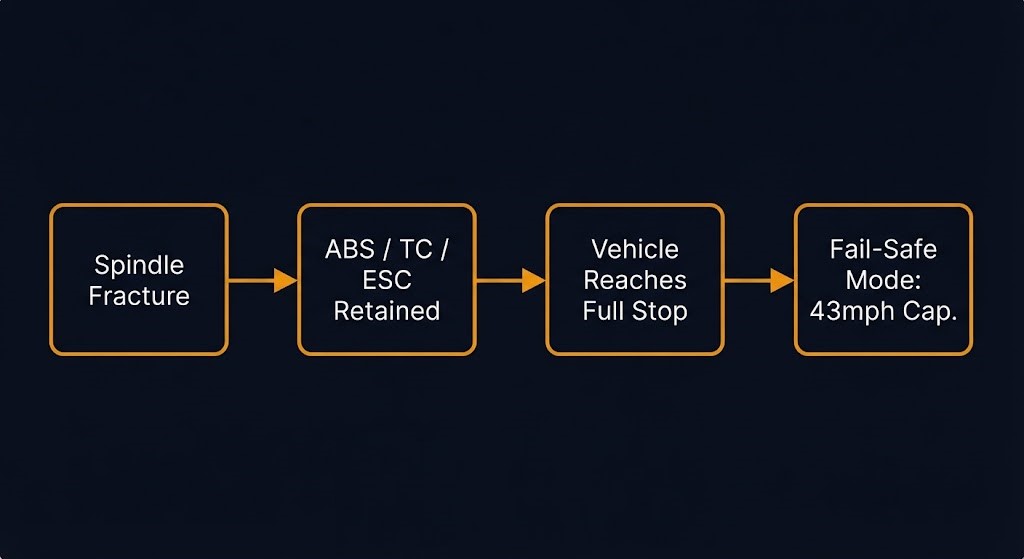
GM’s explanation for the eBoost brake failure centers on a spindle inside the eBoost electronic brake control module — a component GM says can fracture under the mechanical loads generated during an anti-lock braking event. According to GM’s own technical response, a spindle fracture triggers a specific, ordered degradation sequence. GM’s technical response also describes dynamic testing involving a fractured spindle during an ABS event, in which braking pressure already generated in the system was sufficient to carry the vehicle through that event — a behavior GM describes as “push-through braking”:
- Antilock brakes, traction control, and stability control remain functional through the ABS event and until the vehicle reaches a complete stop
- After the vehicle stops, the system can set diagnostic trouble codes, illuminate warning indicators, disable affected functions, and limit vehicle speed to approximately 43 mph
This is a designed control-plane response to a known failure condition, backed by GM’s own testing — the automotive equivalent of what Modern Infrastructure & IaC architecture treats as a documented, exercised runbook: when component X fails, the system is supposed to hold at reduced capability until a safe checkpoint, then degrade in a controlled, bounded way.
On paper, and in GM’s own test scenario, that’s a reasonable fail-safe. The problem is what happens when that documented, tested sequence meets the full range of conditions the fleet actually encounters.
What NHTSA Says Drivers Report
This is where the eBoost brake failure story pivots.
NHTSA’s Office of Defects Investigation has continued to receive reports since the original 2024 preliminary evaluation that don’t match GM’s described sequence. Instead of the graceful, stop-then-degrade pattern GM’s documentation describes, a subset of drivers report something categorically different: an immediate loss of brake assist while actively braking — not after the vehicle has already come to a stop.
That’s not merely a difference in degree. It describes a materially different failure behavior from the sequence GM documented and tested. GM’s design assumes the system fails after the safety-critical moment has passed. The reports NHTSA is now examining describe the system failing during it — the scenario the tested design was meant to avoid. That discrepancy is one of the central questions EA26006 is now examining, alongside the underlying eBoost component failures themselves.
To be precise about what’s actually established here: NHTSA has opened an Engineering Analysis. It has not concluded a root cause, and it has not determined whether GM’s original technical explanation is complete, wrong, or one of several interacting failure modes. The documented degradation path and the reported field behavior appear to diverge — whether that divergence traces to the spindle mechanism, a separate fault, or some combination remains under active investigation. GM has disputed the implication that the condition presents an unreasonable safety risk and has said it will continue cooperating with NHTSA as the investigation proceeds; EA26006 remains open, with no finding and no recall to date.
THE PARALLEL
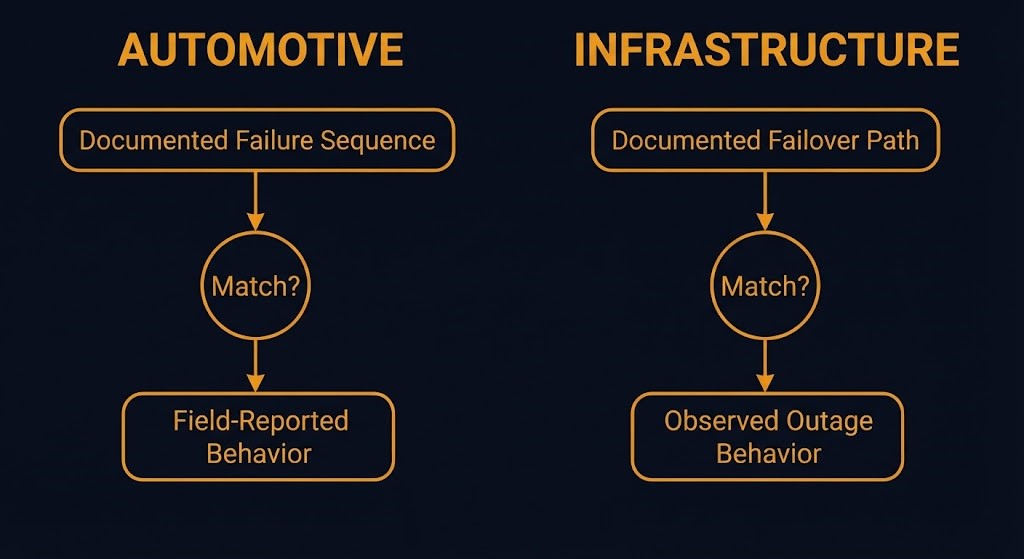
Automotive investigators are trying to determine whether reported vehicle behavior matches the documented degradation sequence. Infrastructure architects perform the same exercise after outages: compare the failure path described in the design with the failure path observed in production.
Architecture Translation: Failure-Path Verification
A fail-safe path is not verified because it exists in the design documentation. It’s verified when observed system behavior under failure conditions matches the behavior the design specifies — and that verification has to be strong enough to survive the range of conditions represented in production, not merely a representative test scenario after hundreds of field reports have surfaced a potential gap.
The eBoost brake failure is where that verification gap becomes visible. The architectural question is a control-plane validation problem, even though the underlying investigation may ultimately identify a hardware failure. Hardware failure and architectural failure aren’t the same claim. The spindle may well turn out to be exactly the problem — that’s for NHTSA and GM’s engineers to determine. The architectural failure, if there is one, occurs if the system’s documented response to that hardware failure doesn’t reliably match observed behavior across the full range of real-world conditions.
eBoost’s electronic brake control module is, functionally, a control plane sitting above the physical braking hardware — it decides what degraded-mode behavior looks like and when it activates. GM documented that behavior, and GM tested it — in at least one representative scenario. The unresolved question is whether that documented, tested sequence reliably predicts what happens across the full range of real-world operating conditions the field reports now represent. Testing one representation of a failure path doesn’t prove the production system exhibits that same path under every condition it will actually encounter.
The eBoost brake failure pattern isn’t unique to automotive. Infrastructure teams make this same category of assumption constantly, and often for defensible reasons: the fail-safe path is expensive and disruptive to fully exercise across every real condition, so it gets validated against a representative scenario and then trusted at that scope until a wider range of production conditions forces a broader comparison. The pattern recurs everywhere a failover path is documented rather than forced: a multi-cloud failover path assumed to work because it was designed to, a DNS failover that passed every static check but was never actually exercised in practice, a DR test that passed without actually exercising the assumptions underneath it. A documented failover path that has only been forced and observed under one representative condition isn’t a fully verified control — it’s a hypothesis that’s held up once, with an owner’s name attached to it.
The distinction that matters here isn’t “did the component fail.” Components fail; that’s the premise the design was built around. The distinction is whether the system’s response to that failure matched what the design said it would do. When it doesn’t, the failure isn’t really in the spindle, or the disk, or the node — it’s in the untested gap between the documented failure path and the one that shows up in production.
Architect’s Verdict
A fail-safe path is not verified because it exists in the design — it’s verified when observed behavior matches designed behavior under failure conditions. The moment those two diverge, the question stops being “did the component fail?” and becomes “did the system fail the way we expected it to?”
That’s the architectural question exposed by EA26006: did the system fail the way we expected it to? It’s also the question every infrastructure team should be asking about its own documented failover paths — before a customer, a regulator, or hundreds of incident reports asks it for them. The eBoost brake failure investigation is still open — but the architectural question it raises isn’t.
Additional Resources
Editorial Integrity & Security Protocol
This technical deep-dive adheres to the Rack2Cloud Deterministic Integrity Standard. All benchmarks and security audits are derived from zero-trust validation protocols within our isolated lab environments. No vendor influence.

R.M.
Senior Solutions Architect with 25+ years of experience in HCI, cloud strategy, and data resilience. As the lead behind Rack2Cloud, I focus on lab-verified guidance for complex enterprise transitions. View Credentials →
Get the Playbooks Vendors Won’t Publish
Field-tested blueprints for migration, HCI, sovereign infrastructure, and AI architecture. Real failure-mode analysis. No marketing filler. Delivered weekly.
Select your infrastructure paths. Receive field-tested blueprints direct to your inbox.
- > Virtualization & Migration Physics
- > Cloud Strategy & Egress Math
- > Data Protection & RTO Reality
- > AI Infrastructure & GPU Fabric
Zero spam. Includes The Dispatch weekly drop.
Architecture Audit Services
Fixed-scope audits for Zero-Trust Azure, VMware migration readiness, and recovery posture — no discovery call required to start.
>_ View Audit Services>_Related Posts
ZFS vs Ceph vs NVMe-oF: Choosing the Right Storage Backend for Modern Virtualization
I still have nightmares about a storage migration I ran back in 2014. >_ Architect’s Brief 60-second read before you commit to the full post · Full post: 7 min Generating brief… We were moving off a monolithic SAN and onto an early “software-defined” storage platform. The sales engineers promised infinite scalability and self-healing magic….
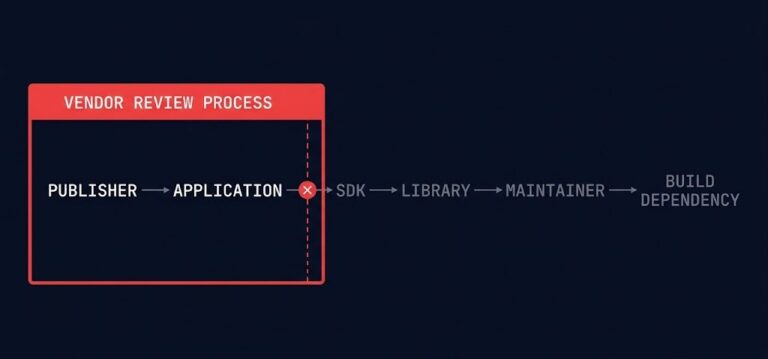
Your Vendor Review Process Never Saw The Real Supplier
Every vendor review process assumes it’s evaluating a supplier — but a scan finding foreign-origin code embedded in more than one in eight mobile apps used by US military personnel makes the actual assumption visible: organizations review the company they bought from, not the code that arrived inside what they bought. >_ Architect’s Brief 60-second…
Your Kubernetes Cluster Isn’t Out of CPU — The Scheduler Is Stuck
Compute Tier 1 Authority Cascades to ➔ >_ Architect’s Brief 60-second read before you commit to the full post · Full post: 9 min Generating brief… [Storage] [Network] 🚨 Failure Signature Detected Grafana shows cluster CPU utilization is under 50%, but pods are stuck in Pending. Events show: 0/10 nodes are available: 10 Insufficient cpu….
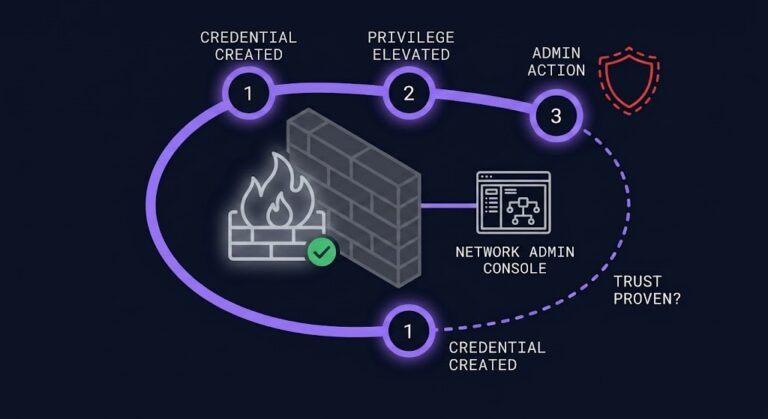
Your Identity Controls Passed. Your Authorization Chain Failed.
A credential chain functioned exactly as it was designed to. No firewall failed. No exploit executed. No malware bypassed a control. A red team walked past physical and social barriers using nothing more exotic than a plausible pretext, and came out the other side holding network admin credentials — issued correctly, authorized correctly, working exactly…
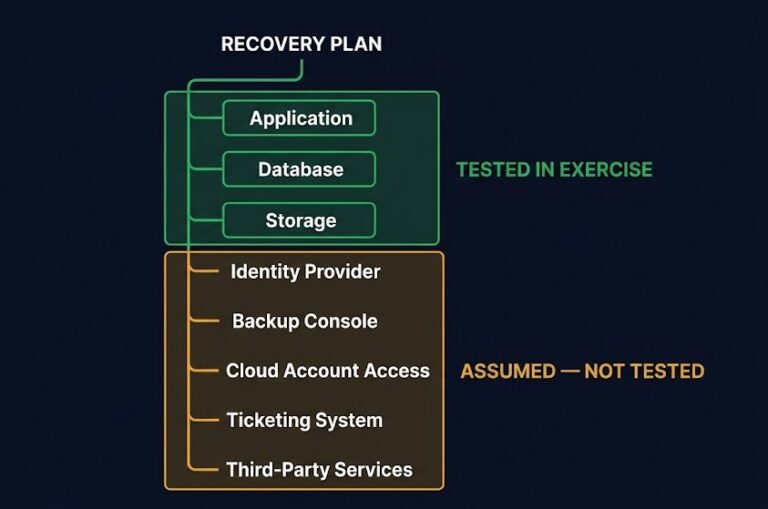
Your DR Test Passed. The Assumptions Didn’t.
DR plan failure rarely happens where you tested. It happens at the assumptions the exercise never reached — the dependencies that weren’t in scope, the runbook written for last year’s architecture, the authority chain nobody tested at 2am.
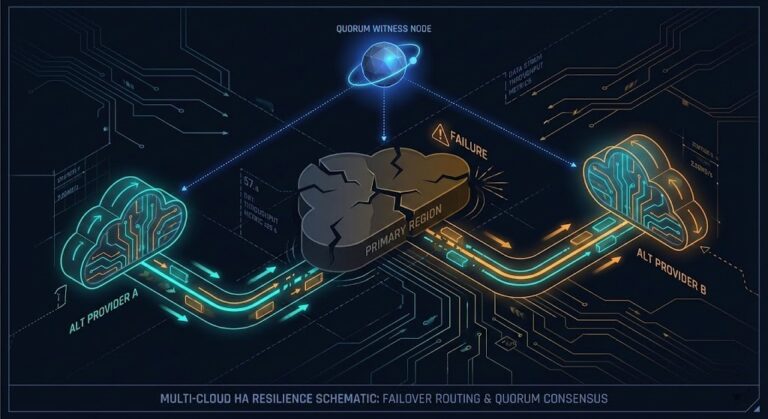
Your Cloud Provider Is Not Your HA Strategy
A Tactical Playbook for Architecting, Testing, and Automating Real Multi-Cloud & Multi-Region Resilience We’ve previously explored why cloud SLAs fail as guarantees in our deep dive, Cloud SLA Failure & Resilience Strategy. This article focuses on how to survive those failures in practice — architecturally, operationally, and financially. >_ Architect’s Brief 60-second read before you…