
-
-
The VMware Exit Has Entered the Coexistence Era
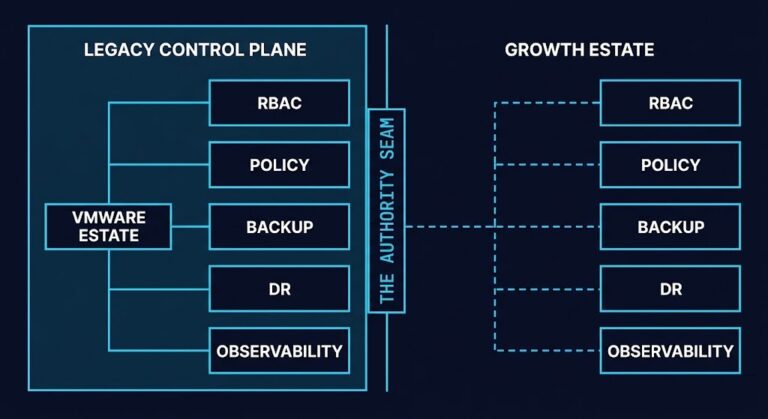
Somewhere around 2025, the enterprise conversation about VMware quietly rewrote its own objective. “Replace VMware” became “reduce VMware dependency” — not in any formal announcement, not in a strategy document, but in the actual architecture decisions organizations were making as migration programs ran longer than planned and the complexity of what they were replacing became…
-
The Control Plane Problem In VMware Alternatives
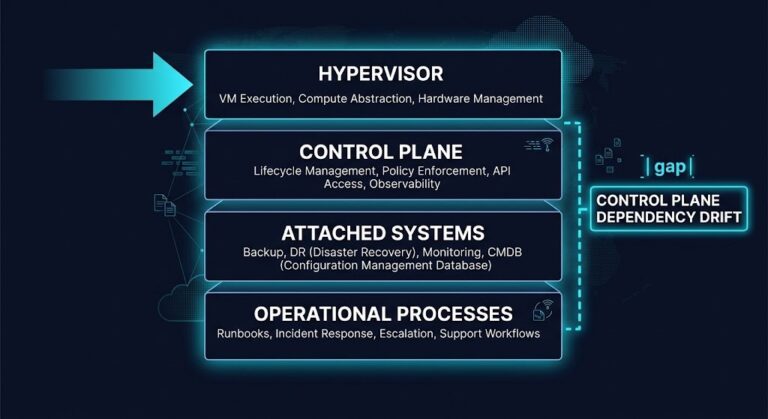
Most VMware migration plans inventory VMs, clusters, storage, and licensing. Very few inventory the operational assumptions attached to vCenter itself. The result is predictable: the hypervisor migration succeeds in staging, but production operations degrade because the virtualization control plane functions the organization depended on were never modeled as architecture. This isn’t a technology maturity problem….
-
The Skills Gap Is the Real VMware Exit Risk
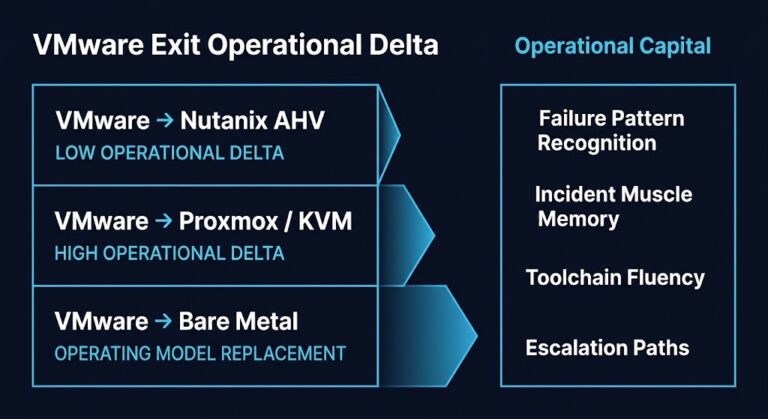
The vmware skills gap that stalls migrations is not a certification problem. It is not a headcount problem. It is an operating model problem — and most VMware exit plans never model it. When an organization exits VMware, the platform changes. The operating model — the accumulated behavior, toolchain fluency, and institutional memory built over…
-
The “Lift-and-Shift to KVM” Fallacy
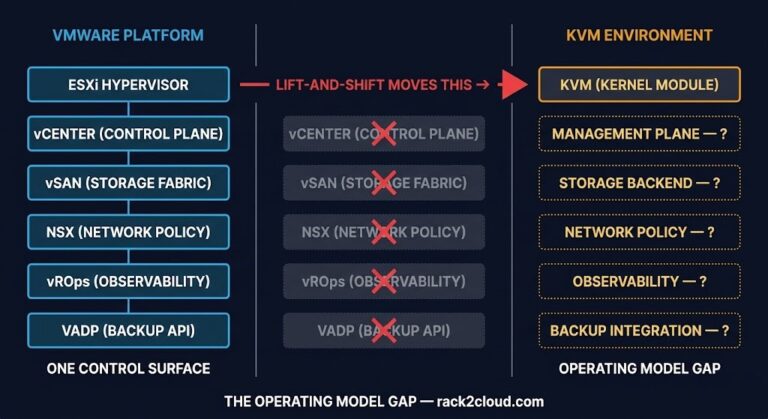
The VM conversion completed without errors. Every workload made it across. The migration dashboard showed green, the project lead closed the ticket, and the consultants left the building. Three weeks later, backup verification jobs are silently failing. Monitoring dashboards are dark. The on-call team is operating without baselines. Nobody knows what normal looks like on…
-
Azure VMware Solution vs Native Azure: Architecture Trade-offs, Costs, and Exit Risk
Azure VMware Solution looks like the safe path out of a Broadcom licensing conversation. Your team already knows vSphere. Your tooling already maps to VMware constructs. AVS lets you move workloads to Azure without retraining anyone or rearchitecting anything. On paper, the risk profile looks low. In practice, you’re not choosing where to run workloads….
-
AI Infrastructure | Cloud Architecture | Kubernetes | Modern Infrastructure | Virtualization Architecture
The Control Plane Shift: Every Infrastructure Decision Now Looks the Same
The control plane shift is the most important infrastructure concept of 2026 — and most teams are experiencing it three or four times simultaneously without recognizing it as the same decision each time. Your VMware renewal lands on the desk. The number is larger than last year. You open a spreadsheet and start modeling Nutanix….
-
Velero Going CNCF Isn’t About Backup. It’s About Control.
The Velero CNCF backup announcement at KubeCon EU 2026 in Amsterdam was framed as an open source governance story. Broadcom had contributed Velero — its Kubernetes-native backup, restore, and migration tool — to the CNCF Sandbox, where it was accepted by the CNCF Technical Oversight Committee. The Sandbox application was originally filed in February 2026….
-
Nutanix vs VMware: The Post-Broadcom Decision Framework (2026)
The Nutanix vs VMware post-Broadcom decision isn’t a hypervisor evaluation anymore — it’s a vendor-exposure decision with multi-year budget consequences. Pre-Broadcom, the VMware vs. Nutanix conversation was an architecture conversation. You weighed feature sets, performance characteristics, ecosystem depth, and operational fit. The hypervisor was a technical decision. Post-Broadcom, the unit of decision changed entirely. You…
-
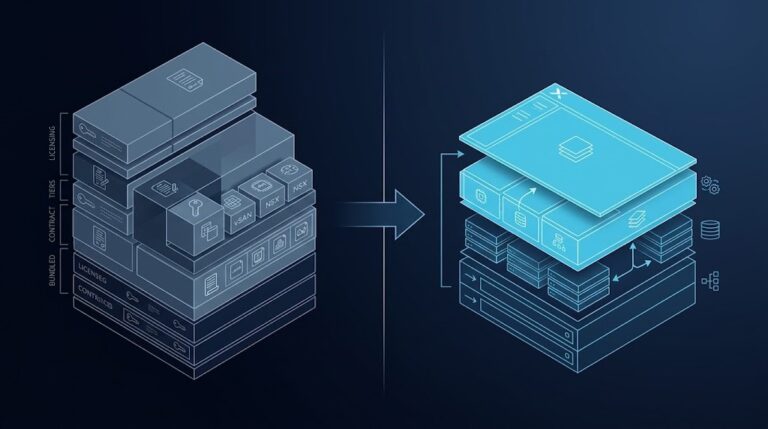
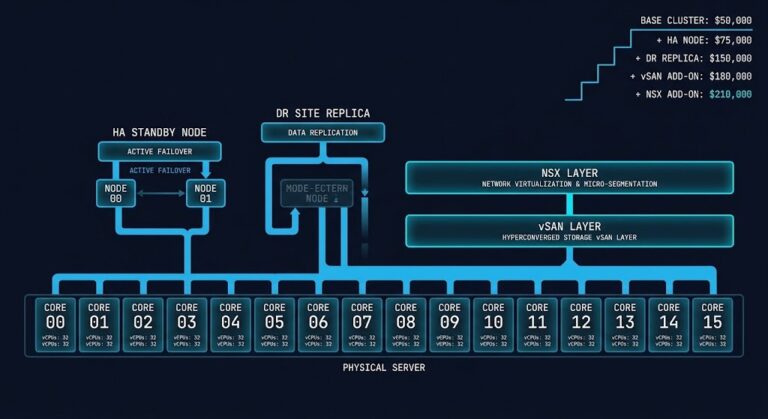
VMware Licensing Costs: Why Most Estimates Are Wrong (And How to Fix Them)
You didn’t underestimate VMware licensing. You underestimated how it’s calculated. That distinction matters more than it sounds. The teams that get surprised by VMware renewal numbers aren’t making arithmetic errors. They’re modeling the wrong thing entirely — counting virtual machines when the invoice is counting physical cores, projecting year-one costs when the real exposure is…