STRATEGIC ENGINEERING MANDATE
The journey from legacy infrastructure to modern cloud-native platforms is often obstructed by marketing-driven abstraction and tool-centric noise. Most technical journals focus on the "Day-1" installation — the easy path. Rack2Cloud documents the Day-2 production reality. We analyze how systems actually behave under load, at the boundaries of integration, and within the constraints of sovereign requirements.
Our field notes serve as a deterministic guide for the architect navigating the complexity gap. We prioritize the physics of data and the logic of high availability over vendor checklists.
"In production, complexity is the default state; architecture is the only defense."
DATA PROTECTION
By R M · 07/28/2026
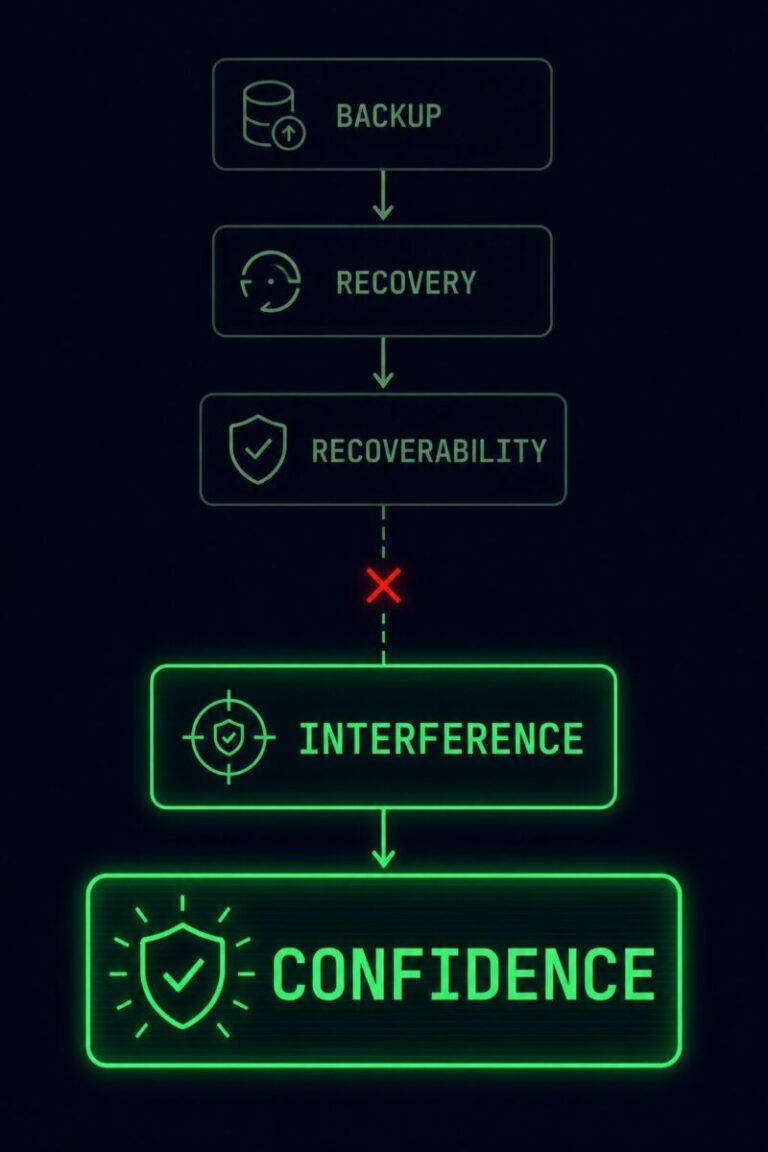
Adversarial restore testing exists because recovery used to assume cooperation, and modern incidents assume interference. For fifteen years, restore testing asked three questions: can…
READ MORE →
DATA PROTECTION
By R M · 07/22/2026
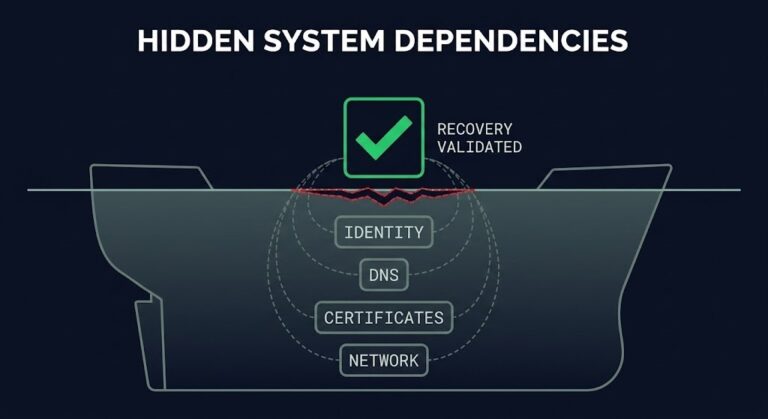
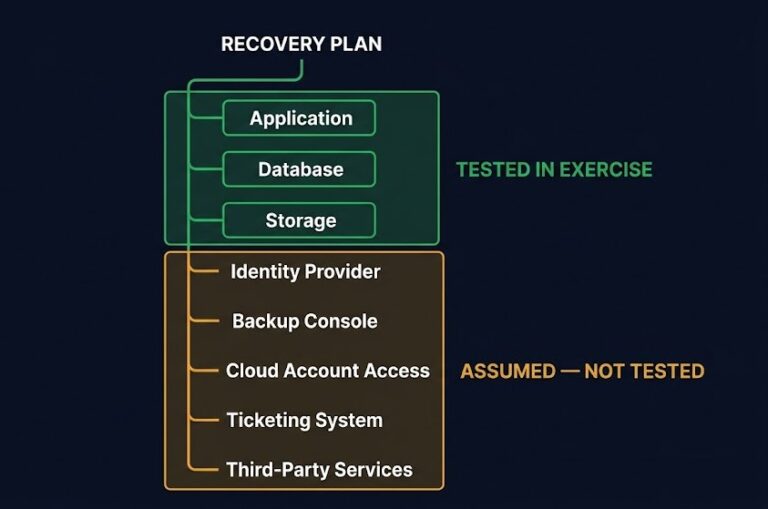
Disaster recovery dependencies are the reason a recovery plan can pass every test the team runs and still leave the business unable to operate.…
READ MORE →
DATA PROTECTION
By R M · 07/20/2026
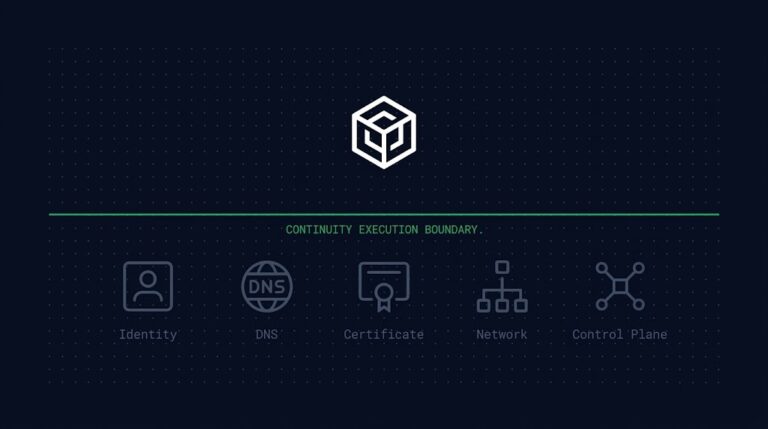
The continuity execution boundary is the line where recovery success stops guaranteeing the business is actually operating again.
READ MORE →
DATA PROTECTION
By R M · 07/15/2026
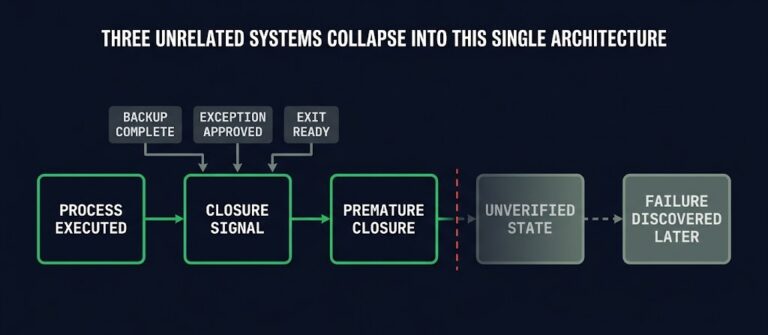
Premature closure is the pattern behind the failures your monitoring never saw coming. It happens when a system declares success because a process executed,…
READ MORE →
DATA PROTECTION
By R M · 07/10/2026
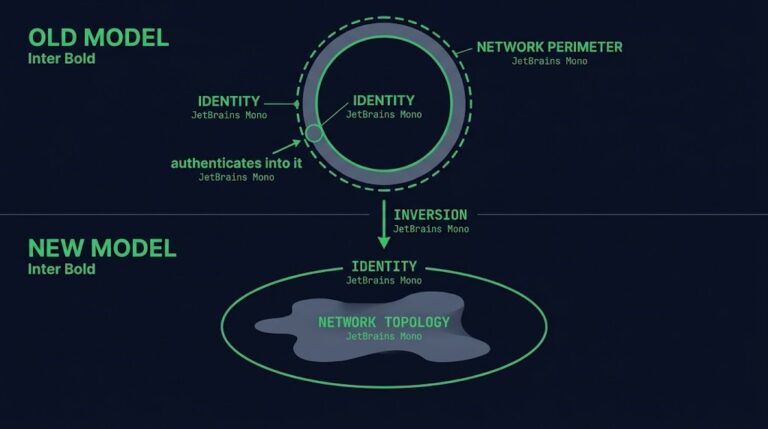
The identity infrastructure boundary is no longer a component sitting inside the network perimeter — it has become the perimeter, and most enterprise architecture…
READ MORE →
DATA PROTECTION
By R M · 07/08/2026
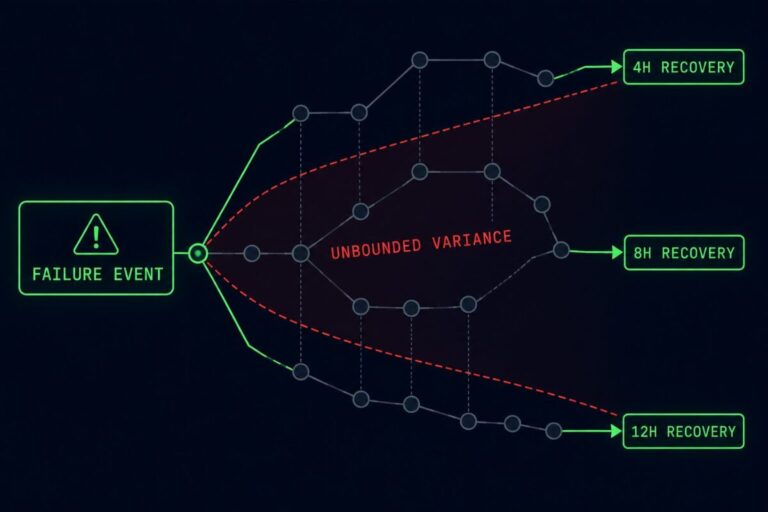
Recovery determinism is the property most disaster recovery programs never engineered for, and its absence is why the same plan produces a different outcome…
READ MORE →
DATA PROTECTION
By R M · 07/05/2026
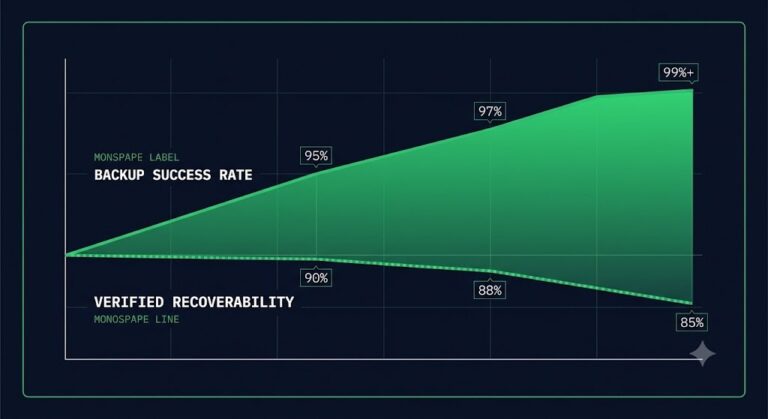
Backup success rate is a dangerous metric because it measures job completion, not recoverability. It persists for a simple reason: backup success is observable…
READ MORE →
DATA PROTECTION
By R M · 07/03/2026
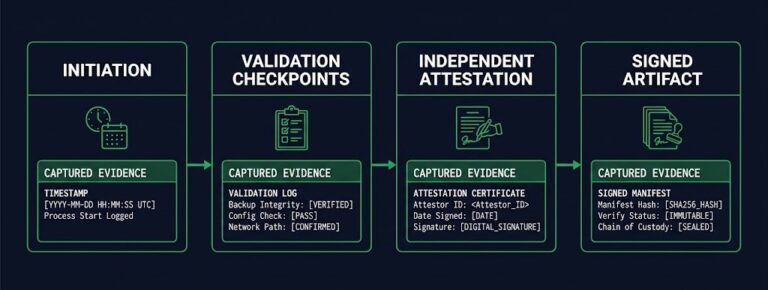
Restore evidence is the artifact layer most disaster recovery programs never build — the difference between reporting that a restore succeeded and being able…
READ MORE →
DATA PROTECTION
By R M · 06/30/2026
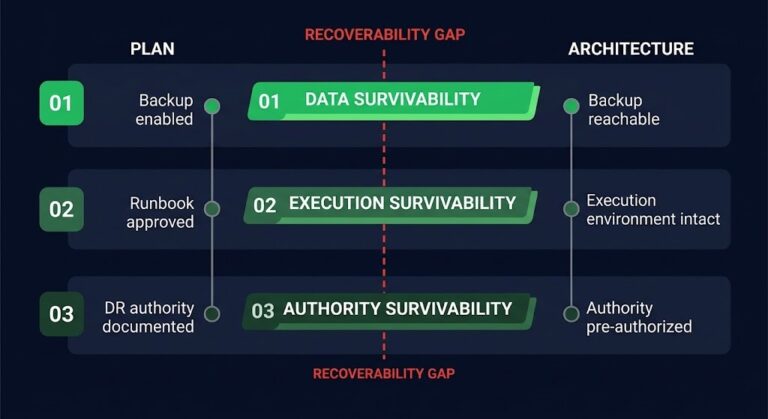
The recoverability gap is the structural distance between what your recovery plan assumes and what your infrastructure can actually deliver under failure conditions. Most…
READ MORE →
DATA PROTECTION
By R M · 06/28/2026
Restore design failure is not a technology problem — it is an architecture problem, and most organizations discover this at the worst possible moment.…
READ MORE →
DATA PROTECTION
By R M · 06/18/2026
Most disaster recovery programs are built around three questions: what systems need to recover, in what order, and within what timeframe. Those are legitimate…
READ MORE →
DATA PROTECTION
By R M · 06/14/2026
DR plan failure rarely happens where you tested. It happens at the assumptions the exercise never reached — the dependencies that weren't in scope,…
READ MORE →