

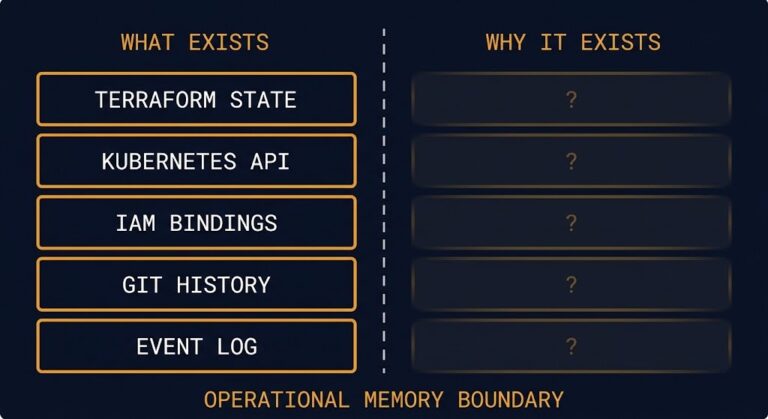
Infrastructure Remembers Configuration. It Forgets Intent.
Infrastructure can reconstruct its configuration state. It cannot reconstruct why that state exists. This is Framework #129 — the Operational Memory Boundary — and…
READ MORE →
ENGINEERING NOTES FROM THE COMPLEXITY GAP.
The journey from legacy infrastructure to modern cloud-native platforms is often obstructed by marketing-driven abstraction and tool-centric noise. Most technical journals focus on the "Day-1" installation — the easy path. Rack2Cloud documents the Day-2 production reality. We analyze how systems actually behave under load, at the boundaries of integration, and within the constraints of sovereign requirements.
Our field notes serve as a deterministic guide for the architect navigating the complexity gap. We prioritize the physics of data and the logic of high availability over vendor checklists.
"In production, complexity is the default state; architecture is the only defense."
Infrastructure can reconstruct its configuration state. It cannot reconstruct why that state exists. This is Framework #129 — the Operational Memory Boundary — and…
READ MORE →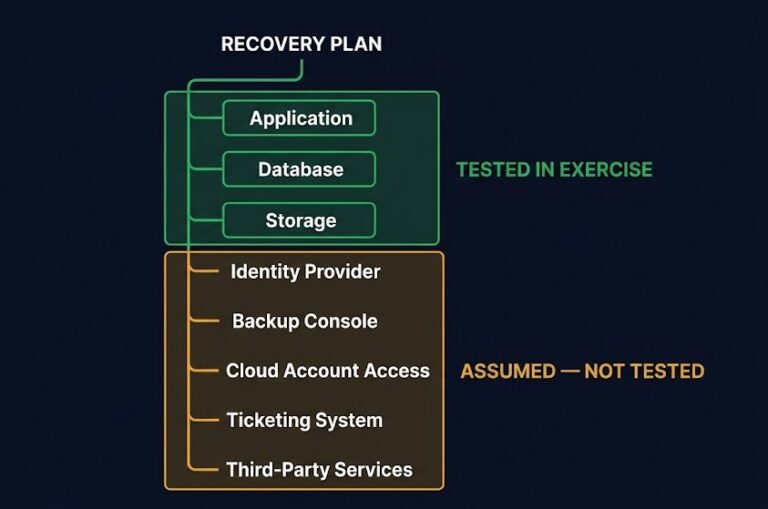
DR plan failure rarely happens where you tested. It happens at the assumptions the exercise never reached — the dependencies that weren't in scope,…
READ MORE →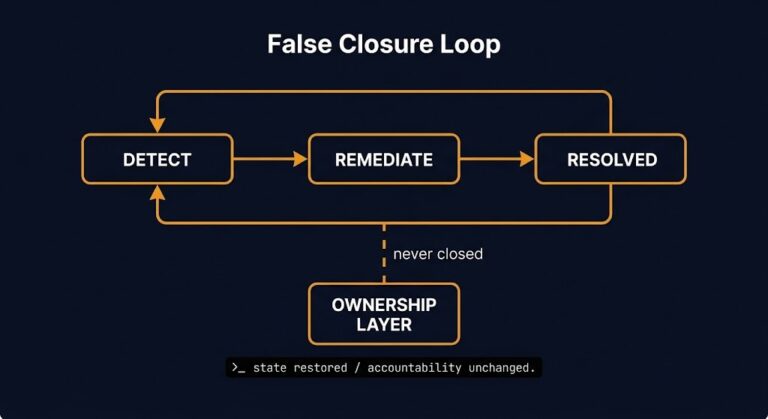
Configuration drift is treated as a visibility problem solved by tooling. It isn’t. Configuration drift ownership is the real breakdown — accountability over declared…
READ MORE →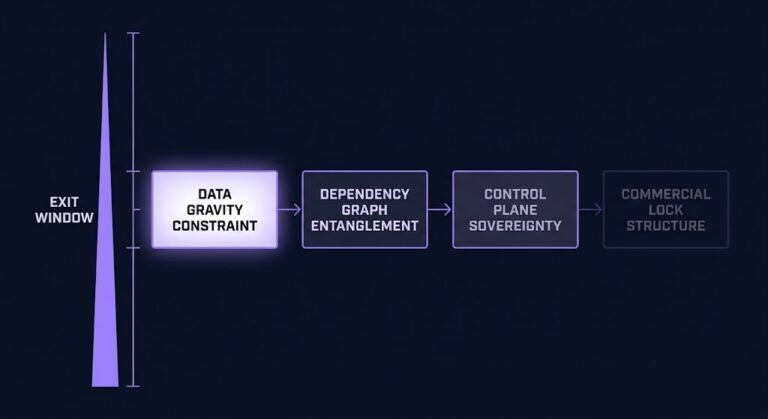
Every cloud exit strategy starts with the same problem: the exit window doesn’t close when you decide to leave. It closes years before —…
READ MORE →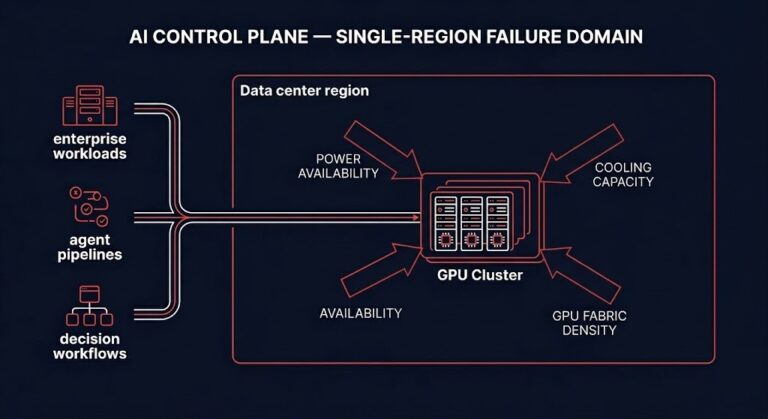
The cloud spent fifteen years teaching architects to think in availability zones, regional redundancy, and distributed failure domains. The assumption embedded in that training…
READ MORE →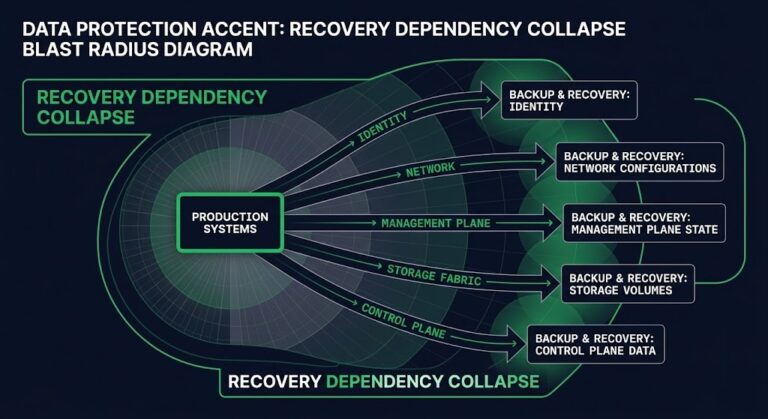
The call came in at 02:00. Production encrypted. By 02:10, recovery had been declared. By 02:15, the backup console was unreachable. By 02:20, the…
READ MORE →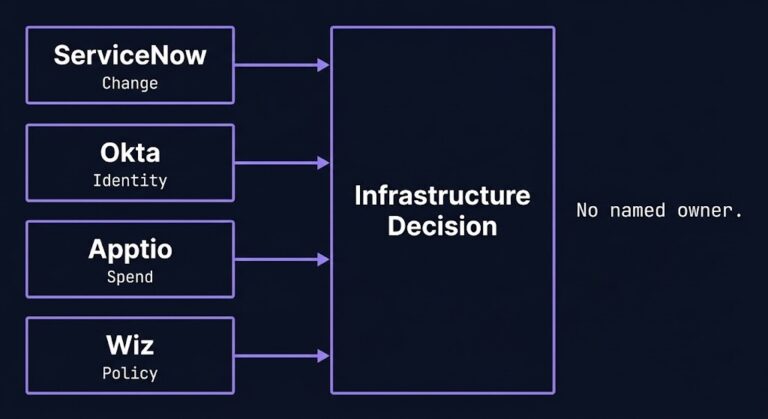
Most organizations do not have a SaaS governance problem. They have a SaaS authority problem — and the distinction matters because governance problems have…
READ MORE →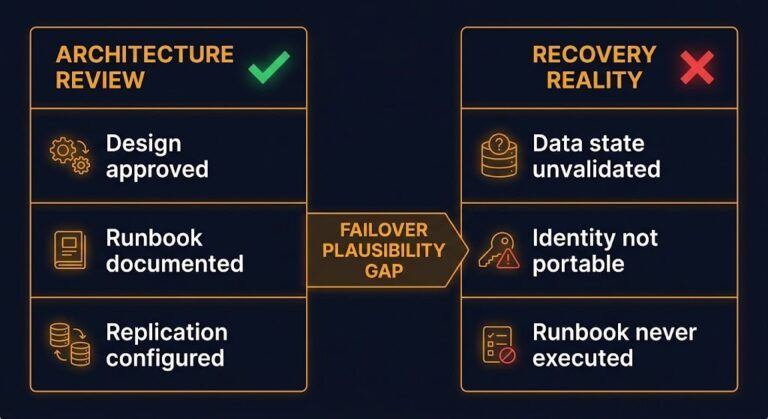
Most multi-cloud architectures are designed to survive a cloud outage. Very few are designed to survive a failover. The Failover Plausibility Gap explains why…
READ MORE →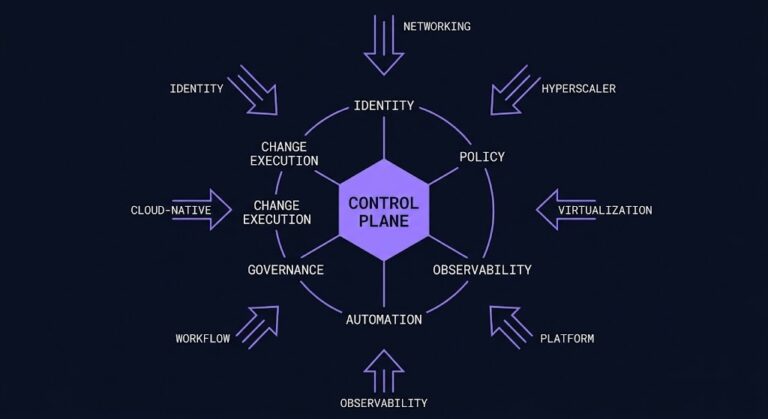
On Monday, Cisco unveiled Cloud Control at Cisco Live. One login. Networking, security, compute, observability, and collaboration unified into a single operational surface with…
READ MORE →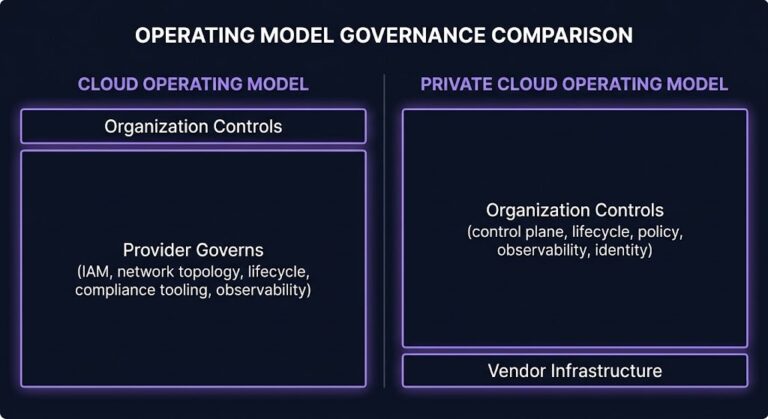
The private cloud narrative was declared dead by cloud-first doctrine for the better part of a decade. Cost comparisons, operational overhead, capital expenditure cycles…
READ MORE →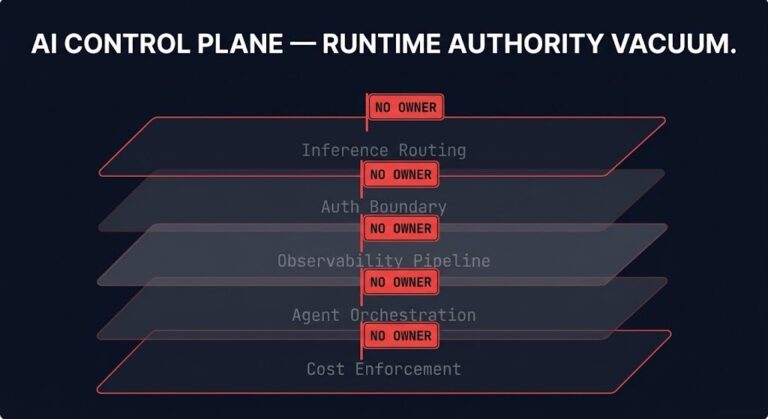
Shadow IT used to mean a SaaS subscription purchased outside the approval process. The fix was a procurement policy and a software catalog. It…
READ MORE →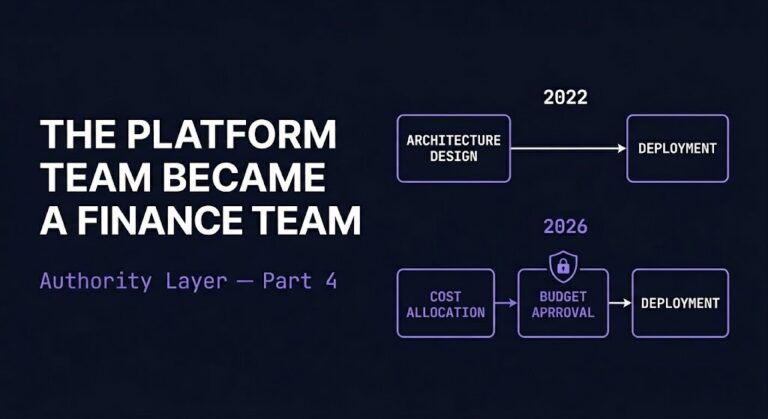
Platform team sprint planning in 2026 begins with budget allocation, not architecture review. The first question is no longer “what do we need to…
READ MORE →