

Your Identity Provider Was Never Your Spend Boundary
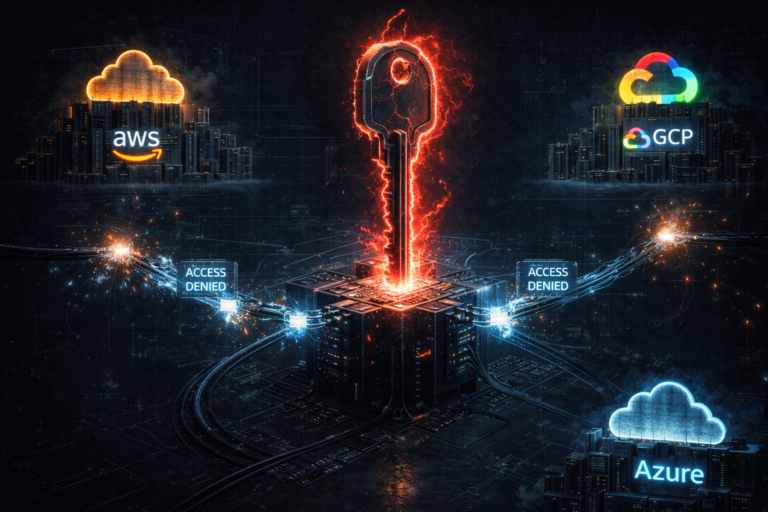
Every enterprise cloud governance program assumes a spend boundary sits somewhere between identity and money — a checkpoint that catches compromised access before it becomes compromised spend. It doesn’t exist. Not as a distinct control. Not as a separate policy layer. Not anywhere in the architecture most organizations have actually built.
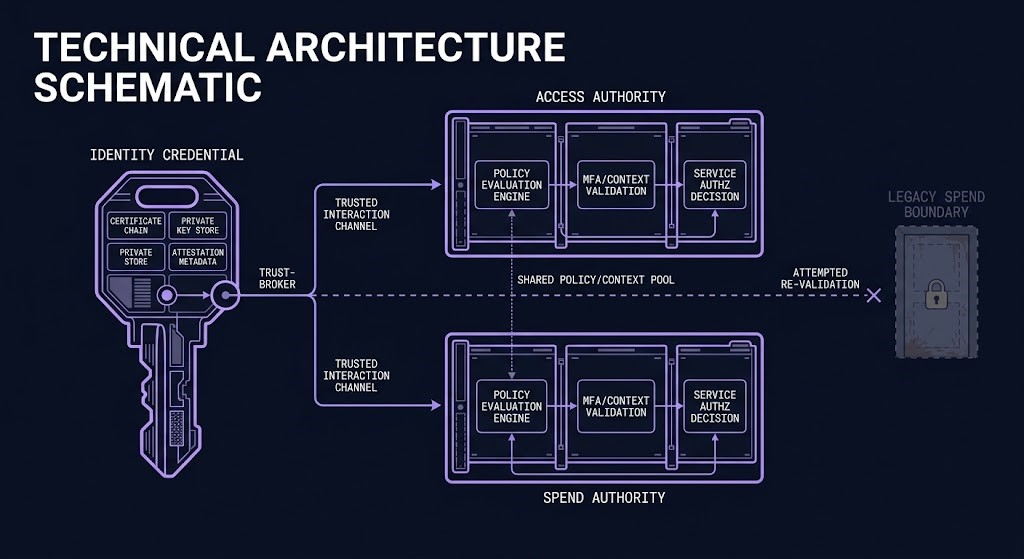
Most governance programs are built on a quiet assumption: that identity compromise and financial compromise are two different classes of incident, arriving through two different doors, caught by two different sets of controls. They aren’t two doors. They’re one door with two labels on it. The same authority chain that lets a cloud operator provision a VM lets that operator — or whoever is holding their credentials — authorize the spend that VM represents. There is no second gate the money passes through that the access didn’t already pass through first.
The Compromise That Becomes A Budget Event
A GCP account hijack disclosed this week followed the pattern security teams have stopped being surprised by: credentials compromised, no unusual network signature, no malware footprint, nothing an EDR agent would flag. What changed wasn’t the account’s behavior — it was who was driving it. And once the driver changed, everything that account was ever entitled to authorize became available to whoever was now sitting in the seat, including provisioning spend at a scale the legitimate operator never would have triggered in a single session.
This isn’t a novel technique. AWS’s own Customer Incident Response Team has documented the same shape from the other side of the fence: threat actors who compromise a management account can use elevated privilege to reach member accounts and change billing configurations directly, in a way that survives remediation focused only on IAM principals. The mechanism differs by provider. The architectural gap doesn’t. Financial authority was never fenced off from identity authority — it was assumed to travel with it, silently, the same way disk access or API scope travels with a role assignment.
That’s the part worth sitting with. Nobody built a “billing exploit” here. Nobody found a vulnerability in a payment system. The attacker simply did what the account was already permitted to do, faster and with less judgment than the legitimate operator would have applied. The spend wasn’t stolen from a separate system. It was authorized, correctly, by an authority chain that had no idea it had changed hands. No spend boundary caught it, because none existed to catch it.
Why Cloud Billing Was Never Designed As A Containment Layer
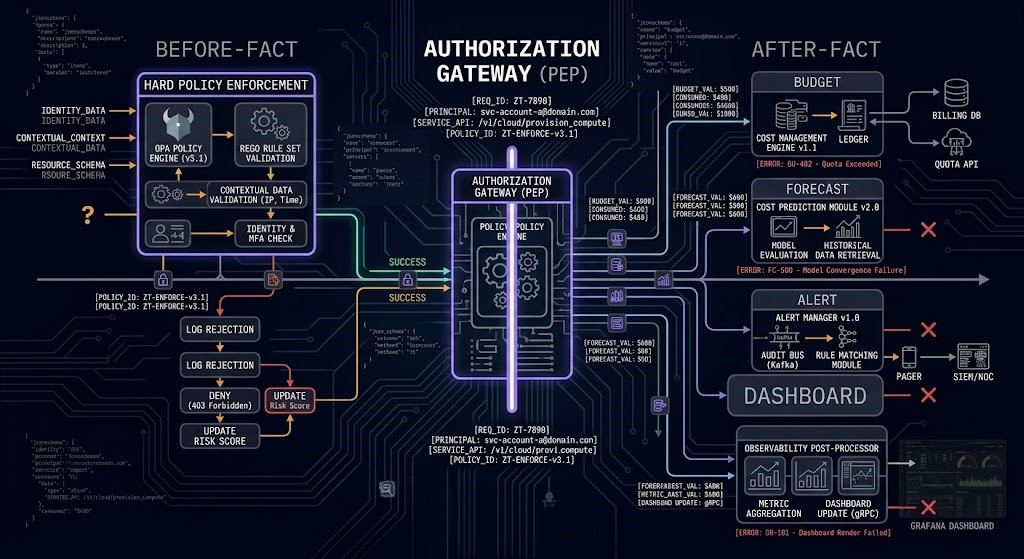
Cloud billing tooling is good at exactly one job: explaining spend after it happens. It was never built to act as a spend boundary — something that stops spend before it happens — and the distinction matters more than it sounds like it should.
Run any standard cost-governance control against a single question — can this stop spend before authorization occurs? — and the answer collapses fast:
| Control | Stops spend before authorization occurs? |
|---|---|
| Budget | No — a budget is a threshold you cross, not a gate you pass through |
| Forecast | No — forecasting projects trend, it has no relationship to a live authorization event |
| Alert | No — an alert notifies a human after the fact; someone still has to act on it |
| Dashboard | No — a dashboard is read access to history, not a control on the present |
| Hard policy enforcement | Sometimes — only if backed by an actual gate, not a threshold |
Four of the five standard tools in a mature FinOps program are observational. They tell you what happened, well after it’s already happened. None of them sit in the authorization path itself. The fifth — hard policy enforcement — is the only one that could theoretically act in time, and it’s rarely deployed as a containment control; it’s deployed as a cost-optimization control, tuned for waste, not compromise.
Here’s the diagnostic that operationalizes this, worth running against your own environment directly: if an attacker obtained the credentials of your most privileged cloud operator, what mechanism would stop them from authorizing six figures of new spend before a human intervened? Walk your own stack through it. Budget — no. Alert — no. Forecast — no. Dashboard — no. Manual review — no, not at the speed an automated provisioning script runs. Hard policy boundary — maybe, if one exists and if it was built to stop this specific thing rather than something else.
If your honest answer stops at “someone would probably notice the alert eventually,” you’ve just confirmed the thesis. Most cloud cost controls were built to explain spend, not contain it.
Spend Authority Is Just Another Form Of Authority
The reason this gap is invisible in most architecture reviews is that spend authority doesn’t present itself as a separate category worth reviewing. It’s folded into whatever role, policy, or service account already exists — the same IAM binding that lets an operator create a compute instance is the IAM binding that lets them create a compute instance sized and quantified however they choose. Nobody drew a second boundary around “how much” once “whether” was already granted.
That’s not a gap in vigilance. It’s a gap in architecture. Identity governance programs are extremely mature at answering who can do this — role definitions, conditional access, just-in-time elevation, session risk scoring. Almost none of that maturity extends to a second, independent question: given that this identity can act, what is the ceiling on what that action can cost, and is that ceiling enforced somewhere the identity itself doesn’t control? Without an answer to that second question, spend authority isn’t really a distinct authority domain at all — it’s a shadow of identity authority, exercised wherever identity authority reaches, with no independent floor beneath it.
That’s the same gap cloud governance failure domains describes generally, one layer further out: a mechanism assumed to sit outside the execution path, reviewing after the fact, that actually inherited the execution path itself the moment nobody built an independent gate for it. The failure doesn’t announce itself as a policy violation. It announces itself as spend quietly executing that nobody separately authorized. Concentrating spend authority behind a single identity chain is the same bet as concentrating a workload behind a single region — just usually not priced as one until the account with no ceiling is the one that’s compromised.
Even the major providers’ own guidance stops at the first question. Microsoft’s cloud security benchmark is explicit that an unrestricted privileged account can reach tenant-wide IAM policy control — but the guidance is scoped to access, never extends to what that same account can authorize financially once it’s already privileged.
Identity Boundary Inversion And Financial Exposure
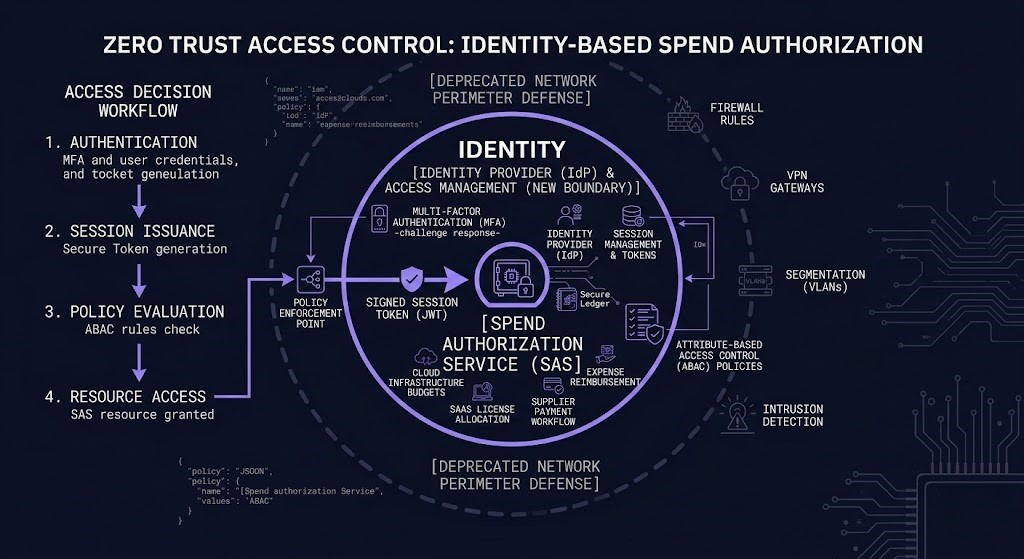
This is a direct instance of Identity Boundary Inversion — the point at which identity, not network topology or perimeter control, becomes the boundary that actually determines whether an action is authorized and survivable. The diagnostic test that framework names is worth restating exactly: the moment authorization survives a topology change but fails when identity changes, the boundary has already moved. Substitute “spend authorization” for “authorization” in that sentence and the doctrine holds without modification. A firewall rule doesn’t care who’s driving the account behind it. A network segmentation boundary doesn’t care whose credentials are in use. Spend authorization, like every other authorization this framework already describes, moved to identity a long time ago — cloud governance programs have simply been slow to notice this particular instance of the spend boundary that inverted everywhere else first.
Contrast this with a genuinely different question addressed by Decision Origination Boundary (#161): that framework asks whether a financial-scoring mechanism has already filtered which architectural options an architect gets shown, before anyone reviews what got excluded. This post is asking something upstream of that entirely — not which options survive economic filtering, but what stops an already-existing authority from authorizing spend once that authority exists, regardless of which options were ever on a shortlist. Different lifecycle stage, different failure mode; the two are related only in that both concern money moving without an architect’s direct review.
There’s also a loose sibling relationship worth naming with Cloud Arbitration Layer (#166), published the same week: that framework describes multiple legitimate decision engines producing a composite outcome nobody owns. This post describes the opposite shape — a single authority, compromised once, inheriting everything that authority was ever entitled to do. One is an arbitration problem between too many legitimate deciders. This is a containment problem with too few checks on one.
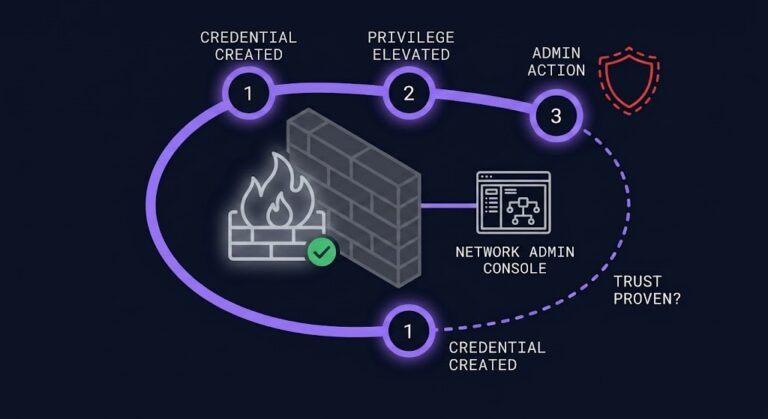
The same missing question shows up one layer back, on the access side rather than the money side. Your Identity Controls Passed. Your Authorization Chain Failed. asks whether an organization can prove a credential’s full chain — creation, elevation, validation — was ever legitimately authorized, not just that each individual step passed its own review. Structurally the same unproven-authority gap this post names for spend, aimed one domain further upstream: access itself.
The same gap shows up a third time, one layer further out than either: at the infrastructure trust boundary itself. Confidential Computing Attestation Proves The Software. Not The Person Operating It. asks who controls the environment a workload runs in — a question attestation was never built to answer, the same way identity was never built to answer what an identity can spend. Three domains, one recurring shape: a verification mechanism succeeding while the actual counterparty question goes completely unaddressed.
A fourth domain runs the same shape one relationship further out: Your Cloud Isn’t Compromised. Your Vendor Is. Now What? asks whether a third party’s standing authority into an environment should still be trusted once the relationship that justified granting it has changed — not a verification mechanism this time, but a persistence assumption succeeding by default while nobody revisits whether it still should.
A fifth domain runs the same shape one direction further out still — not spend, not access, not infrastructure trust, but the read layer itself. Identity Directories Have Become An Unmonitored Intelligence Source asks whether an already-valid session can be observed at scale, the same missing-second-question shape this post names for money: authentication passing is not the same as volume being bounded, whether what’s being authorized is spend or a bulk directory read.
A sixth domain runs the shape in the opposite direction — not an authority quietly carrying a second authority, but an authority nobody recognized as authority at all. The Help Desk Is Becoming The New Initial Access Broker documents a support function that can reset credentials, enroll devices, and approve access — exercising identity authority in practice, governed and measured as a cost-center support queue on paper. This post’s gap is a missing ceiling on authority everyone agrees exists. That post’s gap is a missing recognition that the authority exists in the first place.
Why Budgets, Forecasts, And Alerts Don’t Stop Attackers
It’s worth being precise about why these tools fail specifically against compromise, not just why they’re imperfect in general. A budget assumes the spend pattern deviating from it is a planning error — someone under-forecast a workload, a team scaled up faster than expected. It has no model for “this spend is being authorized by someone who was never supposed to have this authority in the first place.” A forecast assumes continuity — that next month looks statistically like this month. An attacker authorizing six figures of compute in an afternoon isn’t a forecasting anomaly the model was built to catch; it’s a different kind of event entirely, one the tool was never pointed at.
Alerts get closer, but an alert is only as fast as the human reading it, and a compromised-credential spend event doesn’t wait for a human to open Slack. By the time a cost-anomaly alert fires, escalates, and reaches someone with the authority to act, the resources have often already provisioned, run, and in some cases exfiltrated whatever they were provisioned to do. The alert did its job. Its job was just never “stop this,” it was “tell someone afterward.”
What An Actual Spend Boundary Would Require
A real spend boundary — not a reporting layer wearing the name — would need to answer the diagnostic question above with something better than “maybe.” That means enforcement that doesn’t derive its authority from the same identity chain it’s meant to check: a hard ceiling on provisioning velocity or magnitude that triggers regardless of which credential is presenting it, evaluated independently of whether the request looks like normal behavior for that specific account. It means treating “how much can this identity authorize in a given window” as a first-class governance question, reviewed with the same rigor as “what can this identity access” — not assumed to follow automatically from the answer to that first question.
Most organizations haven’t built this because nothing forced them to notice it was missing. Cost governance matured to solve waste, not compromise, and the tooling built for one job doesn’t automatically do the other. The architectural fix isn’t a better dashboard. It’s recognizing that spend authority needs its own boundary, checked by something other than the identity chain that’s also the thing being exploited when it fails.
Architect’s Verdict
Cloud governance programs treat identity compromise and financial compromise as separate incident categories, respond to them with separate playbooks, and staff them with separate teams. They are not separate. The same authority chain authorizes both, which means the moment one fails, the other has already failed with it — the attacker never crosses a distinct spend boundary because no independent spend boundary exists to cross.
Most cost-governance tooling was built to explain spend, not contain it, and mistaking one job for the other is exactly how a compromised account turns into a budget headline instead of a contained incident. The fix isn’t better reporting. It’s recognizing that spend authority is a distinct governance question that doesn’t get answered just because the identity question already was.
A spend boundary that holds under normal operation and inverts silently under compromise was never a boundary. It was a convenience that hadn’t been tested yet.
Additional Resources
Editorial Integrity & Security Protocol
This technical deep-dive adheres to the Rack2Cloud Deterministic Integrity Standard. All benchmarks and security audits are derived from zero-trust validation protocols within our isolated lab environments. No vendor influence.

R.M.
Senior Solutions Architect with 25+ years of experience in HCI, cloud strategy, and data resilience. As the lead behind Rack2Cloud, I focus on lab-verified guidance for complex enterprise transitions. View Credentials →
Get the Playbooks Vendors Won’t Publish
Field-tested blueprints for migration, HCI, sovereign infrastructure, and AI architecture. Real failure-mode analysis. No marketing filler. Delivered weekly.
Select your infrastructure paths. Receive field-tested blueprints direct to your inbox.
- > Virtualization & Migration Physics
- > Cloud Strategy & Egress Math
- > Data Protection & RTO Reality
- > AI Infrastructure & GPU Fabric
Zero spam. Includes The Dispatch weekly drop.
Architecture Audit Services
Fixed-scope audits for Zero-Trust Azure, VMware migration readiness, and recovery posture — no discovery call required to start.
>_ View Audit Services>_Related Posts
Your Kubernetes Cluster Isn’t Out of CPU — The Scheduler Is Stuck
Compute Tier 1 Authority Cascades to ➔ >_ Architect’s Brief 60-second read before you commit to the full post · Full post: 9 min Generating brief… [Storage] [Network] 🚨 Failure Signature Detected Grafana shows cluster CPU utilization is under 50%, but pods are stuck in Pending. Events show: 0/10 nodes are available: 10 Insufficient cpu….
Your Identity System Is Your Biggest Single Point of Failure
Part 2 of the Rack2Cloud’s Cloud Fragility Series >_ Cloud Fragility Series 01 Multi-Cloud Cascading Failure Risks 02 Your Identity System Is Your Biggest Single Point of Failure [CURRENT] 03 Vendor Lock-In Happens Through Networking — Not APIs 04 Your Cloud Bill Quietly Increased in 2026 — Here’s Where the Money Is Actually Going >_…
Your Identity Controls Passed. Your Authorization Chain Failed.
A credential chain functioned exactly as it was designed to. No firewall failed. No exploit executed. No malware bypassed a control. A red team walked past physical and social barriers using nothing more exotic than a plausible pretext, and came out the other side holding network admin credentials — issued correctly, authorized correctly, working exactly…
Your DR Test Passed. The Assumptions Didn’t.
DR plan failure rarely happens where you tested. It happens at the assumptions the exercise never reached — the dependencies that weren’t in scope, the runbook written for last year’s architecture, the authority chain nobody tested at 2am.
Your Cloud Provider Is Not Your HA Strategy
A Tactical Playbook for Architecting, Testing, and Automating Real Multi-Cloud & Multi-Region Resilience We’ve previously explored why cloud SLAs fail as guarantees in our deep dive, Cloud SLA Failure & Resilience Strategy. This article focuses on how to survive those failures in practice — architecturally, operationally, and financially. >_ Architect’s Brief 60-second read before you…
Your Cloud Provider Is a Single Point of Failure — Enterprise Resilience Beyond Provider SLAs
Cloud SLA limitations become real the moment IAM starts returning 503s. It’s always a small event at first — a blip in CloudWatch, a dashboard alert muted over lunch. Then every automation pipeline you thought would “save you” suddenly becomes inert code waiting on a dead API. I watched great engineers helplessly SSH into nothing…